- April 1, 2026

-
-
Loading
Loading
The biggest question facing the Winter Park City Commission was not when or how a giant development would transform a 50-plus acre neighborhood filled with dead grass and empty plots — it was whether to burn it all.
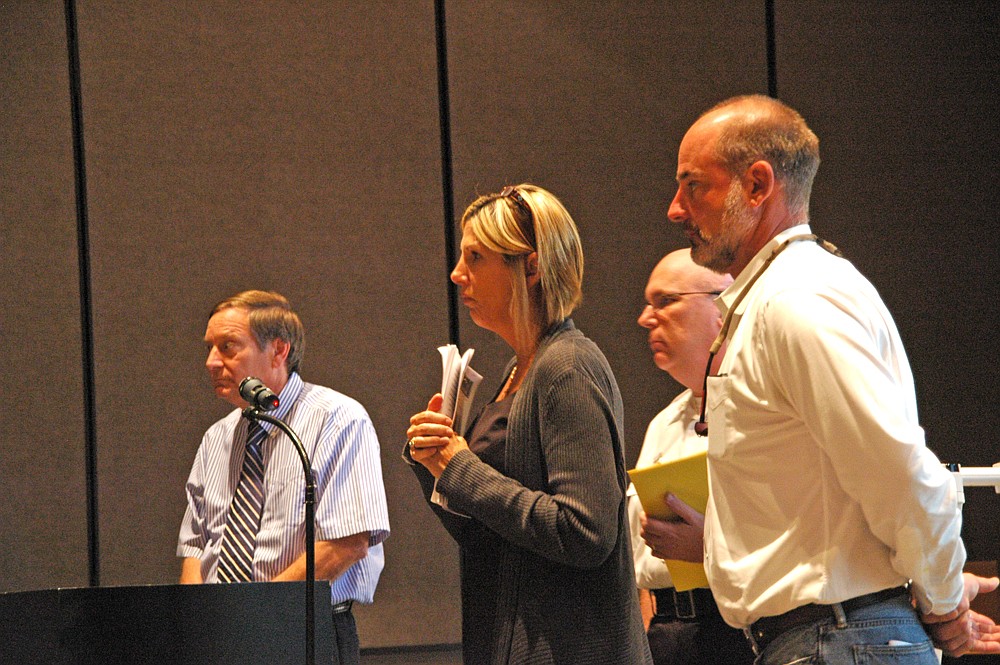
At Monday’s meeting the Commission held a preliminary meeting with Ravaudage developer Dan Bellows to fix any parts of an annexation agreement in which Winter Park would swallow up 54 acres of the development at the corner of U.S. Highway 17-92 and Lee Road. The first official vote on the ordinance will come at the April 9 City Commission meeting.
Most of the agreement passed by without a whisper from the Commission, but then came the issue of what to do with the debris that would be cleared after the development was leveled: haul it off or burn it?
Bellows was requesting it be burned off in at least one controlled burn so large that Fire Chief Jim White said it might not be allowed by the state. City code doesn’t really allow burning garbage at all.
But while the land still belongs to Orange County, they might have a chance to do it before it is annexed.
“In Orange County you can get a burn permit and it's only organic materials — it's not building materials,” Bellows said. “In Winter Park you can't do this.”
White said a large-scale burn on county land could be a good precedent for whether the burn could happen without risk to any nearby buildings.
“They don't have the same additional level of restrictions that we do,” White said of the county. “If he burns and it's still in the county and he gets a division of forestry permit, that's going to be a good heads up whether we'll be able to do this down the road.”
Bellows said that he would use an air curtain burner, which is a cleaner way to burn off the tons of brush that would be cut down on a piece of land the size of nearly 50 football fields. The burners resemble large semi-trailer-sized dumpsters with an air blower attached to ventilate the fire while keeping smoke and ash down.
But as current city law stands, he wouldn’t be allowed to do so if the land were annexed first.
“We can't break our own laws,” Mayor Ken Bradley said, adding, “I for one would not like to see the debris burn.”
That’s when Bellows informed the Commission of how much it would cost to pursue the alternative, hauling off the brush that would have otherwise been burned.
“We're talking almost a million dollars to haul this stuff off,” Bellows said. “You set up this air curtain, it's clean and there's almost no smoke.”
Resident concerns
Commissioner Carolyn Cooper said she was worried that the rights of nearby property owners weren’t being respected in terms of impact to their properties and businesses by the large development. She said that in parts of the agreement, retail buildings are allowed to be built much closer to homes than normally permitted.
“You're asking for me to vote on this agreement, in order for me to do this, I want to know that they're comfortable with the property rights,” Cooper said.
Bellows said that those business and homeowners had been involved in the process from the start and had agreed to the terms.
“They're not waiving their rights — they signed consent,” Bellows said.
Bradley said that the annexation into Winter Park and subsequent development would be a boon to those property owners, not a detriment.
“To me, joining the city of Winter Park is a good thing,” Bradley said. “I don't see anybody who's losing by coming into Winter Park.”