- April 3, 2026

-
-
Loading
Loading
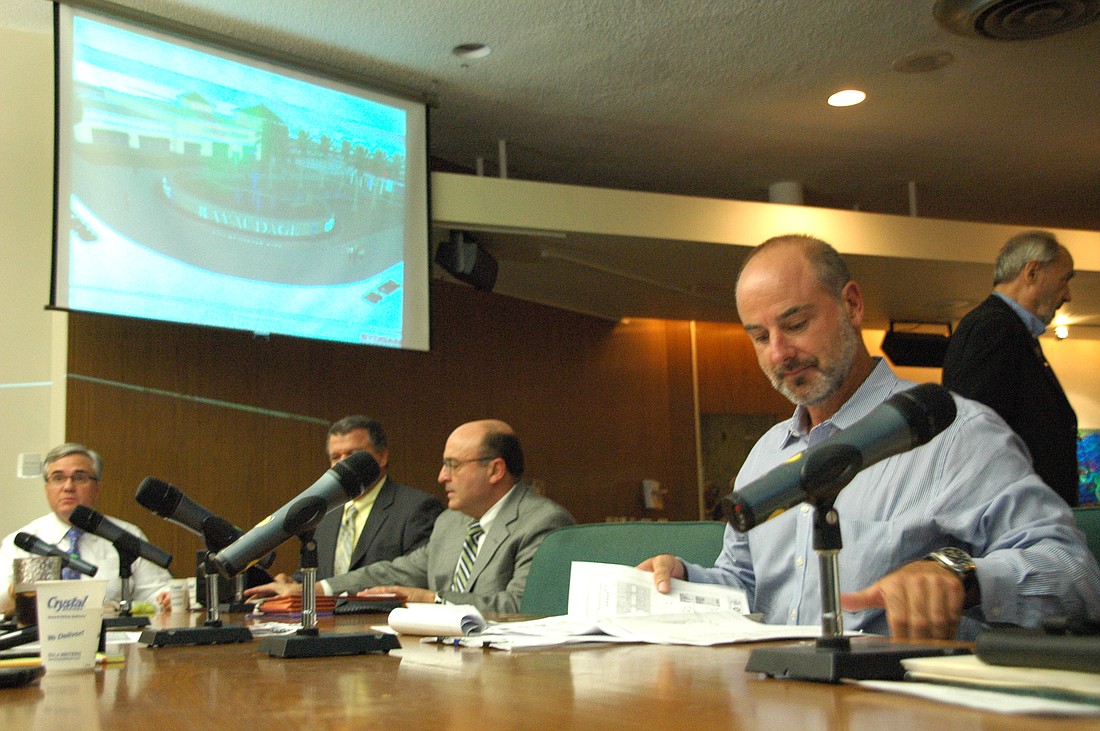
Hours after members of the Maitland City Council adopted a resolution announcing the city is open for business, they took a first-of-its-kind step toward trying to bring that businesses in by attempting to create an open market for the sale of city impact fee credits for capital.
In February, developer Dan Bellows approached the city of Maitland with the idea of allowing him to separate impact fee credits, for things such as water, sewer and transportation, from his Gem Lake Apartments property. He wanted to sell them to another developer for capital to support his other developments in the city, namely the $500 million mixed-use Ravaudage project, planned for Maitland and Winter Park between Lee Road and Lake Avenue off of U.S. Highway 17-92. At that meeting, the Council taxed Bellows with the job of finding a buyer for the fees before they would agree to proceed.
On Monday, Nov. 12, Bellows and his lawyer, Javier Omana, told Council that they had found a buyer for $534,000 of the fees: Atlantic Housing Partners, the developer set to build Uptown Maitland, an affordable senior housing project planned for the corner of 17-92 and Sybelia Parkway. That left it up to City Council members to decide if they wanted to pursue the idea, and how, considering no other city on record has tried an impact fee-for-capital exchange process.
“If there’s interest in doing it… we’d kind of be out there on our own,” City Attorney Cliff Shepard said.
Innovation battled practicality and potential benefits weighed against risk, as the Council went back and forth before deciding to move forward with coming up with a process. The vote was 4-1, with Councilwoman Bev Reponen dissenting.
“I think we’ve put the cart before the horse,” Reponen said. “We don’t have a process to do this. We don’t have any other city to use as a guide for how to do this. … I don’t think citizens feel that they want to give money to us and trust us to handle money if we’re going to do something on the fly, and we’re doing this on the fly.”
Councilman Ivan Valdes countered there would be no progress without someone taking the leap and trying something new. He said moving forward the city will have to weigh whether or not the money given out will come back enough to benefit the citizens, and how not having the interest accrued from the $534,000 would impact the utilization of the city’s general fund.
To balance those claims, Bellows offered to put the value of the interest, calculated to be around $35,000 over three years, into an escrow account for the city, in addition to covering the legal fees associated with the city drafting a process to monitor the market of impact fees. He also agreed that this would be the only time he’d be eligible for such a trade of fees for capital, and that after 36 months, any remaining impact fee credits needed to be repaid to the city.
Bellows says he’s already made a considerable investment in Maitland, from Gem Lake to the idea of Ravaudage, which he said should speak for his commitment to developing the area, and doing so quickly.
“I didn’t spend $21 million on a less-than-desirable piece of property to sit on it like that,” Bellows said.
Mayor Howard Schieferdecker said pursuing the process was a calculated risk he was willing to take in order to further a chance for an eyesore of Maitland property to be cleaned up and for new businesses to develop. He said the possible benefit for residents outweighs the initial risk of taking this step forward.
“I think we’re doing the citizens a disservice if we don’t look at this process. … I think we should at least explore this,” he said.
City staff along with the city attorney will now work to oversee the drafting of a process, which will start through Bellows’ lawyer, Omana, to move the idea of open market impact fees forward.