- April 3, 2026

-
-
Loading
Loading
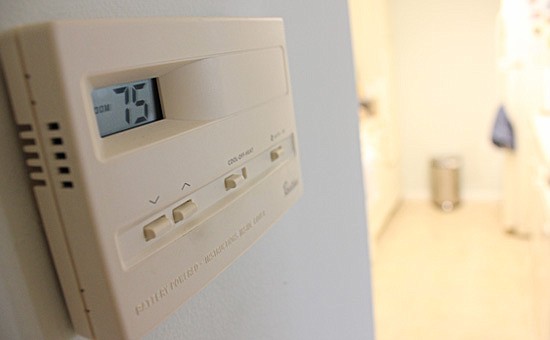
The air conditioning blows gently through Marie Waller’s apartment as she relaxes in her cushioned crème chair, basking in the gentle 75-degree breeze. To her it feels like a lifetime ago that going outside to stay cool was as common during Florida summers as iced tea.
“I worked in an office…with a round fan beside my desk, and many times at noon I would go home just to take a cold shower,” she said. “It was not pleasant.”
Before air conditioning, Central Florida in the summer was an unbearable place to be.
In the daytime, parishioners would diligently fan themselves during a Sunday church service. Taking a lesson from local otters, they’d cool off with an afternoon swim in a nearby lake.
Ninety-year-old Waller said the summer heat got so bad that many Floridians, such as herself, would sleep on their screened-in front porch, known as a sleeping porch. As the summer heat subsided near midnight, a hot house would take far longer to cool than the outside air, even if “cool” meant just below 80 degrees right before the sun rose again.
“I would sleep on the daybed out there (on the porch) in the summer sometimes just to stay cool,” she said. “But one of the good things about growing up here then was everything wasn’t covered with concrete, which creates heat, and you didn’t have close next-door neighbors. We always had every window in the house open, all night, no one locked doors either; it was a very comfortable time, as far as crime was concerned.”
Both 91-year-old Eleanor Fisher and her mother were born in a home with no air-conditioning, right in the heart of Orlando. Her grandparents moved down to Orlando in 1873, when even electric fans were the stuff of science fiction.
Her old two-story Victorian house was full of open windows and breezeways — a bygone feature in many modern homes. In an era where eco-friendly convective cooling has become all the rage among green circles, few remember when it wasn’t an efficiency-boosting luxury. Homes would strategically place walls, doors, and windows to let cooler air in and draw hotter air out. Windows of homes from the late 1800s wouldn’t just open, they’d raise straight up into the ceiling to create massive wind apertures. And of course screened porches surrounded the perimeter, including the one with the bed.
Fisher said one of her favorite things to do in the summer was to make ice cubes out of orange juice, put them in a glass, sit in front of the fan and eat them with a spoon.
She also recalls having large floor and attic fans in homes to keep people cool during these sweltering summers.
“We had a great big floor fan that sounded as if there were a huge airplane propeller in the house,” Fisher said.
She and her family would frequently find refuge from the horrific heat at a beach, lake or the springs. But these weren’t day trips. They were survival vacations to beat the heat.
“We spent a month at Daytona Beach or a month out at Windermere on a chain of nine lakes,” she said. “And the swimming was wonderful.”
She said the summers without air conditioning got so bad that Winter Park stores would close up shop because of it.
“A lot of the shops just closed, because they figured there wasn’t any business in the summertime,” Fisher said.
Mayflower Retirement Community resident B.J. McKee is also a two-generation Florida native, born on the same lot as her mother.
“My grandmother came down here as a 15-year-old with her parents, her brother and her sister, from Macon, Ga., in two covered wagons,” she said. “And my father started the first bottled-water company.”
The bed outside had the luxury of privacy curtains and screens to keep away the mosquitos, which would wake up just around the time when people were going to sleep.
“There were roll-down awnings on the screened porch, to keep the wind out … room for a bed and a blanket chest, but that’s about all,” McKee said. “But that was summer sleeping.”
Although summer sleeping has changed quite a bit for this generation of ladies, they say they’ll never forget the time when there was no thermostat to set at a cool 75 degrees.
“We just tried to deal with the hand we were given,” McKee said. “We just didn’t know any different back then.”