- April 3, 2026

-
-
Loading
Loading
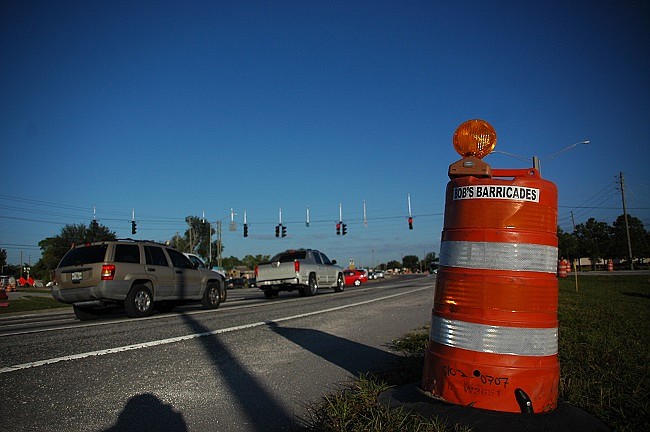
Winter Park continues to see new development springing up across the city, but how do the growing buildings impact traffic?
City Commissioner Greg Seidel spoke with Economic Development Advisory Board members on Tuesday about a new tool he’s creating with city staff: a model that measures how a new development will impact traffic at neighboring intersections.
Seidel calls it a partial-level based traffic model, an equation where the city can input data regarding a new development and get a read on the congestion it will cause on Winter Park roads.
“I want this model for the city of Winter Park and I want us to partner with the DOT to get it done properly, because they have the main roads that are coming through,” Seidel said. “We’d have all the cut-through streets as well – we could enter parking and pedestrians to it. It’s setting up a base for us to use as we plan into the future five or 10 years from now.”
“When we have smarter traffic lights, we can collect data, put it in the model and make modifications.”
Seidel said the concept is still being crafted, but compared it to what he does at The Balmoral Group, an engineering design firm with an expertise in economics, environmental analysis and GIS capabilities. Seidel said his firm has every farm in Florida mapped out with its estimated water use so that the farmers can better understand and monitor their water consumption.
Winter Park can take the same approach with measuring traffic caused by a new development, Seidel said.
“We have development outside of the city that we can’t do anything about,” Seidel said. “With this model that I’m talking about, those are your boundary conditions for the model. Only so many cars can come down Aloma at 436.”
“We can insert the development, the traffic it’s going to generate and see if it causes intersections to fail or things to function worse.”
The intersection of U.S. Highway 17-92 and Morse Boulevard saw a large increase in traffic and nearby parking problems following the opening of Trader Joe’s, resulting in an uproar from residents and the developer scrambling to build a new development across the street with more parking.
Board Chair Marc Reicher said traffic has always been a hot-button topic when it comes to new projects.
“If you talk to the regular person on the street, they’re really interested in whether it took me longer to get through,” Reicher said. “That’s where the rubber really meets the road, so thinking about those things is something that’s critical. I’m glad the city is starting to do more of that.”
It’s all about reducing the impact on traffic as much as possible, Seidel said.
“Those that are driving through are not my biggest concern,” Seidel said. “My biggest concern is the people that live in the city.”
“Once you have these data sets available, you can ask people ‘OK, if we [build] this, what’s it going to do?’”
Intersections like the ones at Lakemont and Aloma avenues and Fairbanks Avenue and U.S. Highway 17-92 require the most attention, said Seidel, who also hopes to find a way to bring downtown traffic through Morse Boulevard, an under-utilized road.
“Any intersection where you spend more than two lights waiting to get across…we need to see if we can fix it,” Seidel said.
The newly elected Commissioner added that the model may not guarantee traffic improvements, but it’s certainly worth a try.
“Having the tools to make the right decisions is important,” Seidel said.
A meeting should take place within the next couple months between city staff and the DOT to solidify the model’s concept, Seidel said.