- April 3, 2026

-
-
Loading
Loading
When it comes to redeveloping its downtown core, members of the Maitland City Council haven’t always gotten what they wanted. Now, by reconfiguring development standards, they’re working to get what they think they need to have the bustling, walkable city center that’s long been a dream.
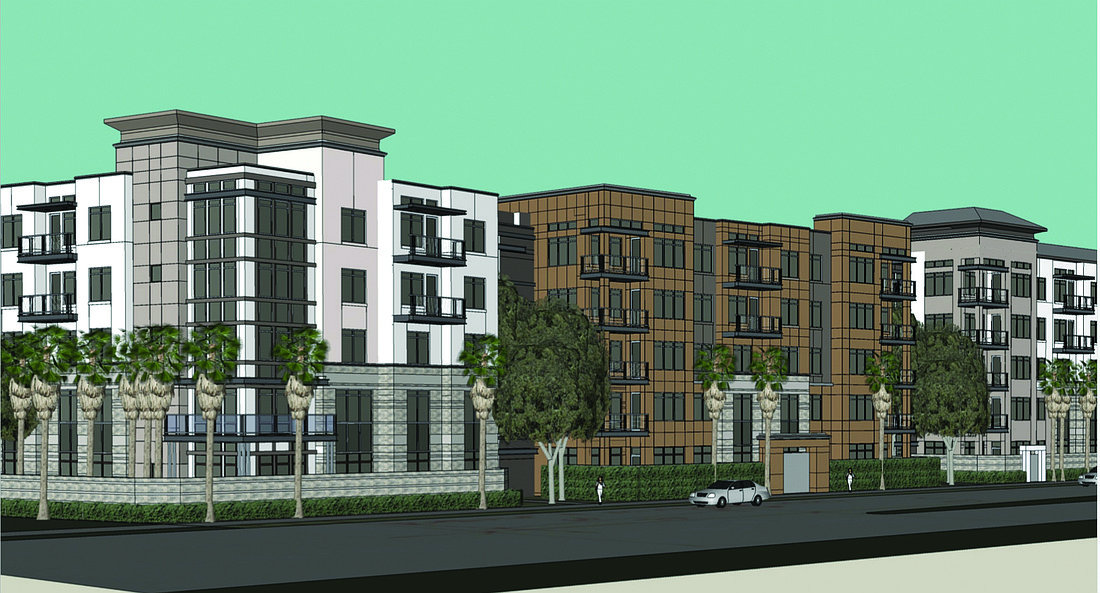
After four out of five Council members voted begrudgingly in April to approve a fully-residential project to be built next to the Maitland SunRail Station, feeling they had no choice but to vote it through due to city code, city staff and Council are working to draft changes to the city code to allow more flexibility of choices in the future.
“What we want to represent to the development community is that we know what we’re doing … it’s up to us to represent our vision of our town in a comprehensive and cohesive way,” said Councilman John Lowndes at the Council’s July 13 meeting.
The sticking point of Monday’s discussion focused on the allowance of ground-floor residential units in the downtown core. Revisions to the code suggested by the city’s Planning & Zoning Commission would force developers suggesting first-floor residential units to have to rezone their property as a planned development and prove that it would, “encourage economic viability by creating a mixture of public and private uses to promote walkability and activation of the retail core of the city’s downtown.”
Current code allows residential units on the first floor though permitted conditional use, which spurred contention during the Maitland SunRail Station apartments’ approval process.
“What we’re looking for is the key to building something that attracts the kind of people that have the kind of jobs that have the kind of interests to build the town that we desire,” Councilwoman Bev Reponen said.
Reponen said that, in her opinion, buildings with ground-floor residential aren’t going to get them to that goal.
“[Ground-floor residential] really doesn’t look inviting … why would I want to walk past that?” she said.
“We’re trying to build something that will move visitors down the street. Well that would move me down the street, but quickly to my car, not forward down the street.”
Councilman Ivan Valdes – the only Council member who spoke favorably of the Maitland SunRail Station apartment project in April – warned his fellow Council members that despite whatever rules they put in place, future Councils won’t be forced to follow them or have the same visions of what the downtown should look like. Just because this Council wants the downtown area to look a certain way, he said, doesn’t mean future Councils will help make that a reality.
“Whatever you put in place today is a road map, a guide, a set of instructions of which they work with, but let the future unfold and embrace it,” he said. “If the future people believe it should be developed more aggressively than you or I thought it should be, then they’ll make that decision no matter what we put on paper.”
On Monday, the Council came to a majority consensus to keep city staff along with the Planning & Zoning Board working on exact language for possible downtown development code changes, which will be presented at a future meeting.
Until more precise and exact changes are laid out in front of the Council, City Attorney Cliff Shepard said it’s hard to nail down the specific impact the code changes will have.
“If you have staff bring you back something, then you can perform the surgery,” he said. “But right now you don’t even have the body.”