- April 3, 2026

-
-
Loading
Loading
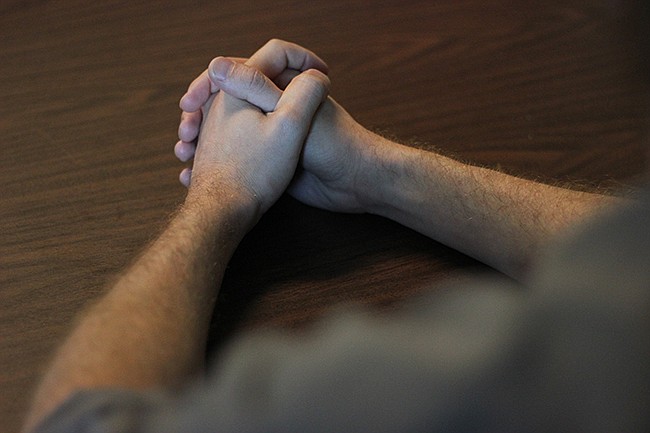
No one bowed their head, clasped their hands, or said “Amen.” For the first time in decades on Monday, the Maitland City Council meeting started without a prayer. In its place: silence.
The moment was a quiet victory for members of one local activist organization, the Center Florida Freethought Community. Working with the support of a Supreme Court case ruling on their side, the group has spent the past year slowly pushing Central Florida cities to either open up their meetings’ opening moments to the input of anyone in their community, or to do away with their prayer-based invocations altogether.
This week, while Maitland works to schedule a discussion to redraft its invocation policy, the city opted for a moment of nothing – the mayor calling for a few seconds of silence once the clock struck 6:30 p.m. to start the meeting.
The Central Florida Freethought Community – a group founded on the premise of maintaining the separation or church and state – first contacted the city of Maitland in May 2014 with a letter asking for one of their members be allowed to offer the invocation at an upcoming meeting. Receiving no response, they wrote the city again last month. This time with strong enough language that it prompted Maitland’s city attorney to encourage the Council to make a move or likely get sued.
“What I know is if we continue to do what we’re doing, we’re going to end up in court,” City Attorney Cliff Shepard said. “And if we don’t do something different then that would end up being a likely outcome.”
In May 2014, the U.S. Supreme Court ruled in the case of Town of Greece v. Galloway upholding the town’s right to hold an invocation to open meetings. But, the ruling stated that the town of Greece’s policy wasn’t unconstitutional because it was “nondiscriminatory” and allowed members of the community of all religious and non-religious views to offer the invocation.
Shepard said that in order for Maitland to stay within the legal parameters set by that case, the city needs to either do away with the invocation, replace it with a moment of silence, or redo its policy to open the invocation to the community as was done in Greece, New York.
“What it means if we have Wiccans or Satanists or secular humanists or fill-in-the-blank with someone who might offend you… they would have the opportunity to give invocation,” Shepard said.
For at least the past three years, Maitland has limited its invocation to be given almost exclusively by members of Council. And according to analysis done by the Free Thought Community, for at least all of 2015, each of those invocations have been skewed toward the Protestant faith.
But members of the Freethought Community argue that the primarily Protestant approach doesn’t accurately represent the religious landscape of Florida.
According to the U.S. Religious Landscape Survey done by the Pew Research Center in 2008, 70 percent of the state’s population is Christian, 6 percent follow non-Christian faiths, and 24 percent are “unaffiliated,” which includes atheists, agnostics or people who say they follow nothing in particular.
And Maitland isn’t the only local city being challenged to change its practices.
Freethought Community board member Jocelyn Williamson said her organization has sent out a dozen letters to communities across Central Florida since last May asking to have the opportunity for representatives of their group to offer an invocation. Some cities, such as Winter Park and Orlando, accepted the requests quickly, with members of the organization offering invocations at their meetings in the summer of 2014. Others, like Maitland, she said, dragged their feet, spurring a follow up letter this summer. So far, she said, Brevard County is the only municipality where legal action has been filed.
Last month, the city of Sanford responded, opening a discussion about the practice with which they screen who from the community they would allow to give their invocation. And on Sept. 14, Freethought Community member David Williamson offered the invocation.
Jocelyn Williamson said the group’s goal isn’t to take cities to court, but to inspire inclusiveness at local government meetings. Having city officials and staff of a singular faith consistently pray at meetings, she said, doesn’t do that.
Williamson said that for many people, including herself, showing up to a government meeting and having to take part in a prayer for a religion you don’t believe in can be uncomfortable.
“[The invocation] needs to be something that brings us all together instead of drawing a line between the community,” she said.
“… I think that everyone should have their beliefs, but there is a time and a place for it. But the question is, is a government meeting the right place?”
Williamson said she personally favors the idea of a moment of silence to start meetings. “Nobody is ever possibly excluded from a moment of silence,” she said. But most importantly, she said, the Freethought Community is fighting for fair representation in invocations, whether those filling the time are religious or not.
“We need to look around the room and realize that we all want our city and community to be a better place … and I think the invocation is a time to reflect on that,” she said. “…But having government officials give their prayers when it’s specifically religious is not doing that.”
Councilman Ivan Valdes, who often offers the opening prayer at city meetings, told the City Council on Monday that he is in favor of the city revamping its policy to allow the community to contribute to the invocation.
“Knowing that these changes were eventually going to hit our little city,” he said, “I would like to encourage the Council to come up with a policy to let it be open to the public citizens to come and sign up so that those who want to continue this process can let it continue.”
The Council agreed to put the item on an upcoming agenda.
To that, the Central Florida Freethought Community colloquially says, “Amen.”