- April 9, 2026

-
-
Loading
Loading
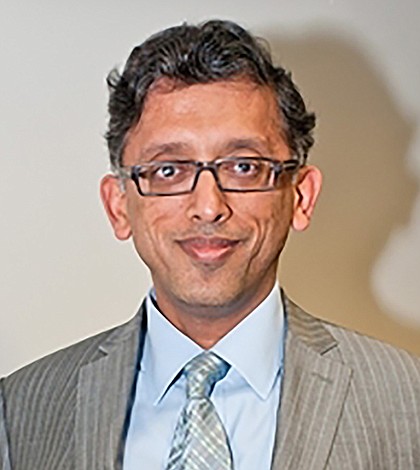
By Dr. Ashish Pal
Cardiovascular Specialist
One of my patients had been experiencing significant pain in her knees and legs for many years. She found this pain increased if she stood for long periods of time at the office or at home doing housework or cooking. The pain lessened if she sat, lay down or exercised, but it never completely went away and always hurt when she was standing. She thought she could be developing a problem with her knees or joints, because she didn’t have any obvious vein issues.
CVI often is associated with varicose veins, which are ropey, twisted and enlarged veins close to the surface of the skin, most common in the legs. Like my patient, you may not have these bulging veins but may be experiencing pain, aching, muscle cramps, tiredness in your legs or restless leg syndrome. People who stand for many hours — teachers, service workers, doctors, nurses, chefs — are more prone to get CVI. In fact, by age 60, 70% of women and 40% of men will be affected. CVI is the cause of greater than 90% of RLS. Studies suggest that three years or more of RLS can increase the incidence of heart disease.
TREATMENT OPTIONS
Non-surgical treatments include sclerotherapy and endovenous thermal ablation (Venefit procedure), a newer technique that uses laser or radiofrequency treatment as an alternative to surgical “vein stripping” or ligation. Heat is directed through a catheter to close up the targeted veins but leaves them in place so there is minimal bleeding or bruising. It results in less pain and fosters a return to normal activity. Laser and RF ablations can treat superficial veins and can cure about 70% of the symptoms. Those who have persistent symptoms have obstruction of the deep veins, which is treated with stents to relieve the obstruction.
The seriousness of CVI increases as the disease progresses so it is important to see a doctor immediately if you have symptoms to get a proper diagnosis and treatment plan.
Dr. Ashish Pal is a graduate of the University of Delhi, New Delhi, India. He completed residency in internal medicine and cardiology at Maimonides Medical Center, affiliated with the State University of New York. He subsequently completed fellowship in Interventional Cardio-Vascular Medicine at the University of Alabama in Birmingham. He specializes in cardiac catheterization, cardiac stenting, as well as carotid stenting.
Pal now offers free vein and artery screenings from 1 to 4:30 p.m. Tuesdays, at the Vein & Cardiovascular Center, 1206 N. Mills Ave., Orlando. For more, call (407) 898-8449 or visit veinguru.com.