- March 20, 2026

-
-
Loading
Loading
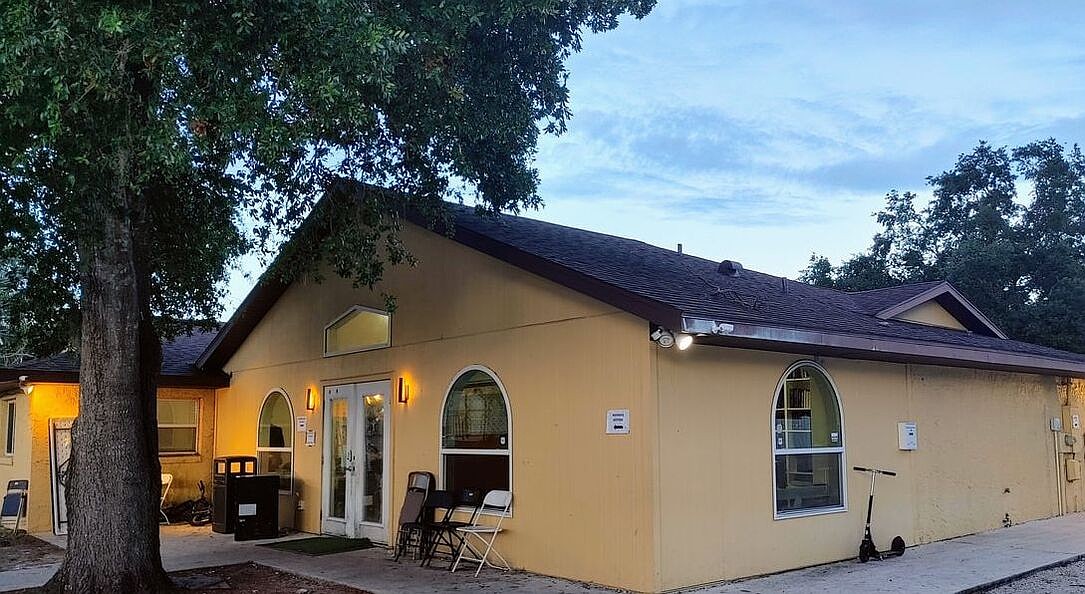
The Orlando Torah Center, an Orthodox synagogue in Dr. Phillips, filed a federal lawsuit against Orange County and the Orange County Board of County Commissioners, claiming it is being deprived of its right of religious expression and exercise.
OTC purchased a property at 8613 Banyan Blvd., Orlando in the Sand Lake Hills subdivision in 2015 that later was legally converted to a dedicated house of worship in 2022, with Orange County’s approval. The roughly .75-acre property is zoned R-1A single-family residential.
With membership doubling within five years, OTC filed an application through Orange County to expand by 9,376 square feet, adding a second floor and a partial third floor to continue providing Orthodox Jews the right to practice their religion.
County commissioners unanimously denied OTC’s request to expand its facility Tuesday, July 1, deeming the expansion to be incompatible with the neighborhood.
In its lawsuit, the Orlando Torah Center asserts the denial violates its rights under the First Amendment, the federal Religious Land Use and Institutionalized Persons Act, and Florida’s Religious Freedom Restoration Act. The case was filed in the U.S. District Court for the Middle District of Florida, Case No. 6:25-cv-014.
“To tell Orthodox Jews who need to worship where they live that their worship is going to detrimentally impact the community is to marginalize that faith community and to send the wrong message about who belongs,” said attorney Roman Storzer, of Storzer and Associates. “Because of the growth of the community and the limitations of the existing facility, it no longer serves as an adequate house of worship. They need this expansion in order to be able to continue (practicing their religion).”
With most OTC attendees living within the Sand Lake Hills, its location is critical. Their religious beliefs do not allow them to drive on certain holidays and on the Sabbath, a day of religious observance and abstinence from work.
“They need a place of worship that they’re able to walk to,” Storzer said. “You might have other religious groups that drive, five, 10 miles to go to church, (but) this community needs to be able to walk to their synagogue, and that’s why the facility is located there.”
The expansion is needed as the community grows. The property currently cannot accommodate its congregation.
According to the complaint filed, “the religious experience of OTC’s attendees is significantly diminished by the lack of space in the sanctuary, since the overcrowding prevents worshippers from focusing on the prayers and detracts from the worshipful atmosphere. Because of this, OTC has had to limit or cancel various religious programs it seeks to offer, like youth programs, Shabbat groups, holiday events and more.”
Some residents of Sand Lake Hills complained the house was not used for its intended purpose of being a residence and it was a burden on the neighborhood.
During the pendency of the 2024 application for expansion, a neighbor-objector said “my personal feeling is that Orthodox religion (be it Christian, Jewish, Muslim, etc.) oppresses women, girls and the LGBTQ community while unnaturally elevating the status of heterosexual men and boys. While I respect that my neighbors do not all share my views, I oppose actions such as the expansion of this site into a property that dominates this residential neighborhood, because I feel it will diminish diversity and equality as well as detract from the residential nature of this subdivision.”
Storzer said that assertion is untrue.
“It is a use that is allowed on this property,” he said. “The zoning for this property allows a place of worship as a special exception use, so it’s not like this is not allowed.”
Storzer said there is a middle school and day care center in the neighborhood with the same conditions.
“If you tell (Orthodox Jews) they cannot have a synagogue within their neighborhood, you’re essentially telling them that Orthodox Jews are not welcomed in the neighborhood, and that goes against all of our best traditions, protection of religious freedom, and tells this community that they’re second citizens,” Storzer said.
He said the center wishes to live in harmony with its community, though the opposition seems to be directed toward what is going to be worshiped there, not what is going to be built.
“The center is looking to move forward to do what it can to preserve its rights,” Storzer said. “We’re hoping for the court approval to allow the center to be able to build and to be able to have a functioning synagogue.”
County Commissioner Nicole Wilson did not return requests for comment by press time Tuesday.
TIMELINE 2011: Orlando Torah Center was founded. 2015: OTC purchased the property at 8613 Banyan Blvd., Orlando in the Sand Lake Hills neighborhood. 2018: Orange County’s Code Enforcement cited OTC for operating a religious institute without obtaining a special exception. 2019: The county filed a lawsuit against OTC to prevent it from operating on the property. The court denied the injunction saying the county has not demonstrated any negative impacts OTC has had on the neighborhood. 2020 :OTC obtained a special exception to operate its institution on the property. 2022: The property was legally converted from a residential home to a dedicated house of worship. 2024: OTC filed an application with the county to expand its facility to better accommodate its congregation. July 1, 2025: After multiple public hearings and negative feedback from Sand Lake Hills neighborhood, the application was denied. The county claimed OTC to be incompatible with the neighborhood in which it resides. July 31, 2025: OTC filed a federal lawsuit against Orange County and its Board of County Commissioners. |