- February 5, 2026

-
-
Loading
Loading
Saying goodbye is never easy — especially when it’s to something you love or something you’ve experienced enormous amounts of success in. What might be even harder, however, is choosing the right time to do it.
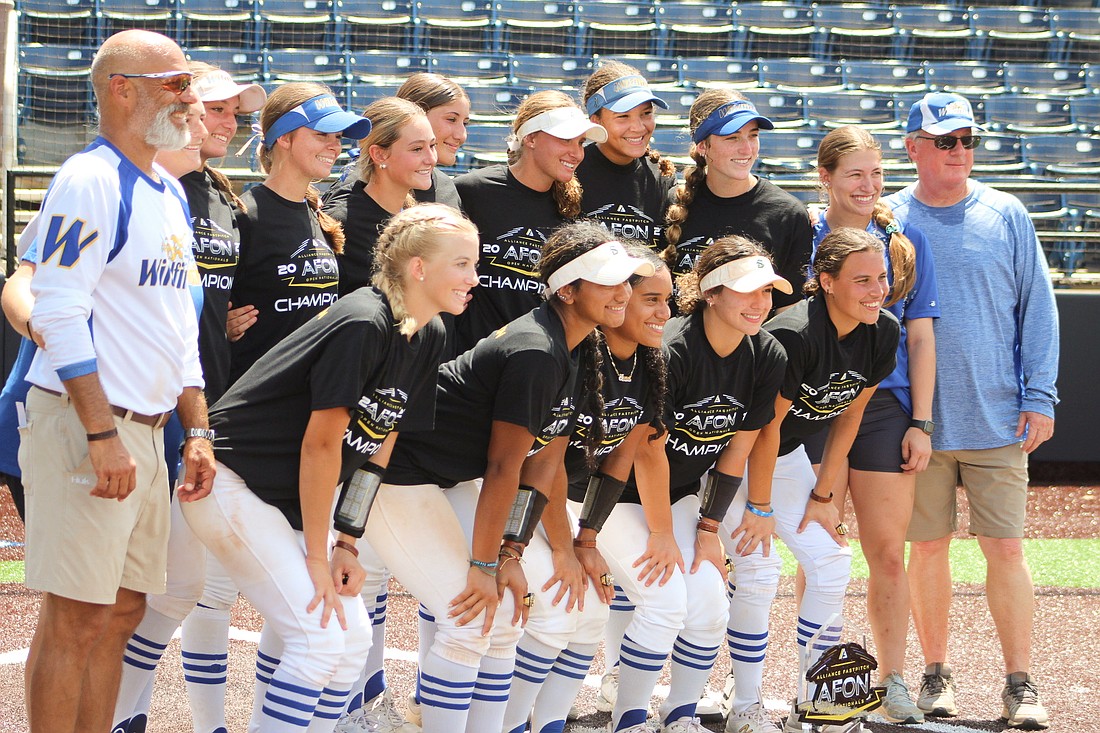
Following the conclusion of the 17th season of doing what he loved to do at the highest levels, George Paulson took a look at the softball club he founded and coached, Windermere Wildfire Paulson, assessed the current landscape of the club — and travel ball as a whole — and considered the stage of life he is personally in and landed on this moment to say goodbye to the softball field and bring an end to his team.
“There are a few different reasons why the time felt right to say goodbye,” Paulson said. “First, on a personal note, I’m getting ready to retire from work, so having this be part of that transition makes sense to me and my family. Another of the biggest reasons why the timing felt right is that this group we’ve been coaching has pretty much graduated out with 10 or 11 of the 14 total girls heading off to college in the next few weeks.”
Facing the process of overhauling his roster — an undertaking that involves evaluating and accumulating talent at a younger age group to begin a four- to five-year development journey — along with the major lifestyle shift of retirement and the changing landscape of high-level travel ball, Paulson decided this was the right time to say goodbye.
“Compared to our original group of girls, it’s gotten a lot harder to go back to the younger age groups and build the team back up,” he said. “What it boils down to is that younger parents and their kids don’t really know who we are, because they’re not following the teams in the 18-and-under age group, right? So, they don’t know what our reputation is. Not to mention, now, we’ve seen these bigger organizations come in and almost become franchises, with their bright and shiny brands that are more known than the Windermere Wildfire. That’s the kind of battle we’d be facing. Doesn’t mean we couldn’t do it, it just means it would take a little bit longer to rebuild.”
With the Windermere Wildfire, Paulson built a national powerhouse. Under his leadership, the team had more than 200 players go on to compete at the collegiate level. It claimed three PGF Florida State Championships and three national championships — the 2021 and 2022 USA Softball titles and the 2023 AFON National title.
Paulson’s process for developing championship-winning programs and college softball-bound players can be boiled down to three key pillars: people, partnership and pressure.
Paulson will be the first to tell you, without his people — his team of Wildfire assistant coaches — this club wouldn’t have reached the heights it did. Paulson said Mike Lang, an assistant coach for the original Wildfire team, made him a better coach. David Taylor, an assistant coach for the Wildfire’s second and third teams, headed up the college recruiting process, and Megan McReynolds, a former player on the original Wildfire team, returned to help lead the third team while lending her expertise by working with the organization’s pitchers and catchers.
With the right people guiding the way, the next question that needed to be addressed was the message they sent the players. For Paulson, that message was as clear as it could be: Put the partnership with the team above your personal pride.
“The team comes before the individual,” he said. “The way I’ve described that to them is, ‘Nobody cares about you except for your mother and your father.’ Which, I know sounds harsh, but it’s supposed to sound that way to get their attention and help them understand that playing for the team is how we become successful. Think about it: When a player is up to bat, if they’re successful for themselves, there’s really only two other people that are happy with that — your mother and father. Everybody else — the coaches, the other players, the other parents — sure, they want you to be successful but in a way that helps the team.”
This partnership approach to the game of softball not only helped the team succeed but also benefited players and how they dealt with pressure.
“Our goal was to get the perspective in their minds that when they are playing for the team, they are being successful individually as well,” Paulson said. “An example of that would be, there’s a runner on third with less than two outs. All the team needs is a ground ball to second base and we score the run. When you play selfishly, all you see is that ground ball hurting your batting average, but from the team side, that ground ball is a win. Playing for the team takes pressure off a kid. Think about it, if you take the expectation of getting a hit away and say, ‘We don’t need you to get a hit here, all we need is for you to execute the game plan.’ That immediately takes pressure off of a kid, which for us was big, because of the level we played at. A lot of the times, it felt like if we weren’t playing for a some sort of championship; we were performing in front of college coaches to get recruited.”
Paulson points to three moments with the Wildfire — starting with a moment that came before the inception of the Wildfire.
“The whole idea for the Windermere Wildfire travel team actually came from our Windermere Little League team,” he said. “Remembering that Little League team and not only the success we had winning a Little League State Championship — and being a game away from the World Series — with that group but also the group that came after that made it to the Little League World Series about 14 or 15 years ago. It was cool to see Windermere Little League thrive based on those kids becoming better players and seeing their hard work, that included playing travel ball, pay off in Little League.”
The second point of pride for Paulson again looks beyond the team’s trophy case and, rather, at the remarkable young women who have represented the club.
“I would say the biggest highlight for me has been the number of kids who have gone on to play in college and get their education paid for; something only 1-2% of high school softball players get to experience,” he said. “For there to be roughly 200 kids across the whole Wildfire organization who have gone on to play college softball and have that experience is the biggest highlight I could ask for.”
His last point strayed even further away from the accolades and records. What he feels a sense of pride about is the attitude and toughness his teams played with.
“Whether they were national championship teams or not — we’ve always played with a little bit of a chip on our shoulders,” Paulson said. “I’ve always felt we had to fight for respect, so we’ve always had to be a gritty and tough team. … I think that’s the thing I’m proudest of.”