- April 2, 2026

-
-
Loading
Loading
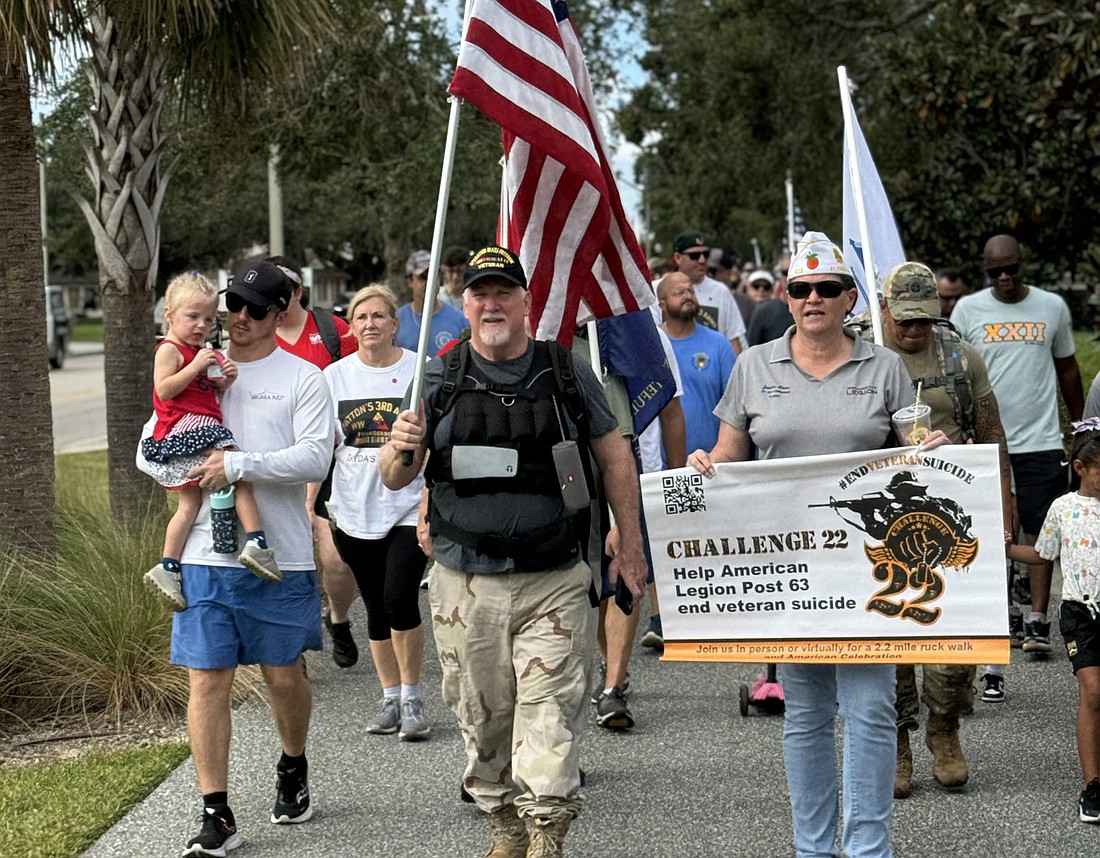
Challenge 22, a Winter Garden nonprofit organization to end veteran suicide, wants to expand nationally.
Established in 2017, Challenge 22 is a volunteer-led organization committed to helping veterans and first responders fight post-traumatic stress by raising money and partnering with organizations to provide them with care.
“We look at it as a conduit to connect the funds and the clients with veterans to these organizations,” said Kurt Gies, a 25-year Navy veteran and founder of Challenge 22. “We’ve got nonprofits out there that we have partnered with who are doing amazing work and getting amazing results. It’s just that veterans don’t know about them and the communities don’t know about them, so they struggle with clients and they struggle with funding.”
Seeing how successful Challenge 22 has been in the Winter Garden community and raising more than $650,000 since its inception, Gies believes it can expand and help veterans across the nation.
SPREADING AWARENESS
The idea of this nonprofit first came about after Gies learned about a study made in 2012 stating that 22 veterans commit suicide a day.
“I was like, ‘This is ridiculous; this is not happening,’” Gies said. “I couldn’t believe it.”
He then started asking other veterans in Winter Garden if they heard of that statistic; no one knew about it. That’s when he said he realized if veterans themselves don’t know about this statistic, then civilians wouldn’t know, either.
With the help of a Marine he met while in Winter Garden, he created a 2.2-mile walk, which was an opportunity for veterans and first responders in the community to walk together to raise awareness.
The first Challenge 22 walk took place in 2017.
“Since (then), we’ve raised (more than) $650,000 and have basically worked with about 10,000 veterans and first responders, family members,” Gies said. “(We) haven’t had a single reported suicide.”
With this success, Gies thought the organization could grow tremendously — that it could do so much more.
“So we talked as an organization last year about shifting to a more national focus and instead of raising $650,000 over eight years, maybe we can raise $10 million a year and help these organizations in ways that they’ve never seen before,” he said.
Challenges won’t stop him
But Gies was faced with a hardship before being able to move forward working full-time.
In the summer of 2024, he had a heart attack and had to have open heart surgery.
“I had what they considered a miraculous recovery,” he said. “They did five bypasses on me.”
Gies said the doctors intended for him to be in the intensive care unit for at least two days and a full week in the hospital under observation.
“I was home on my couch in like, three, four days,” he said.
He said the day he had a heart attack was the same date as his father’s death.
“As they were wheeling me into the (operating room), I was praying and I said, ‘Well, you know, if you’re going to take me today, can you wait til after midnight? I don’t want to die the same day my dad did,’” he said.
While he was in the ICU, Gies said he felt a sense of peace overcome him.
“I really have never felt (that) before in my life, and I just didn’t want to let go, I was like ‘I’m done,’” Gies said. “At that point in time, I was actually having an encounter with Jesus. He said, ‘Kurt, I’ve got work for you to do, and you need to take a breath.’”
Kurt shut down his real estate and construction companies and has been working on Challenge 22 full-time since.
Expanding the nonprofit
Gies is confident the nonprofit can expand nationally and help more veterans and first responders than ever before.
“This model is very simple, and it works, and we’ve got it in place because all of our providers (nonprofits) have the ability to work with people anywhere,” he said. “Some modalities can be done over the phone, over the internet. Sometimes organizations will fly clients out into their locations to do their events. …We feel it’s a model that can be easily duplicated.”
Gies said communities need this all across the country — including places such as Texas and California.
“We need to do these things everywhere, because this problem persists everywhere,” he said. “A lot of these vets never come home. They’re home physically, but in their mind, they’re still where they were at. We need to break that chain, and the community is the only way we’re going to do it.”
Gies said Challenge 22 already is developing a template for the other towns and cities.
The organization will provide videos for them of how to go about the process, to make it as easy as possible.
“The goal is to raise as much awareness as we possibly can and also to raise funds as much as we can, because it’s very expensive, the modalities we use,” Gies said.
Currently partnering with 14 organizations, Challenge 22 allows veterans and first responders to pick what organization they want to go through and what they think will help them the most. If it didn’t work, they have a chance to pick another program to go through.
“Our mission is to end veteran suicide, but it’s also to fully reintegrate our heroes and our warriors back in society as fully functioning members,” Gies said. “When we have that done, then we solve the problem.”
In the next two years, Gies said he will not be taking a salary. He wants all funds received to go to organizations meant to help veterans and first responders.
“What we’re trying to tap into is that opportunity to say thank you, the opportunity to volunteer and help, the opportunity to donate and get involved in the cause.”
PARTNER ORGANIZATIONS