- March 27, 2026

-
-
Loading
Loading
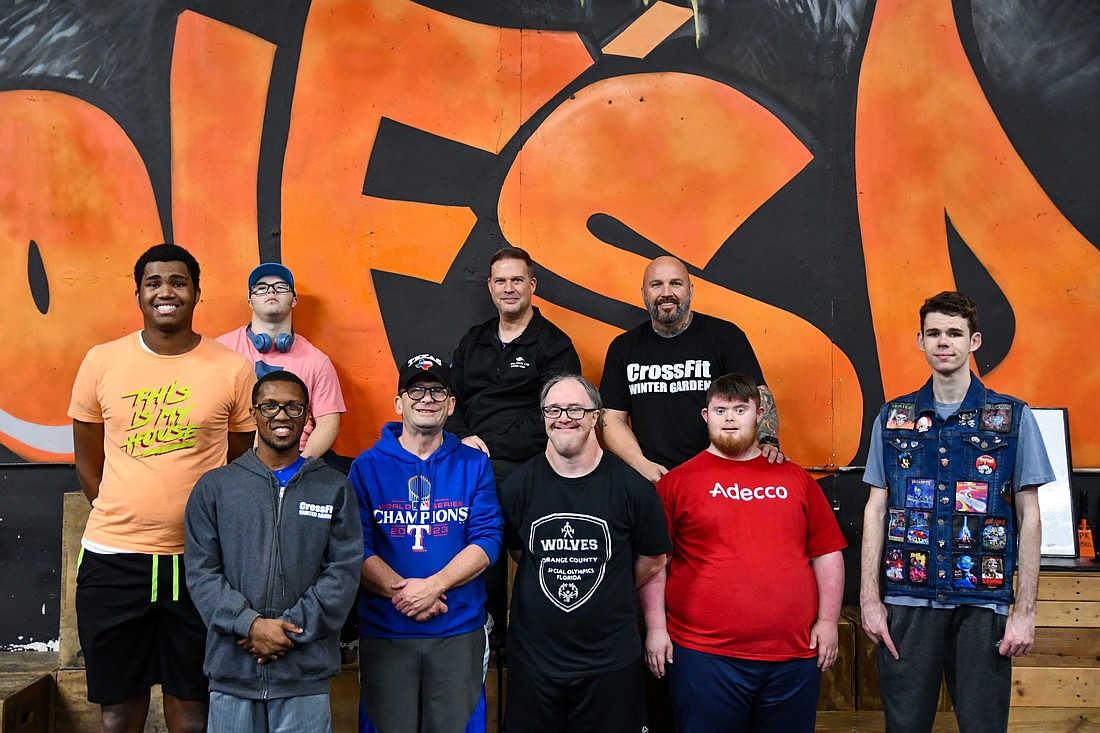
At 7:30 p.m. every Tuesday, Special Olympics weightlifters flock into Lee Lovette’s Winter Garden CrossFit Gymnasium.
Lovette starts work at 4 a.m. Tuesdays and coaches 12 classes before the Special Olympics powerlifting team’s practice even begins, but his energy and excitement doesn’t waver for the final class of the day.
He had been looking forward to it all day.
Everyone pushed themselves, they worked hard to deadlift, followed by quick HIIT workouts. After training, the group closed off the night with a round of musical chairs — capturing the essence of the team through the smiles, cheers and competitive nature.
Yes, it’s a space to train, but most important, Lovette wanted to foster an environment for anyone to come to be active and have fun, and that’s exactly what he has done.
Special Olympian John David Haywood loves being a part of the team for those reasons.
Haywood has Down syndrome and has been a member of the team since it began in 2017. Sarah Haywood, John David’s mom, said the family tried a different gym closer to their house, but it wasn’t the same so they continued to make the 30-minute commute.
“It’s the absolute feel of a family at that gym,” she said.
Lovette refers to Haywood as “Lord Haywood,” after discovering his siblings gifted him a plot of land in Scotland, which legally makes him a lord. Sarah Haywood laughed at the memory of the nickname; his siblings made matching shirts to commemorate the title.
“There are little inside jokes with everyone,” Lovette said. “That’s family.”
It’s not only the family environment that has kept John David Haywood going to practice but also the confidence he’s gained from it.
“We’ve always pushed him to do things, but he was the one who showed the interest in CrossFit,” Sarah Haywood said. “It’s really made him healthier.”
In addition to being a Special Olympian, John David Haywood attends Lovette’s CrossFit classes three times per week. Recently, John David Haywood had a cardiac evaluation, and the doctor was shocked to hear what he was doing because of how rare it is for someone with Down syndrome to do CrossFit.
He has fallen in love with CrossFit and working out through Lovette’s gym. The first item of clothing he brings on every vacation is his gym clothes.
“He has to work out on vacation,” Sarah Haywood said.
When Lovette moved to Winter Garden in August 2016, the idea for a Special Olympics Florida team was tucked away in the back of his mind. He felt a strong pull to form a team, but the plan had not fallen into place yet.
In a year, the plan became a reality.
Before retiring, Lovette worked as a police officer and later as a crisis intervention officer, often working with individuals who were facing mental health challenges and diagnosed with special needs.
“That was part of my draw,” he said. “But honestly, I just saw a void.”
He questioned why in a city such as Orlando, a hub for Special Olympics, there was no dedicated special-needs powerlifting program. Lovette couldn’t understand it, so he dedicated himself to creating one but not just any program, the biggest and the best.
The original roster of his Special Olympics team was small enough to fit inside of a minivan. The photo of the original six athletes hangs over the doorway in Lovette’s office.
It serves as a reminder of where the team began.
Today, almost a decade after the team’s beginning, the Special Olympics’ roster has grown to more than 30 athletes, and it’s supported by 18 volunteers and coaches. On a busy night, around 50 people pack themselves into Lovette’s gym.
“It’s controlled chaos,” Sarah Haywood said.
Powerlifting might have been the original purpose of the program, but it isn’t the heart of what Lovette’s doing. He knows the athletes aren’t going to become world-class powerlifters by practicing one day per week, but the mental impact is far greater.
Lovette and parents see how each athlete looks forward to the day every week, and training nights become added motivation and structure at home.
Sarah Haywood admitted some nights she doesn’t want to make the commute after working all day, but when she mentions skipping practice to John David, he says a resounding, “No,” and pushes to go.
Inside of the gym, the energy reflects how special the “family” is to each athlete. They greet one another with smiles, hugs and laughter, and celebrate their birthdays together almost weekly. Sarah Haywood said they attended a friends-giving at Thanksgiving time with the gym members.
“We celebrate everything,” Lovette said. “Getting jobs, independence, accomplishments. We’ve become a gigantic family.”
It’s the family that keeps the Special Olympics Florida team running. With a hefty roster number, Lovette relies on his volunteers to give their time consistently.
“Without them, I could never run this program the way I do,” he said “Every night after practice, I tell the athletes to thank their coaches.”
The volunteers aren’t giving their time for any other reason than loving it. Lovette said he has people from all age ranges, a varsity soccer player at West Orange High, members of his CrossFit classes and even people who aren’t a part of the gym in any way.
The athletes look forward to seeing their coaches every week. When one has to miss, Lovette knows he’ll have a few athletes asking where they are. The consistency matters and it’s what’s created such a beautiful environment.
“It’s not a rotating door of people trying to check off hours,” Lovette said. “They’re here because they want to be.”
While the volunteers might be the backbone of the program and assistants in keeping it running, the team would be nothing without the consistent athletes who show up week after week.
Unlike many Special Olympics programs that train seasonally around the competition schedule, this team trains year-round, and Sarah Haywood believes it’s great. She said if they took breaks in lifting, John David Haywood and others would lose some of their skill. Instead, they are able to maintain it.
It also means Lovette holds his athletes to a higher standard since they are practicing all year, compared to others who take a break from lifting to pursue other sports.
Special Olympics powerlifting season officially begins in August and training heightens near area meets. Athletes compete in either combo two — bench press and deadlift — or combo three — bench press, deadlift and back squad. Each lift is judged strictly.
“Powerlifting is probably one of the strictest sports when it comes to rules and technique,” Lovette said. “They’re held to a high standard, because it can be dangerous.”
The team has racked up quite a medal count. Over the years, they’ve earned more than 100 gold medals. In their first area competition, after training together for only three months, they brought home 21 gold medals.
“A lot of people can’t believe how much these kids can lift, because we’ve got some big lifters in there,” Sarah Haywood said.
Despite the abundance of success, frustration still is present, especially when it comes to state qualification.
This year, 24 of the 33 athletes qualified at area games but Orange County was allotted only six spots for state competition. It always has frustrated Lovette that few actually can take their talents to the next level, and it gives the team an extra edge to work harder.
At states, Lovette’s team was met against competition whose strength far exceeded their capabilities. He told his athletes that first place would be out of reach, but they still should push themselves, and it paid off.
“I had three or four boys take second place,” he said. “I told them, ‘In the state of Florida, you are the second strongest lifter in your weight class, and that’s pretty cool.’”
To further support the athletes, Lovette created the gym’s own nonprofit: the Charity Network. All of its proceeds go directly back to the athletes.
Every lifter receives custom uniforms, shoes and a Wolfpack backpack. The nonprofit is also used to cover travel expenses. When they went to Atlanta three years ago, they paid for everyone’s plane tickets, dinner and aquarium visit. It was to give them life experiences.
For some, it was their first time leaving Florida or being on a plane. Sarah Haywood had fond memories from the trip. Her sister-in-law made the commute there from Nashville, Tennessee, to celebrate John David Haywood’s accomplishments.
Sarah Haywood was excited from the memory of a coach bringing her 4-month-old baby on the trip to Atlanta. To her it was special seeing how everyone came together to support the athletes — no matter the distance.