- March 27, 2026

-
-
Loading
Loading
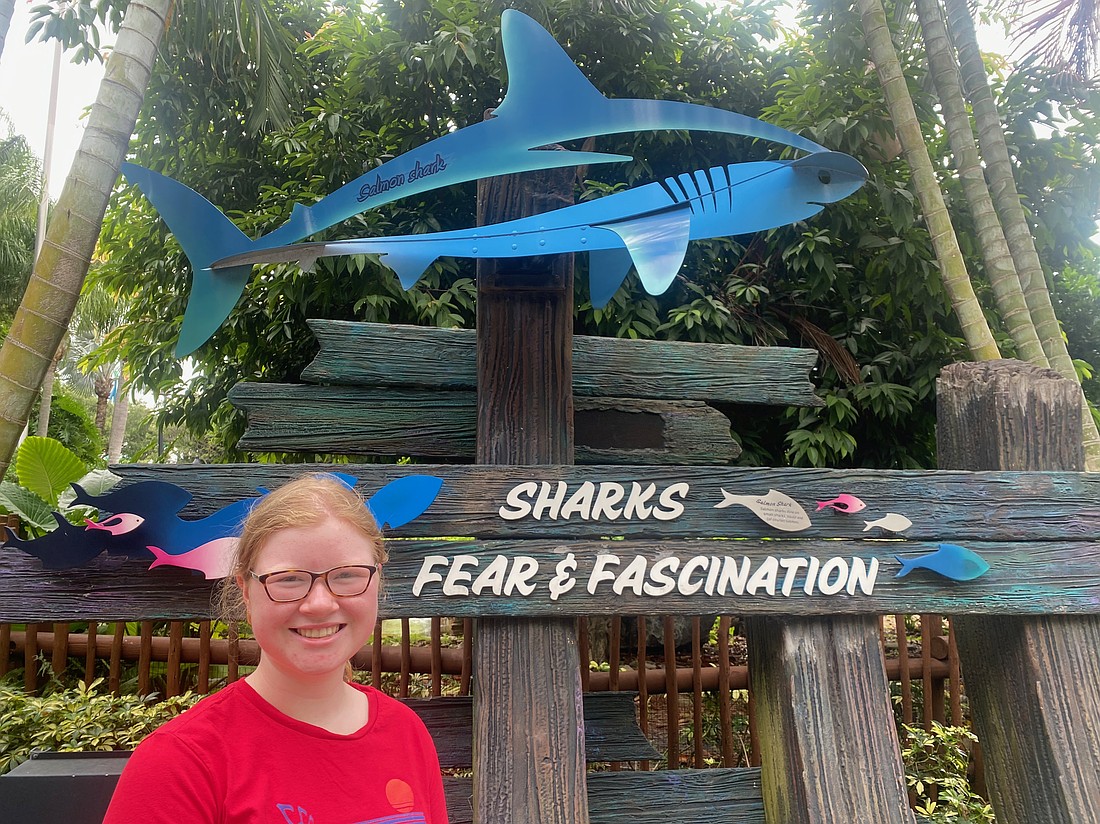
People around the world have confessed to a fear of the creatures that lurk underwater. According to Psychology Today, 51% of Americans are afraid of sharks. This phobia might be even more intense for those living near the water, including many Florida residents.
Sharks have frightened adults and children for decades, but are these fears warranted? While their sharp teeth produce a sinister facade, sharks are vulnerable just like any other animal. They play an important part in the ocean’s ecosystem, despite their portrayal as vicious beasts.
VARYING ROLE OF SHARKS
Sharks are fish — they have scales and are cold-blooded. They use their fins and tail to move from the surface of the water to depths of thousands of feet. Some are mere inches long, while others are the size of a school bus.
In movies and on TV, sharks often are villainous. The “Jaws” movies, directed by Steven Spielberg, follow the story of shark attacks on a peaceful, seaside town. Since the 1975 debut of “Jaws,” sharks have terrorized horror movie characters for decades.
While they’re notorious for hunting humans, sharks’ skills usually are reserved for other fish. Their predatory instincts have placed them toward the top of the food chain. What might seem alarming to humans actually prevents overpopulation and keeps marine ecosystems healthy.
BREAKING SHARK MYTHS
One of the most popular rumors about sharks is they can smell blood. Many assume if they bleed in the water, they immediately make themselves prey for a shark.
While sharks are able to smell human blood, their ability is not so simple. Sharks have a remarkable sense of smell and are able to detect different amino acids in the water. Many of those amino acids are found in the blood of fish as well as that of humans. People are not, however, natural prey for sharks. They usually use the scent of blood to detect bleeding fish that would be easy to hunt.
Another myth is that sharks, as a top predator, are invulnerable and cannot be stopped by humans or other marine species. This especially is promoted by the media’s portrayal of sharks as large and powerful.
To the contrary, sharks do have a natural predator. Orcas, or killer whales, are apex predators like sharks and have been known to prey upon them. Orcas hunt in pods and easily rival sharks, who travel alone. Even the infamous great white sharks are vulnerable to killer whales.
Furthermore, not all sharks are near the length of great whites. Most people assume they are about 15 feet long because of the notoriety of sharks that size. However, there is a wide range of shapes and sizes of sharks. Dwarf lantern sharks only are about as big as a human hand. Whale sharks are quite the opposite, being able to reach sizes of up to 60 feet.
Shark sizes actually are related to how different species hunt. Whale sharks conserve their energy, simply swimming with their mouths open to consume food. Because they use so little energy, whale sharks are able to become quite large. Average-sized species use strategic hunting techniques that use up more energy.
THE TRUTH ABOUT SHARK ATTACKS
Sharks do not target humans. Shark attacks are infrequent and can occur for a variety of reasons. Often, humans and the senses sharks use to hunt clash and result in the several dozen incidents that occur each year.
Sharks help preserve ecosystems by preying on dying or sick fish. While humans cannot detect ill fish from 100 meters away; many sharks can. Fish utilize lateral lines, a form of motion detection, which are part of their nervous system. Lateral lines can be used to detect prey and avoid obstacles while swimming. The lateral lines produced by a healthy fish are different from a sick one, because dying fish usually are struggling to swim. Sharks pick up on those lateral lines and gravitate toward the dying fish because they are easier to catch.
Humans unknowingly produce lateral lines sharks are able to detect. Splashing and moving in the water resembles the lateral lines of dying fish. As a result, sharks might mistake people for their usual prey.
Shark attacks also can be the result of misidentification. Many sharks naturally prey upon seals and sea turtles and use hunting techniques to surprise them from below. Looking up, a person on a surfboard can look similar to other marine animals — especially from a distance. A shark might assume a person is a seal or turtle and attack.
CAUTION AND CONSERVATION
Learning about the science behind shark attacks can help stop them in the future. Before going to the beach, people should know whether lifeguards will be present and whether sharks have been known to travel near that coastline. Simple research like this can save a number of lives.
Sharks are amazing creatures that have survived for centuries before humans existed. So, with humans being the dominant species, it is important for us to learn about and care for the ocean. Recycling, participating in beach cleanups and conserving energy usage all are little things that have a big impact.
More than anything, learning respect is essential for the survival of marine life and humans. Sharks are not how they are portrayed in movies. They still are wild animals, and the International Union for Conservation of Nature has determined about one-third of sharks are endangered. This threat of endangerment and humans’ fear of these magnificent creatures will not change unless we actively help to save the environment.