- March 21, 2026

-
-
Loading
Loading
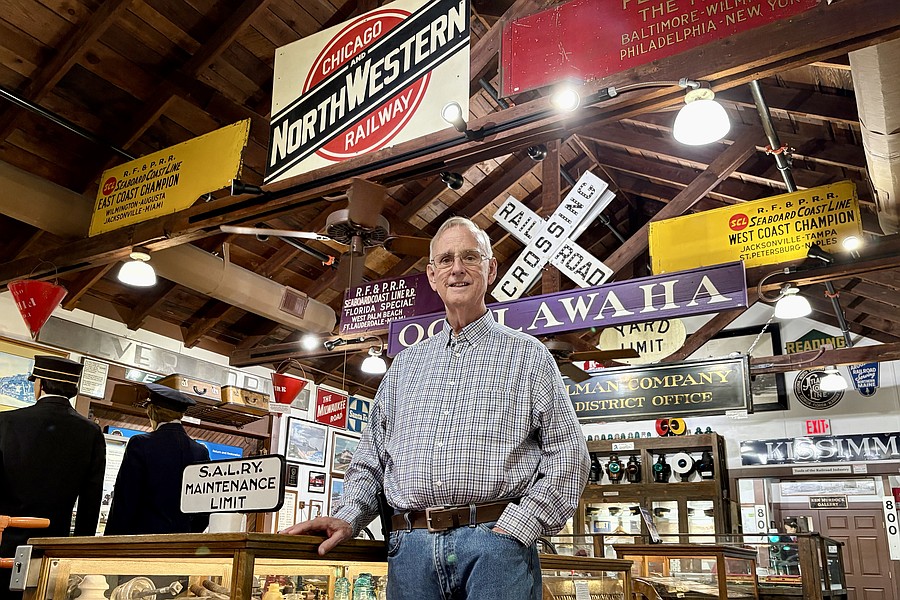
Ask Phil Cross any question about the history of local railroading and he immediately will give you the answer.
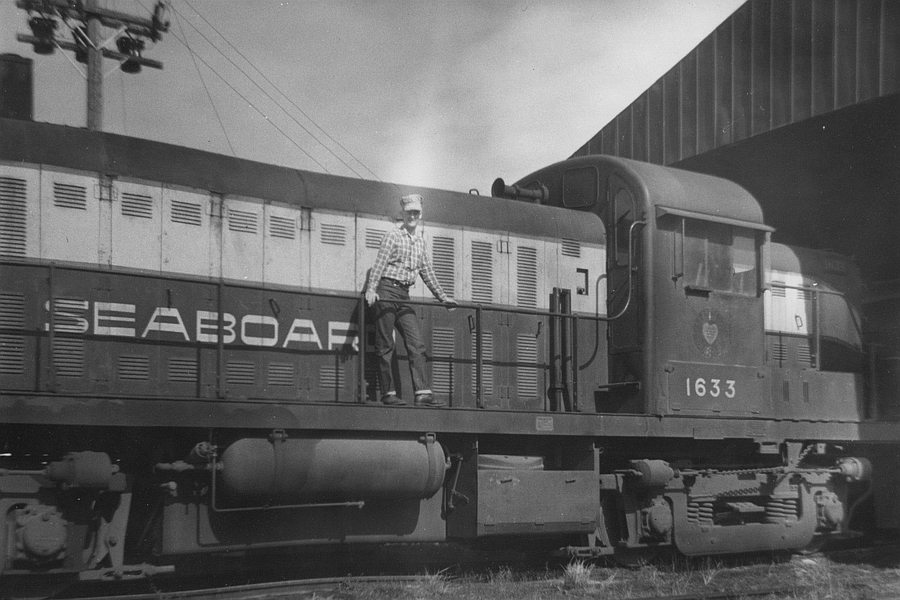
By the age of 17, Phil Cross was quite knowledgeable on Central Florida’s railroading history.
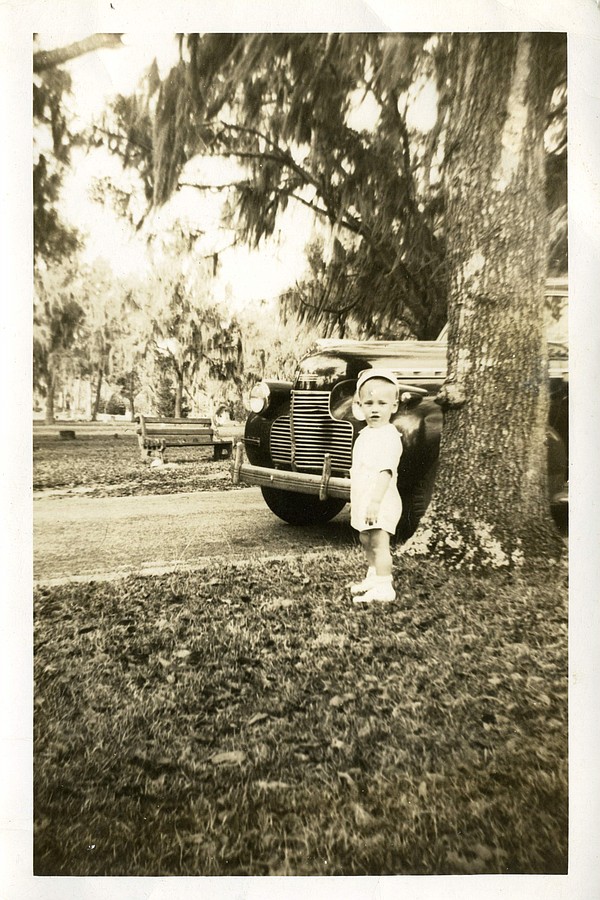
A young Phil Cross grew up on Fourth Street — renamed Tubb Street in 1972.
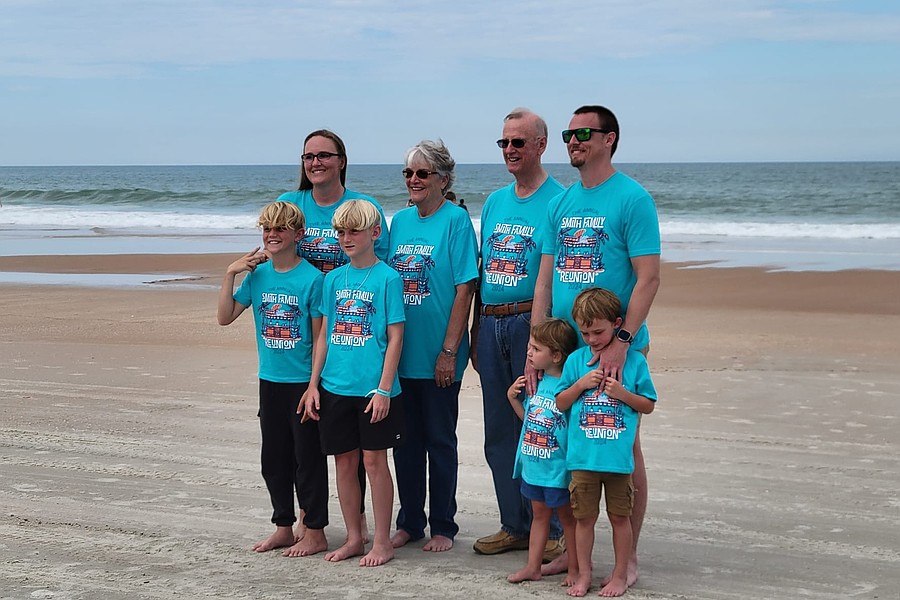
Ann and Phil Cross, in the center, took a group photo with their daughter, Elizabeth; son, Fred; and four grandchildren during a Smith family reunion.
Editor’s note: Way Back When is an ongoing feature that records and preserves the stories and memories of lifelong West Orange and Southwest Orange residents.
Phil Cross has been fascinated with locomotives and railroading since he was a young lad living in Oakland and frequently got invited to hop aboard a Saturday train headed to Ocoee and back.
Now 80 and living in Winter Garden, Cross still holds that same fascination with trains and can rattle off facts and statistics about the local rail history.
Cross was born at Orange Memorial Hospital in Orlando and spent his youth in Oakland. He moved a few miles east to Winter Garden when he married Ann Duppenthaler in 1973.
Cross loved growing up in Oakland.
“The streets were dirt, and you didn’t lock your doors; you might throw the latch on the screen door,” he said. “It was a small community, it was a safe community, crime was unheard of. … You went to church in Oakland and went to school in Oakland and shopped in Oakland. You stayed pretty much close to home.”
Oakland students attended Tildenville Elementary School from first through sixth grade and Lakeview High School from seventh through 12th. Cross graduated with the Class of 1963. Educators who played a role in shaping young Phil were Lucille Drieschef, Hannah Burgess, Ms. Johnston, Janet Waters, Myrtice Hurley and Louelle Akin. Annie Connell was Tildenville’s principal. At Lakeview, Cross recalled John Rees and Jim Higginbotham were principals and Ted Wiedenbeck was assistant principal.
For fun, Cross said, he and his friends — which included David Dobson, John Duggan, Charles Arrington and a cousin, Jerry Smith — fished in Lake Apopka and Johns Lake. When they were older, they had a boat they kept at the Killarney Fish Camp and went out on the water from there.
What he really loved, though, was riding the rails.
“The most fun thing to me … I got to ride with the train for about six years,” Cross said. “It started when I was 10, 1955, and it lasted until 1961 when they changed train masters and he didn’t approve of that. I would ride on Saturdays into Ocoee and back. They were freight trains. I sat in the cab in the brakeman’s seat. Just a lucky kid. And sometimes they came to Winter Garden and Ocoee every day, and sometimes they would go back to either Killarney or Clermont to service packing houses after they came here. … I would ride from home either to Killarney or Clermont with them during the week sometimes. Dad knew all the crew.”
Growing up in a time when the youth had to invent their own entertainment, Cross said it was fun to load up a car and drive on the “rollercoaster road,” later named Highway 50 (and now Colonial Drive).
“There was a road on top of the hill, a clay road, Fosgate Road, and to the top of that there was Fosgate Groves barn,” he said. “You could pull up and turn the car and look east and watch the lights come on downtown Orlando at dusk.”
THE CROSSES OF OAKLAND
Cross’ father, Fred Cross, made a name for himself in the early days of Oakland. Fred was 2 when his parents and siblings moved to Oakland in 1900. As an adult, Fred Cross served four terms on the Oakland Town Commission from 1957-65 and was a three-term mayor in the late 1960s. While mayor, Cross oversaw improvements to the town’s water system. Oakland’s Cross Street is named for the family.
Phil Cross’ parents, Fred and Florine, were married in 1926 and remained devoted to each other for 64 years until Fred Cross’ death in 1990. They built their own home in Oakland in 1937, probably after living with Fred Cross’ parents for the first decade of their marriage.
Fred Cross was a truck farmer before converting some of his farmland to citrus.
“Mom and Dad had 22 acres of land, what my granddad had, all within Oakland, and the majority of it was down on Lake Apopka,” Phil Cross said. “There was a four-acre block by the railroad, and then north of that was a two-acre block and then north of that was the rest of the acreage.”
Growing up an only child had its advantages, and Phil Cross frequently accompanied his father in the groves.
“I always liked being with him, either hoeing trees, mowing or discing, or chopping, whatever he did,” he said. “We dug them up by hand. … He did his own grove work. I enjoyed working with my dad, citrus wise and history wise.”
Phil Cross said he gets his love of history and love of trains from his father, who always was sharing interesting facts.
“My dad was kind of a historian; he loved history,” he said. “He never wrote anything down. He was in Oakland for 90 years. He witnessed a lot of things that happened. He remembered he and my granddad would go twice a year in a two-horse wagon to Orlando to Bumby Hardware. It would take them 16 hours to make the trip going to buy farm supplies. It was just dirt ruts. There weren’t any paved roads at that time.”
Trips to Orlando were necessary because local businesses didn’t offer the necessary tools, equipment and other pertinent merchandise.
Oakland stores included B.N. Gulley Hardware and Dees Grocery.
“Gulley also sold cold drinks and candy and crackers,” Phil Cross said. “We’d go up there and shoot the breeze. He had a bench outside, and we’d hang out. They’d play checkers. Mr. Gulley was the first person to have a TV in Oakland, around 1954. He had it at his house, and that was a big deal to get to go to his house on Saturday night and watch the ‘snow.’
“Time moved on, and he got a TV at his store, and around 2 o’clock on Saturdays, everyone would gather around to watch the wrestling match,” he said.
There weren’t many dining options in West Orange County when Phil Cross was growing up. In the 1950s, after Highway 50 was built, The Ranch House (now Country House Restaurant) opened. Howard’s Restaurant operated on North Lakeview near Division Street as well.
Prior to the construction of Highway 50/Colonial Drive, County Road 438 (now State Road 438) was the only way to get from Oakland to Orlando. Locals know it as Old Highway 50, the road north of Colonial that runs east and west from Oakland into Lake County. Phil Cross remembers when it headed east (now Oakland Avenue), turned north (now Tildenville School Road) and then east (now Brick Road) and went through downtown Winter Garden (now Plant Street) and continued meandering through Ocoee at Minorville and into Orlando.
BUILDING A FUTURE
Prosser’s Texaco Station on Dillard Street in Winter Garden was the hangout for the younger generation in the late 1960s and early ’70s, and it was there that he met Duppenthaler, his future wife. After about three years of dating, the two tied the knot.
Phil Cross followed in his father’s footsteps when it came time to choose a career path and graduated in 1967 from Florida Southern College in Lakeland with a degree in citrus production. He joined the United States Coast Guard and was on active duty assigned to the USS Coast Guard Cutter Unimak. Six months later, he was reassigned to the Reserves for five-and-one-half years.
Following the Coast Guard, Phil Cross dabbled in law enforcement with the Winter Garden Police Department and Orange County Sheriff’s Office until he was intrigued by a volunteer position with the Winter Garden Fire Department. He remained there for about 20 years until the city canceled that program.
He would make a living in agriculture for the remainder of his career — starting in citrus with Winter Garden Citrus Growers Association, Herman J. Heidrich & Sons in Orlando and Davis Grove Service in Ocoee. He did production work and supervised production crews until a 1985 freeze destroyed much of the area’s citrus.
When Conserv II, a new water reclamation program was introduced in West Orange County, Phil Cross called about a position and wound up working there for contract operations firms for 31 years.
“Best job I ever had; there were never two days alike,” he said. “They hired me originally as grower liaison. … Before I could go to work, I had to interview with the area manager. I went to dinner with him and the project manager. We talked … he said, ‘I really don’t think there’s going to be enough work for you as a grower liaison … but we need an assistant manager. I’ll make you an offer that you’ll be (both) and I’ll increase the salary by $10,000.’”
Phil Cross would serve as assistant plant manager for five years and project manager for the remaining 26.
THE GOLDEN YEARS
Retirement was calling in 2017, and Phil Cross embraced the idea. He admits he’s busier now than when he worked a full-time job. He served four years on the city’s Planning & Zoning Board and has spent more than a dozen years on the Winter Garden Police Officers’ and Firefighters’ Pension Board.
The Crosses enjoy spending time with their children, Fred and Elizabeth, and four grandchildren. They frequently take trips in their motorhome, visiting friends and the mountains and following multiple bluegrass groups on the tour circuit. Phil Cross used to play upright bass in several local bluegrass bands: Moonlight Express (which played every weekend in the parking lot behind Twisty Treat in Ocoee), Four of a Kind and the Bluegrass Company.
Phil Cross is a member of and the historian for the Central Florida Railway Historical Society and volunteers at the Central Florida Railroad Museum, and he serves on the executive board of the Winter Garden Heritage Foundation, both located in downtown Winter Garden.
“I just like history and the history of West Orange County and railroading, and what better way (than) to be involved in both locations,” he said.