- February 9, 2026

-
-
Loading
Loading
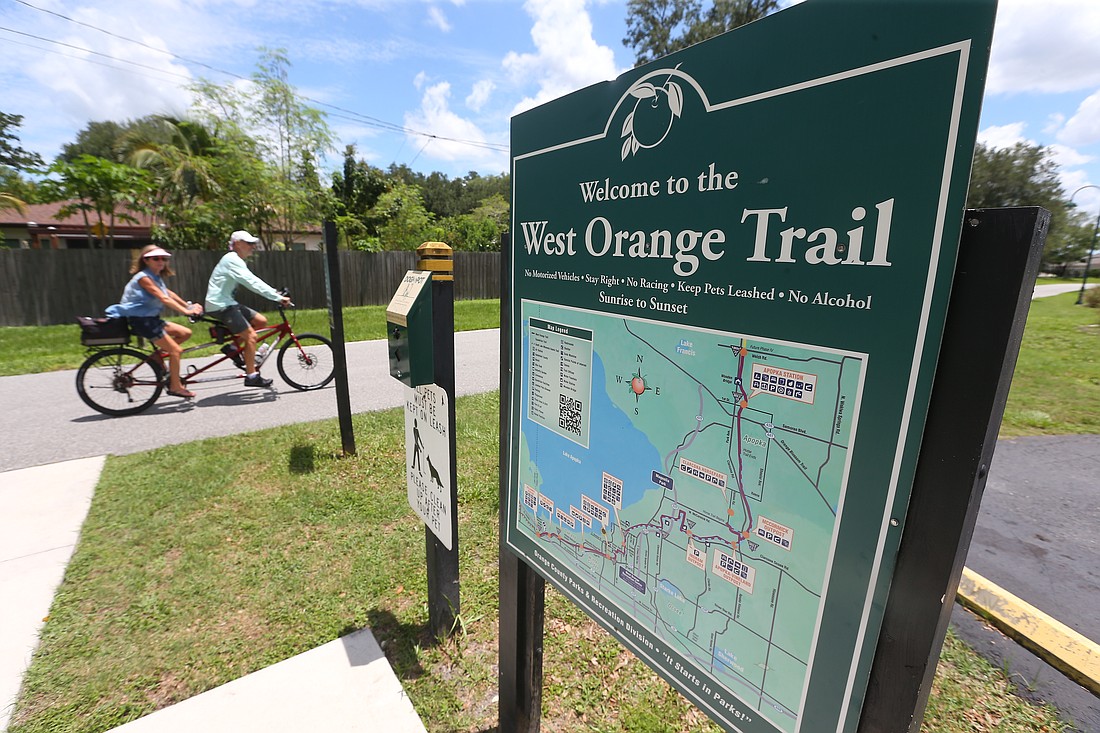
The West Orange Trail embodies many things — a quiet moment to breathe, a tourist destination, a challenge to conquer and a safe place to exorcize your demons. Besides being one of the reasons Winter Garden is the bustling city it is today, the WOT is 22.32 miles of paved freedom for anyone with ability and motivation.
The WOT project was approved in 1990 by the first mayor of Orange County, Linda Chapin. The old railroad was redone and officially opened as the West Orange County rail-to-trail in September 1994. Since then, the WOT has expanded into Apopka and connects to Lake County’s South Lake Trail.
It’s one thing to know the West Orange Trail. It’s another to have years of experience cycling and working with bikes and the people who ride them. Dennis Jones, owner of Winter Garden Wheel Works, and Trek Bicycle Winter Garden’s Steven Gonzalez and Natalie Medlock share their best safety tips, riding routes and ways to handle Florida’s unpredictable weather.
Medlock said regular bike maintenance is crucial and recommended bike checks at least every six months.
“If your bike is making a weird noise, get it looked at,” Gonzalez said. “A bike is transportation — there is something so freeing about being on a bike. Making sure it runs well is important.”
Jones, Medlock and Gonzalez all agreed the most underrated piece of equipment is still the helmet.
“It is the No. 1 piece of safety gear,” Gonzalez said. “Do not cheap out on a helmet. … I think the stereotype is that they’re not comfortable (but) there are a lot of comfortable helmets to wear.”
Gonzalez said like child seats, helmets eventually expire after about five years and should be replaced.
“It’s truly that important to have a helmet that fits you and that’s safe,” he said.
Jones said cyclists need to ride defensively on the trail.
“(For crossroads) the rule of thumb is eye contact; I always like to see the other person,” he said. “That’s always a good sign that they see you and you see them. If I don’t make eye contact, that’s when my defense mechanism goes up.”
Gonzalez and Jones both recommended wearing bright clothing and helmets, as well as having a blinking light at all times because it attracts the eye.
Jones said to be respectful of others while riding.
“It’s a two-way street, and you’ve got to be respectful of cars, pedestrians and bikes,” he said. “Once respect is lost it’s a losing battle. You can’t win against a 5,000-pound car on a 25-pound bike.”
Cyclists always should notify pedestrians they are riding behind them.
“If no one says, ‘Hey, on your left,’ and you whiz by, someone could get hurt,” Gonzalez said. “A lot of people wear headphones, which cancels the noise out versus between being heard and being seen.”
As far as headphones go, Gonzalez uses a pair of wireless earbuds himself, but cautions that “you need to be sure that you can at least be aware of your surroundings.”
Jones said cyclists always should stay to the right.
“Even though you might be a faster rider, there is always someone faster,” he said.
Both Jones and Gonzalez agreed the best protection against the weather and heat is to simply check the radar and use best judgment.
“Twenty miles with wet shoes and socks … it’s happened to all of us — if you’re not looking at the weather,” Gonzalez said. “Understand how to ride in the rain. It’s like driving in the rain, go a little slower. If you have to ride in the rain, having lights is huge. You need to be seen.”
With the Florida heat, Jones recommended riders acclimate themselves with the heat and always carry an electrolyte drink. His rule of thumb is 24-ounce bottle of water per hour. He also recommended a sweat test to learn how much sodium and water you lose per hour.
Jones said riders can’t go wrong with cycling down any part of the West Orange Trail, but he recommended riding west from Winter Garden to Killarney Station and back as riders will get to see all the trees and water fountains in Oakland.
Gonzalez recommended riding from Killarney Station to west of Clermont and Minneola as there are fewer chances of running into pedestrians and fewer road crossing through neighborhoods while enjoying the long distance and hills.
But he said the main point of biking is not the miles.
“You don’t have to go fast — just move,” Gonzalez said. “People drive a long distance just to ride (our trail). … We can never take it for granted. It’s such a great resource.”