- March 16, 2026

-
-
Loading
Loading
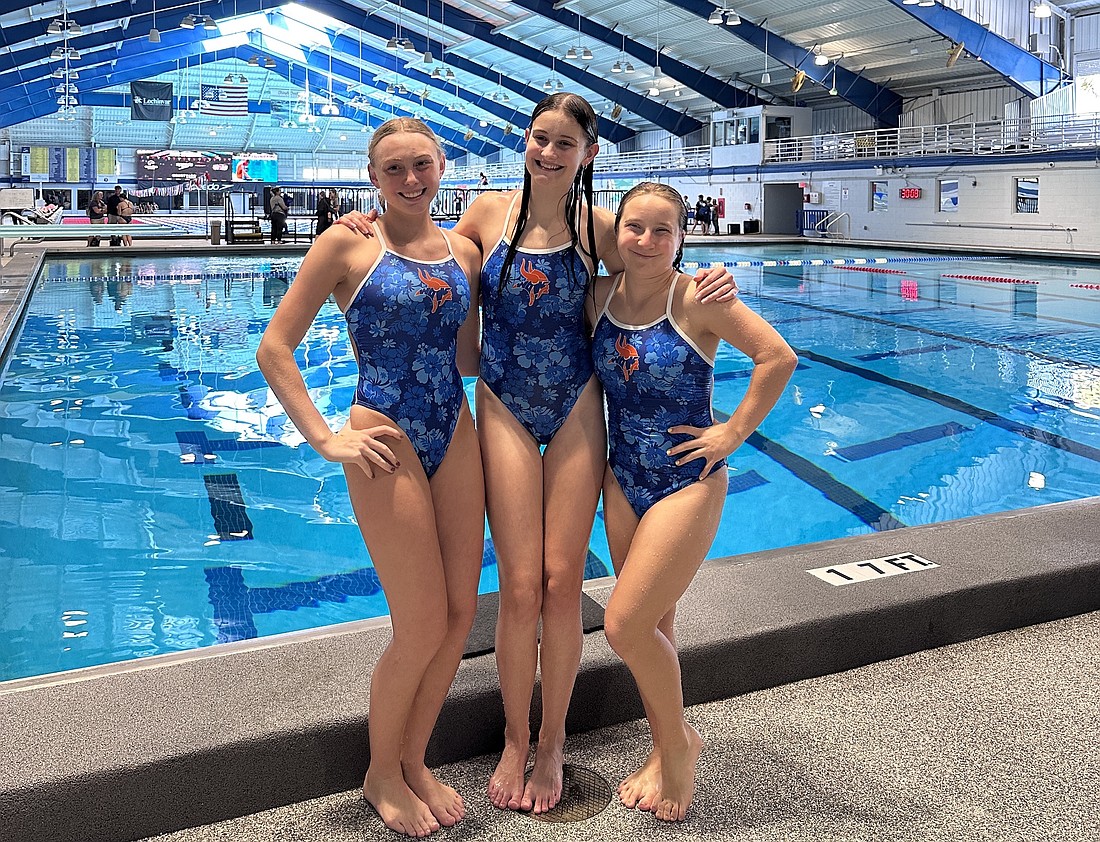
For three of West Orange High School’s divers, their past is what shaped their present.
Isabella Eggebrecht, Olivia Turner and Caitlyn Love were gymnasts before they made the transition to diving.
In gymnastics, they had to twist, turn and contort their bodies. It taught them body awareness, discipline and an appreciation for precision that allowed them to transition into diving. Turner said they had to learn how to go from landing on their feet to landing on their head.
Although all three divers share similar backgrounds, their individual journeys set them apart.
Eggebrecht suffered a back injury that stopped her from being able to compete as a gymnast. Love’s dad, Kenny Love, is a diving coach at Orlando Diving Academy and encouraged her to give diving a try. Turner dealt with burnout, so she quit gymnastics and went to diving for a free trial ODA was offering. She ended up falling in love with the sport.
Their individual pathways led them to become teammates for the West Orange diving team. As teammates, they thrived in districts Wednesday, Oct. 29, and all earned a placement at regionals.
“I was super proud of them, because I know for a fact they both worked really, really hard to get their dives done, to get their dives off the board,” Love said of her teammates.
Turner placed second — a feat that will bode well for her dream of diving in college. What made the moment more special was sharing the success with her teammates and celebrating it together, knowing they all qualified.
“When it came to meet time, at the end, all of us came out, pulled through and placed the way we did, it was really exciting,” she said.
It was a moment of team celebration. All the girls are members of Orlando Dive Academy to train for West Orange’s school team. They practice five days per week at Rosen Aquatic and Fitness Center; it is the only dive well in Central Florida with a diving tower.
To prepare for districts, they focused on practicing their one-meter dives.
In addition to Turner’s second place at districts, Eggebrecht finished in first, and Love in fourth.
“I was incredibly proud of myself, and I couldn’t take the smile off my face,” Eggebrecht said.
Her unique journey into diving is what made her accomplishment so special. She broke her back in March 2024 and now meets with her spine surgeon every six months to talk with him about the possibility of surgery. Because of the injury, her practice isn’t always perfect, and she has to limit herself to the one- and three-meter dives.
SUPPORT SYSTEM
Eggebrecht’s coach at ODA, Terry Horner, has been crucial in her journey. He understands some days she can do more, while others she needs to do less and listen to her body.
“He’s incredible at understanding that there’s a time and a place for you to push and that sometimes you have to push through the pain and other times you don’t,” she said.
Turner echoed the praises of Horner. She said he is the best coach she has ever had.
“Coming from gymnastics where they were really toxic and not the most motivating to Terry was a night-and-day difference,” Turner said. “He is there with you through it all. He sees more potential in us than we see in ourselves, and I don’t know what I would ever do without him.”
Love said the support system she receives from coaches, divers and others is important. It helps with confidence and overcoming one of the most challenging aspects of diving — the mental aspect.
Diving brings a unique fear that tops its physical demands. Standing on a board meters above the water and looking down can be intimidating, but through practice, they have overcome the initial nerves.
“It’s very scary sometimes, but you just have to push through the fear and just do the dive,” Love said.
When Turner first stepped onto the board, she was met with pure excitement. She was excited to jump and try something new and learn all the skills needed for diving. To her and Eggebrecht, overcoming the mental block of fighting with your mind is the most challenging aspect of diving.
The skills and flips are something anyone can learn if they put their mind to it, Turner said. Divers have to tackle trusting their bodies and going with the momentum.
“(You’re) having to fight with the fact that your body inherently tells you that it’s not safe and having to get up on 10-meter (diving board) and tell yourself to jump off and do this, these flips and hope that you’ll land properly is not something your brain wants you to do,” Eggebrecht said.