- March 20, 2026

-
-
Loading
Loading
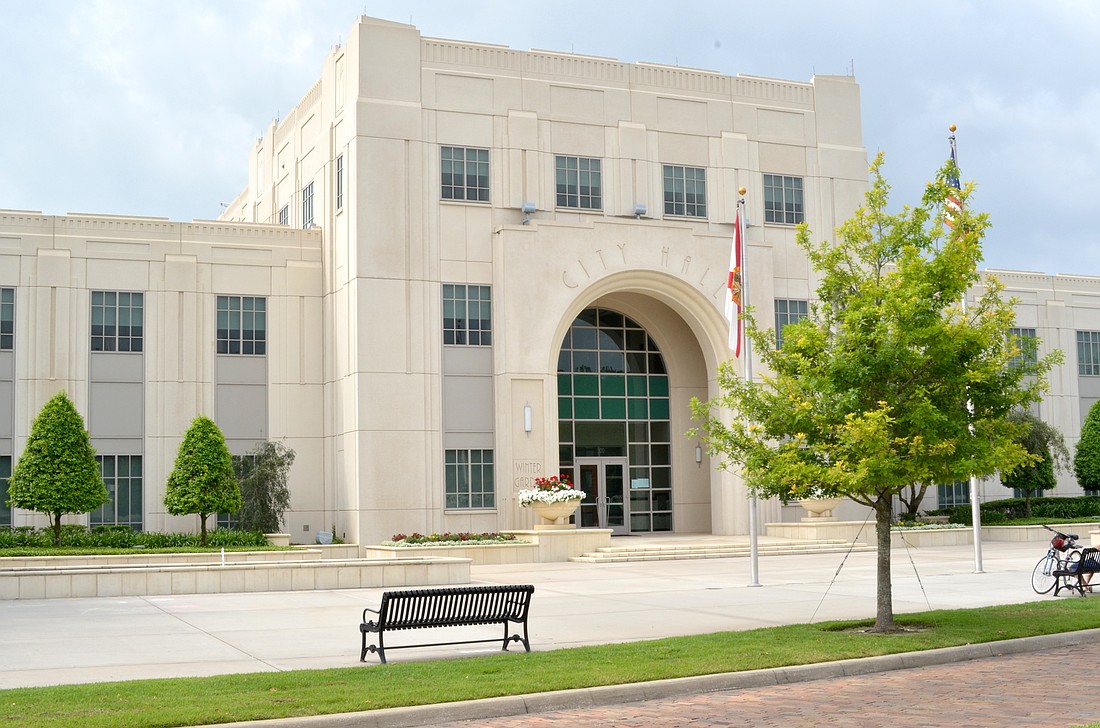
Winter Garden is proposing increasing its millage rate from 4.5 to 4.8565 to address a $2.2 million deficit.
Laura Zielonka, the finance director for Winter Garden, said during the budget workshop portion of the Winter Garden City Commission meeting Thursday, Aug. 28, that city staff is proposing the increase to preserve long-term fiscal sustainability, focus on essential services such as public safety, protect the city’s infrastructure and obtain a fund balance of 20%.
If the millage rate increase is approved, the estimated property tax increase for a home with an assessed value of $200,000 and a homestead exemption of $50,000 would be about $53 per year. That property would pay $675 under the current 4.5 millage rate.
The total budget for the upcoming fiscal year is $180 million in expenditures, with $169 million in revenues.
Using a zero-based budgeting approach, the city decided not to add any new positions in the budget.
Property taxes, which make up the largest portion of the General Fund, represents 18% of the city’s total revenues. Other sources of revenue include charges for services, state shared revenues and grants.
Ad valorem revenues are used to support city services, including fire and police protections, parks and recreation, planning, administration, public works, and infrastructure maintenance. However, those revenues alone are not sufficient to fund the current levels of service. As a result, the General Fund uses alternative revenues, some of which are unpredictable and unstable, to fund all services.
If the city maintains the current millage rate of 4.5, Zielonka said the city will have a fund balance of 17%. The fund balance is used to respond to emergencies such as hurricanes, economic downturns and unexpected costs. The reserves also can be used for one-time expenses, major equipment capital projects and as a short-term bridge for temporary revenue loss as the city looks for long-term solutions.
The city would need $2.2 million in additional revenue or in expense reductions to obtain the goal of a 20% fund balance.
Zielonka said when looking at cutting expenses, not all dollars are equal. Some expenditures are restricted, which means the funds are legally tied to specific uses from specific revenues. Unrestricted revenues can be allowed where they are needed most.
The General Fund budget for Fiscal Year 2026 includes $19 million in unrestricted expenditures.
“If we were to cut $2.2 million, it would have to come from the unrestricted expenditures that are not tied to a specific revenue purpose,” Zielonka said. “When we calculate that out, that’s a total of 11.4% coming from personnel, operating capital and other uses.”
Zielonka said increasing the millage rate allows the city to fund ongoing services with ongoing revenue.
“It addresses the challenge of operating expenses, outpaying recurring revenues, reserves for emergencies and one-time needs, and maintaining long-term fiscal stability for our community,” she said.
Beginning in 2024, Zielonka said the cost of delivering city services began exceeding the operating revenues available to support them, which “marks a critical shift in financial sustainability.”
She said the increase in expenditures is driven by rising personnel costs, inflationary pressures on goods and services and investments in public safety infrastructure. Although revenues have grown, they’re not keeping pace with the cost of maintaining and enhancing city services.
Personnel costs are the largest driver in department operating costs. The proposed budget includes a 7.5% wage increase for fire personnel per collective-bargaining-unit agreements, a 3% cost-of-living adjustment for non-fire union employees, health insurance increases and pension contributions.
The city of Winter Garden currently has 398 full-time equivalent employees. The FTE helps gauge how many full-time employees a municipality has for every 1,000 residents. For Winter Garden, that is 7.6 FTE.
“Winter Garden has the lowest number of FTE employees per 1,000 residents, demonstrating our commitment to lean operations and fiscal responsibility,” Zielonka said. “This low FTE reflects a conservative approach carefully managing taxpayer dollars while minimizing administrative overhead. Even with fewer employees per capita, Winter Garden continues to deliver outstanding service levels across all departments, including fire, police, parks and public works.”
For capital improvements, the proposed budget includes $2.3 million in the General Fund, which includes $995,000 for the fire department, $605,000 for information technology, $366,000 for facilities, $110,000 for the police department, $100,000 for the cemetery, $91,000 for recreation and $50,000 for the fleet department.
The city has allocated $4.5 million for road resurfacing, intersection upgrades, new turn lanes and safety agreements across the city.
Enterprise Fund revenues are legally restricted to services they provide and are self-supporting services like water, wastewater, stormwater and solid waste. These fund revenues total $62 million for Fiscal Year 2026. Stormwater, solid waste and trailer city utility rates are scheduled to increase Oct. 1 by 20% in accordance with the approved rate structure for bond covenants.
The city is recommending a State of Florida Public Service Commission CPI Index of 2.23% to solid waste funds user feeds to cover the costs of services.
The east Winter Garden 2026 budget totals $8.6 million and includes the east Winter Garden Home Renovation Legacy Program, Zanders Park improvements, the design phase for the east Winter Garden streetscape, property redevelopment, commercial and business redevelopment, and the east Winter Garden drainage improvements.
The Winter Garden City Commission will have budget hearings at 6:30 p.m. Thursday, Sept. 11, and Thursday, Sept. 25.
“We’re going to continue to evaluate the budget,” City Manager Jon C. Williams said. “We’re going to continue to look for areas to offer some savings, and then periodically ... we’ll bring them back to the commission ... and say these are areas we can identify where we can see savings.”