- March 20, 2026

-
-
Loading
Loading
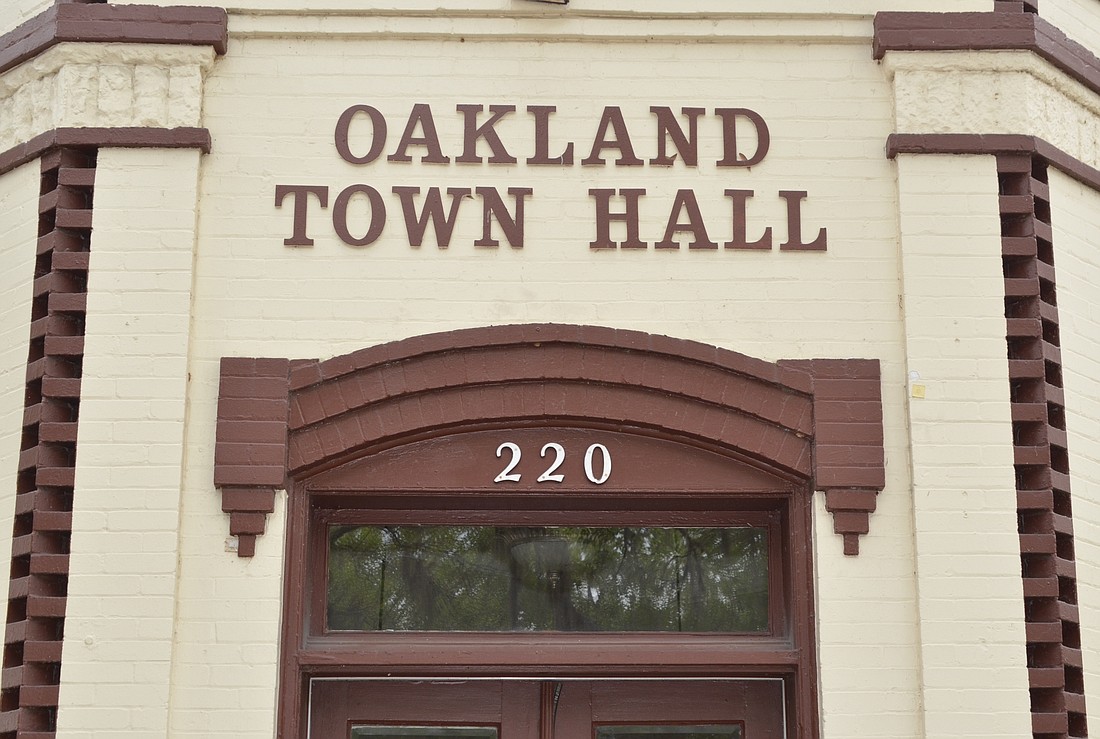
The Oakland Town Commission unanimously approved a tentative budget that pulls $500,000 from the town’s reserves to balance its budget and cover a $360,000 deficit.
During a tentative budget public hearing Monday, Sept. 8, the commission unanimously approved a tentative millage rate of 6.7, which is the current rate.
The General Fund totals $11,020,949 and includes $10,520,949 in revenue and operating expenditures as well as $500,000 in town revenue reserves.
Oakland Director of Finance Gaby Leon said if the town does not use $500,000 in reserves, the town would face a deficit of $360,000. Pulling from the reserves leaves the town with a remaining reserve of $135,741.
The need to dig into the reserves came after the town received revenue estimates from the state and other funding sources as well as updated expenditures and Fiscal Year 2026 projections.
Leon said the town’s portion for Orange County Fire Rescue services increased by $480,000 over Fiscal Year 2024-2025.
Mayor Shane Taylor said he was meeting with Orange County Fire Rescue Tuesday, Sept. 9, to discuss the town’s financial contribution to the fire department.
The budget also includes a 3% cost of living adjustment to all town employees as well as an 18% retirement contribution for all sworn officers, which is a 2% increase from last year’s budget.
Taylor said he likes the 3% COLA because it created high retention with employees because it costs more to retrain someone after turnover than to retain employees.
The budget also includes longevity pay to any eligible employees, and it covers the 9% increase in cost of health insurance for all employees.
Decreases to the General Fund included a decrease of $65,000 for computer services, which was a project the town already had completed. Another reduction was to the overall compensation budget for the town clerk due to the reduction of the assistant town manager position.
The town’s Enterprise Fund continues to be its largest source of revenue, totaling $7,552,550 with $4,319,000 coming from grants and loans and $3,233,500 coming from revenue and operating. There were increases to water and wastewater revenues.
The Enterprise Fund includes a 3% cost of living adjustment to all utility staff. The possible reserves for this fund totals $145,507, which is an increase from last year’s reserves of $39,546.
The Impact Fee Fund totals $5,095,392, with the $3,205,000 going toward projects and $1,890,392 set aside in the reserves.
Leon said the town increased the additional Water Plant and Pump Design budget from $200,000 to $500,000.
For the transportation impact fee budget, the town has added $100,000 to the Oakland Avenue and Daniels Road improvements. The budget for the Catherine Ross Road improvements has increased from $50,000 to $150,000. The budget for the improvements for the intersection of Winters Landing Drive and Macchi Avenue has increased by $50,000 to $350,000. The budget for the East Oakland Avenue sidewalk improvements is $75,000.
Oakland Avenue Charter School’s total budget is $6,321,430 with $25,456 in reserves.
Commissioner Kris Keller said she was concerned the town had to pull $500,000 from reserves to balance the budget.
“That’s not a place I think we want to see ourselves in on a regular basis,” she said.
Keller said although it’s a daunting task, she is asking all town departments to “be considerate of the budget” and mindful of spending. She also said as a commissioner, she wants to see any project presentations from the town include where the money is coming from to ensure it’s a budgeted item and only on the rare occasion is it a use of emergency funds.
“We’ve got to get this reined in because in my view, reserves are for emergencies,” she said. “They’re not for funding your budget every year.”
Commissioner Joseph McMullen suggested the town hire a grant writer to help obtain federal and state funding to offset costs.
“We need to figure out how we’re going to bring in more dollars,” he said. “We really need to have someone dedicated to getting these free dollars that can help us get to a point because the dollars are there. Projects are still coming. The growth is still coming.”
He also suggested the town look at ways to monetize special events.
Commissioner Sal Ramos said the missing piece in Oakland is commercial. He said if the town continues to focus on residential, the revenue from it isn’t going to make an impact.
“If we keep going on the residential, we’re always going to be pinching pennies,” he said. “When the commercial finally gets developed here, we’ll have the surplus we all need to get our heads above water.”
Commissioner Michael Satterfield said although this tentative budget is “as good as it gets,” the town needs to focus on long-range planning to ensure the revenues are significant in the next five years before the town is completely built out.
The next public hearing on the budget is at 6 p.m. Tuesday, Sept. 23, at 221 N. Arrington St.