- March 20, 2026

-
-
Loading
Loading
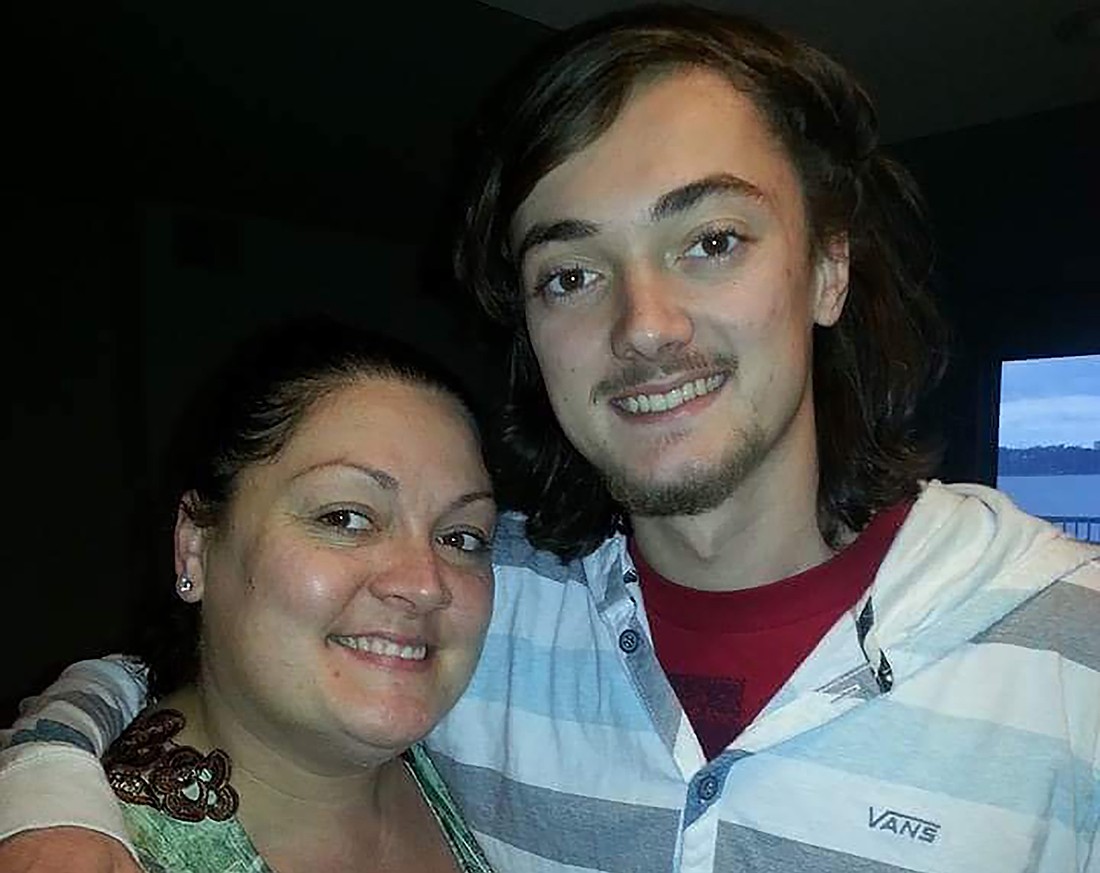
Gretchin Murray awoke Sept. 24, 2022, to a living nightmare.
She received a call notifying her that her only child, Gage Taylor, was taken to Orlando Health — Health Central Hospital in Ocoee after he was poisoned with a substance that was laced with illicit fentanyl without his knowledge.
Taylor was a 29-year-old who, within a six-week period, lost his job at Universal Studios, went through a tumultuous break-up and “had a moment of weakness,” Murray said.
“I know he was struggling with finding another job, and I just think he was in a weakened state and decided to do something he normally wouldn’t do,” Murray said.
His decision cost him his life. He died Sept. 26, 2022.
Since then, Murray said learning about how many people are impacted by fentanyl was “such an eye-opener.” She only had heard of the drug a few months before her son’s death, when his father asked her to talk to Taylor to warn him of fentanyl-laced drugs. She met numerous families who also lost loved ones to fentanyl overdoses.
Now she’s made it her mission to spread awareness of the dangers of fentanyl while advocating for legislation that requires hospitals to test for fentanyl in emergency situations.
She is bringing the national Walk for Lives to Lake Eola Park from 9 a.m. to 1 p.m. Saturday, Sept. 20.
The nationwide, grassroots campaign unites grieving families and friends whose lives have been impacted by fentanyl poisoning. Participants will walk in honor of the loved ones they’ve lost as well as to educate communities and demand action to end the fentanyl epidemic.
“It’s kind of my calling to educate as many people because I had no idea (about fentanyl),” Murray said. “To bring Walk for Lives here is very personal, and I’m just hoping we’ll be able to impact so many people and open people’s eyes and just bring everyone together.”
The free walk in Orlando will feature personal testimonies from local families, remarks from Florida lawmakers, insights from law enforcement leaders and more.
After her son’s death, Murray wanted answers.
She said the police weren’t able to pursue charges despite the evidence already collected against the people who gave Taylor the drugs. There wasn’t a direct connection between those people and Taylor having fentanyl in his system.
She started investigating the matter, collecting records from police, the hospital and medical examiner. That’s when she discovered the hospital never gave Taylor fentanyl, which can be used to conduct a bedside shivering assessment for someone who has had a cardiac arrest and has gone without oxygen to the brain. The assessment uses fentanyl to lower a person’s body temperature to see if the person reacts to prove whether that person is brain dead.
The hospital not giving Taylor fentanyl proved the direct connection between those who gave him the drugs that were in his system. The police were able to move forward with charges.
Murray’s investigation also led her to working with nonprofits and others to create Gage’s Law, which requires hospitals to conduct mandatory fentanyl testing in cases of suspected drug overdose or poisoning, ensuring patients receive timely, appropriate care.
Murray said although Gage’s Law passed, another bill was passed that actually gives hospitals the option to conduct fentanyl testing, undoing the work of Gage’s Law. Now she is working on a new language for a bill to ensure testing is mandatory.
“If we’re going to start getting more prosecutions of these drug dealers that are out there peddling this poison, law enforcement needs to be given that initial proof, but it’s also going to save hospitals from potentially committing medical misfeasance,” she said.