- April 8, 2026

-
-
Loading
Loading
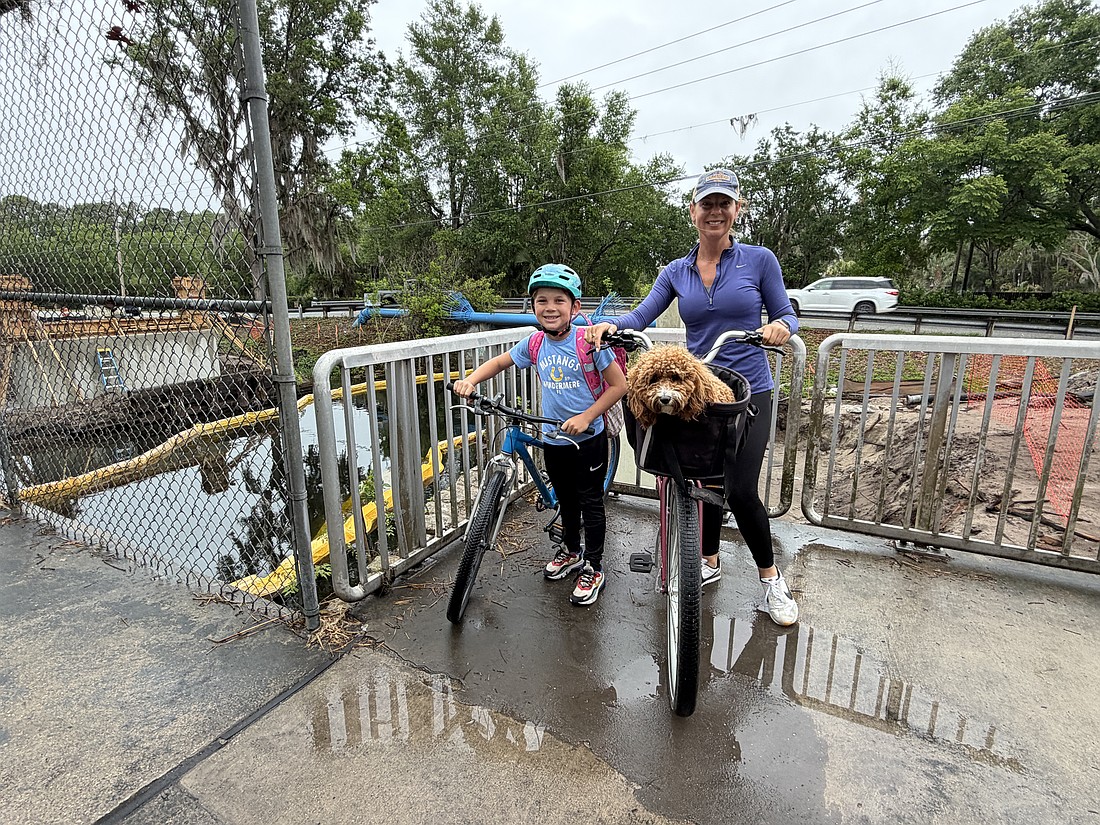
Around 8 a.m. on weekdays, Leah Thon and her son, Emmett, set off to Windermere Elementary School from their home in downtown Windermere. As they make their way across sandy paths covering cracked sidewalks past North Drive, they meet an old pedestrian bridge over a canal.
It features a steep concrete ramp leading to a narrow walkway encased by a warped chain-link fence. Vegetation has grown through the ceiling and along the sides. It’s just wide enough for two people to walk over it side-by-side.
She said it’s a nerve-wracking experience as a parent to watch their children ride down it, fearing Emmett might hit the side railings. It’s been this way since they moved to downtown Windermere two years ago.
Windermere Mayor Andy Williams took the same route to Windermere Elementary when he attended the school in the 1980s.
“It’s been around a long time, and it’s always been how we see it now: narrow, steep,” Williams said.
But now, construction is underway. Trees are wrapped in yellow caution tape and fenced off to protect them, while the surrounding earth is leveled for future pavement. It’s the beginning of Phase 1 of the Windermere Ward Trail project.
Williams said he doesn’t expect the new trail to attract many people from out of town because of its short length, given that the distance from North Drive to Park Avenue is just less than a mile. He said residents will get the most use out of it, especially those going to and from the school.
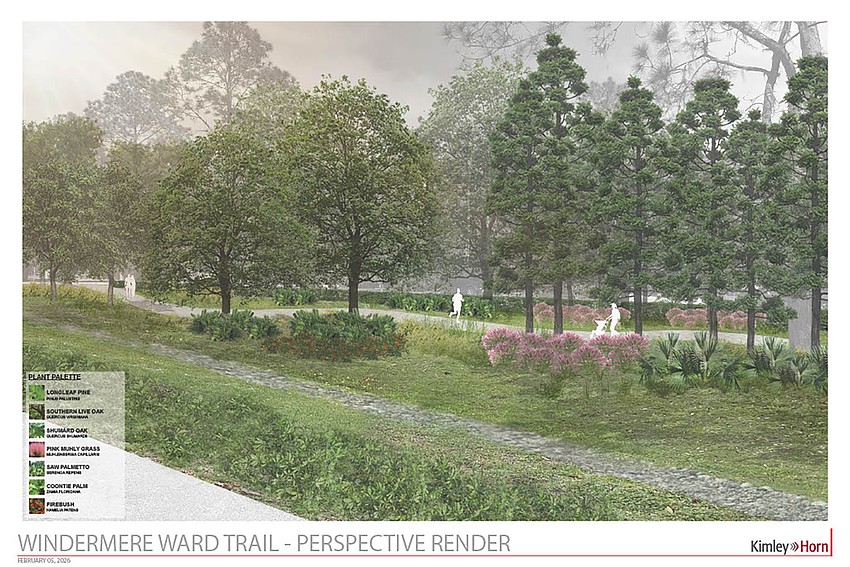
The trail is planned to be a multi-modal path wide enough to fit pedestrians, bike riders and golf cart travel. Different habitats of greenery will be planted along the path, including longleaf pines, firebushes, saw palmettos and Sabal palms. Benches and lighting are planned to sit along it as well.
The most significant renovation, though, will be a new railroad-style bridge over the canal that connects Lake Down and Lake Butler. It will replace the one Thon and her son commute over every morning. The new bridge will be 8 feet tall and 14 feet wide, allowing two golf carts to pass each other.
Windermere Town Manager Robert Smith said a current issue is residents have had to drive their golf carts over the road bridge to get to and from downtown Windermere because there’s not enough room on the pedestrian bridge.
He added the main intention behind the wider bridge is to connect old downtown Windermere with newer sections of Windermere, wanting to make sure residents north of the canal have access to parks, boat ramps and the town’s civic centers. Another motivation was safety.
“We knew that what is there is not safe, and we want to make it safer for the people going to school,” Smith said.
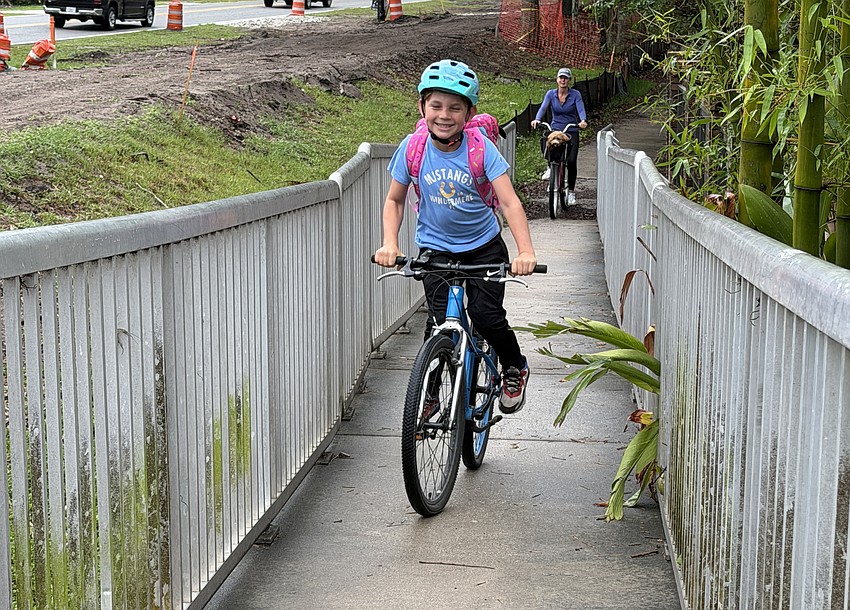
Thon and her family moved to downtown Windermere from Keene’s Pointe, an area she said has a bus service. When she purchased her new home, she no longer had that service. Emmett, a fourth-grader at Windermere Elementary, now rides his bike to school.
Thon joins her son in the mornings, along with their dog, Malibu, a cavapoo she keeps in a basket on the bike. She said she and the other residents are excited about the new bridge, and more specifically about the added space it’ll provide.
“Oftentimes, if there’s a pedestrian walking (down the bridge), we have to stop and pull over or back down the path to move out of their way,” Thon said. “So this will be a welcome addition to downtown Windermere.”
For the first six months of biking to school, Thon said she had Emmett walk his bike down the bridge until he gained confidence so he wouldn’t fall.
“When the kids are riding down the pedestrian path right now, it is a little tight on their bikes,” Thon said. “We’re always fearful that the handlebars could get caught in one of the rails and they could fall easily because it is a pretty narrow path to ride your bike down.”
Thon’s fears were a reality for Dave Eaves, as his youngest son, Max, a first-grader at Windermere Elementary, fell from his bike one morning last year when his handlebars knocked into the rail.
Eaves rides to school with Max and his other son, Teddy, a fourth-grader. He said the current bridge is very steep and resembles single-lane traffic, causing people to constantly bump into each other while walking or biking over it.
“It’s kind of not safe,” Eaves said. “Especially for younger kids if they’re learning to ride a bike.”
Eaves said the new bridge should generally be a lot safer. Plus, the trail will have an added benefit: keeping bike riders off the sandy paths. Eaves mentioned they have been known to cause people, including his children, to come off their bikes.
Thon said there’s seemingly been a lot of progress made in the past few months. Early construction began in February, when town staff and members of the Windermere Tree Board conducted a walkthrough to determine which trees to keep along the trail. In total, workers are set to remove nearly 70 existing trees but add more than 100.
The rest of the construction will take months, Smith said, adding that the canal area will be temporarily shut down for two months starting sometime in May as the town brings in a crane to demolish the old bridge. Smith said the town expects Phase 1 to be “substantially completed” by August.
To get to this point, though, has been a much longer process.
The town of Windermere has been working on this project for nearly a decade. The town initially missed out on buying the property the trail will be built on when CSX Transportation vacated the railroad right-of-way more than 50 years ago.
Williams said one of the reasons the town might not have bought the property at the time is because Windermere might not have had enough available funding to purchase it. Therefore, various property owners bought it. Ken and Susan Ward bought a majority of the right-of-way from 12th Avenue to Windermere Road and put it into a trust.
Smith was hired in 2011 and said one of his first tasks on his onboarding list was to acquire the right-of-way. He began negotiating with the Wards to buy the property but not before having Kimley-Horn conduct a safety study in 2015 that assessed the roadways and sidewalks in the area.
Years of negotiations led to a stalemate until Ken and Susan Ward died in a house fire in 2017. Their sons assumed the trust and accepted the town’s $250,0000 appraisal, with the trail now set to be named in the family’s honor.
Smith said the remaining land was acquired through property swaps.
Windermere Town Council finalized the purchase of the Wards’ property March 13, 2018. It was the same meeting Williams officially was sworn in as a then-council member. Nearly a decade later, the town is breaking ground, an amount of time Smith hadn’t anticipated, but after years in government work, he said it doesn’t surprise him.
“In government, nothing is easy,” Smith said. “No. 1, you had to go through all the Town Council meetings on them accepting this or buying into this project. And then you have to work with various governmental agencies to make sure that you’re having all the certifications to make sure they’re buying in, too, because it is federal and state money.”
To fund the project, the town secured $760,000 from a federal appropriations request through the Safe Routes to School program, which was signed into law March 2022. Windermere also secured $1 million for the project from the Florida Legislature in 2023. Smith said the town currently is working with Healthy West Orange to acquire additional landscaping funds.
Phase 1 is the first of the project’s four construction phases. Future plans for the project include Phase 2, from North Drive to Sixth Avenue; Phase 3, along Sixth Avenue from Main Street to Apopka-Vineland Road; and Phase 4, from Chase Road/12th Avenue to Sixth Avenue.
Smith said he’d love to have Phase 2 completed within the next five years, but it depends on funding and property tax reform.
“It’s been very difficult to get this project started, but it’s finally going on right now,” Smith said. “And we’re hoping to have it completed before school starts in August.”