- March 20, 2026

-
-
Loading
Loading
Armand Winters lived across the railroad tracks in Ocoee from his Little League coach, Pete Armstrong. Winters remembers stepping outside and seeing Armstrong in his driveway with baseball helmets lined up, preparing them for a fresh coat of paint. He carefully painted them himself. He mowed the Little League fields on his riding lawnmower and would bring his old army duffel bags filled with bats and baseballs.
That scene is how Winters knew baseball season was right around the corner.
Years later, the memories remain vivid — not only because of the trophies and championships Armstrong represented but also because of the man behind them.
“He was a walking legend,” Winters said.
Armstrong, at 87 years old, died Saturday, Jan. 24, but his character and impact on others will never be forgotten.
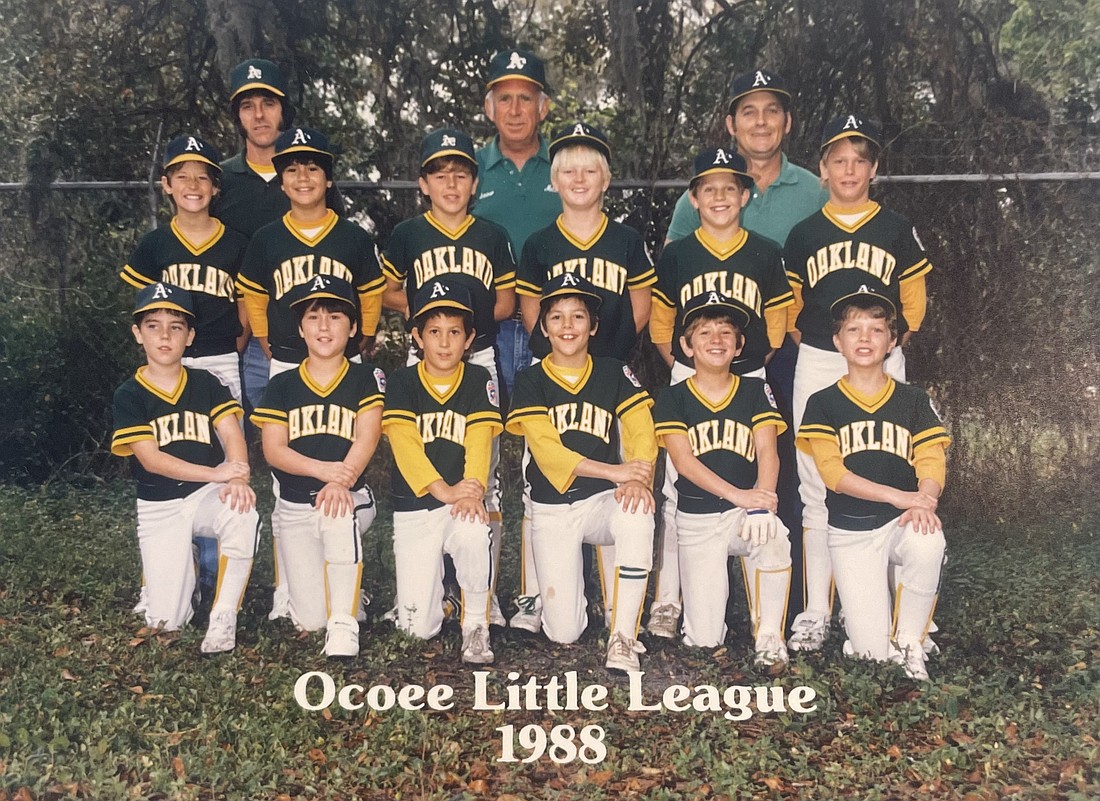
Derrick Anderson, who played for Armstrong from 1988 to 1991, said Armstrong coached at Ocoee Little League for at least 45 years, and in those years he knew one feeling — winning. Winter said of the years Armstrong coached, he won the championship 75% of the time.
Anderson never lost a game playing for Armstrong. He didn’t understand losing until he was 13 years old playing on the bigger fields and lost his first game.
Growing up in Ocoee meant you were one of two people: You either played for Armstrong or you wished you did, Winters said.
Armstrong was a simple man. He lived in the same home, married to the same woman and had the same job, and it resulted in him being simple and straight to the point in the way he spoke to others.
As a coach, Armstrong’s top priority was to develop players first. He used his actions to build confidence, putting players in uncomfortable positions that later produced success. He taught baseball through repetition and had batting cages in his backyard to teach players individually or in group sessions.
On the field, Armstrong coached with “tough love,” but he was the first to say, “I love you,” after a game, Sean Carroll, a player of Armstrong’s, said. Carroll’s team made history by becoming the second team to make it to sectionals. The nature in which Armstrong coached as well as the man he was grew the respect his players and community members had for him.
His players said the first thing Armstrong told his teams was, “You’re going to call me Mr. Armstrong and say, ‘Yes sir and no sir.’” And they did it without hesitation, even the parents spoke to him that way.
“The way he raised us on the field is the way I tried to raise my son, held him accountable for everything and respect,” Anderson said.
The coaching style taught his players life lessons extending beyond the dugout. They learned how to clean up after themselves, respect adults, work hard, go to school and stay out of trouble. Nobody wanted to be caught doing anything bad in Armstrong’s presence.
“Some coaches coach because they just need a coach,” former player Josh Wilson said. “He coached because he really had the passion for it.”
The passion showed itself in how Armstrong worked with his players. Every boy who walked onto the field under Armstrong’s wing earned a nickname as their badge of honor.
White showed up to practice one day with a red ring of Kool-Aid around his mouth and it birthed his name, “Kool-Aid.” Wilson earned the nickname “Stumpy,” for his tendency to stay motionless in the batter’s box until the pitch arrived. Anderson was named “Biscuit.”
But not everyone had a glamorous nickname.
Carroll, otherwise known as “Booger Red,” had striking red hair that resembled another man in Ocoee, and the nickname was born. The instant welcoming nature Carroll received helped him navigate the challenges of moving from New York to Ocoee at 8 years old.
“I didn’t realize Ocoee was a tight group, and it really was tight with baseball families, and then Pete was right on the top of it all,” Carroll said. “He was the main guy, being the leader of all that and made everybody feel comfortable playing in that league.”
Forty years later, the nicknames still stick. White said he still calls his air conditioning tech, “Rusty,” and Wilson, one of his closest friends, “Stumpy.” Sharing the inside jokes bonded the players, made them feel welcomed, and it’s a feeling they always will remember.
“I had a lot of good coaches, but he was above all of them,” Winters said. “He taught us structure at a young age that a lot of the boys in that area needed and that effect was beyond the boys on his team. He affected the whole league. He affected the whole neighborhood.”
His impact even was seen by the city of Ocoee.
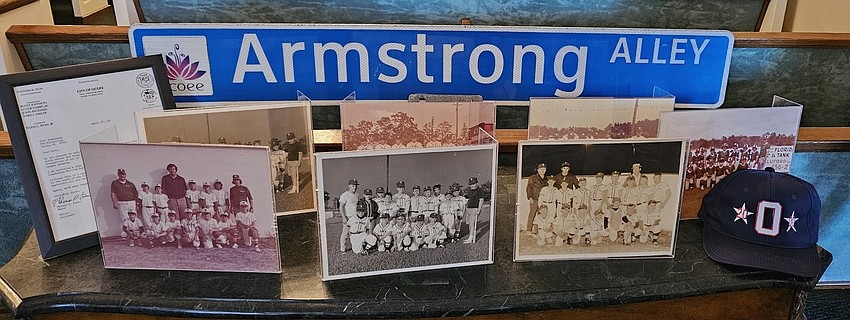
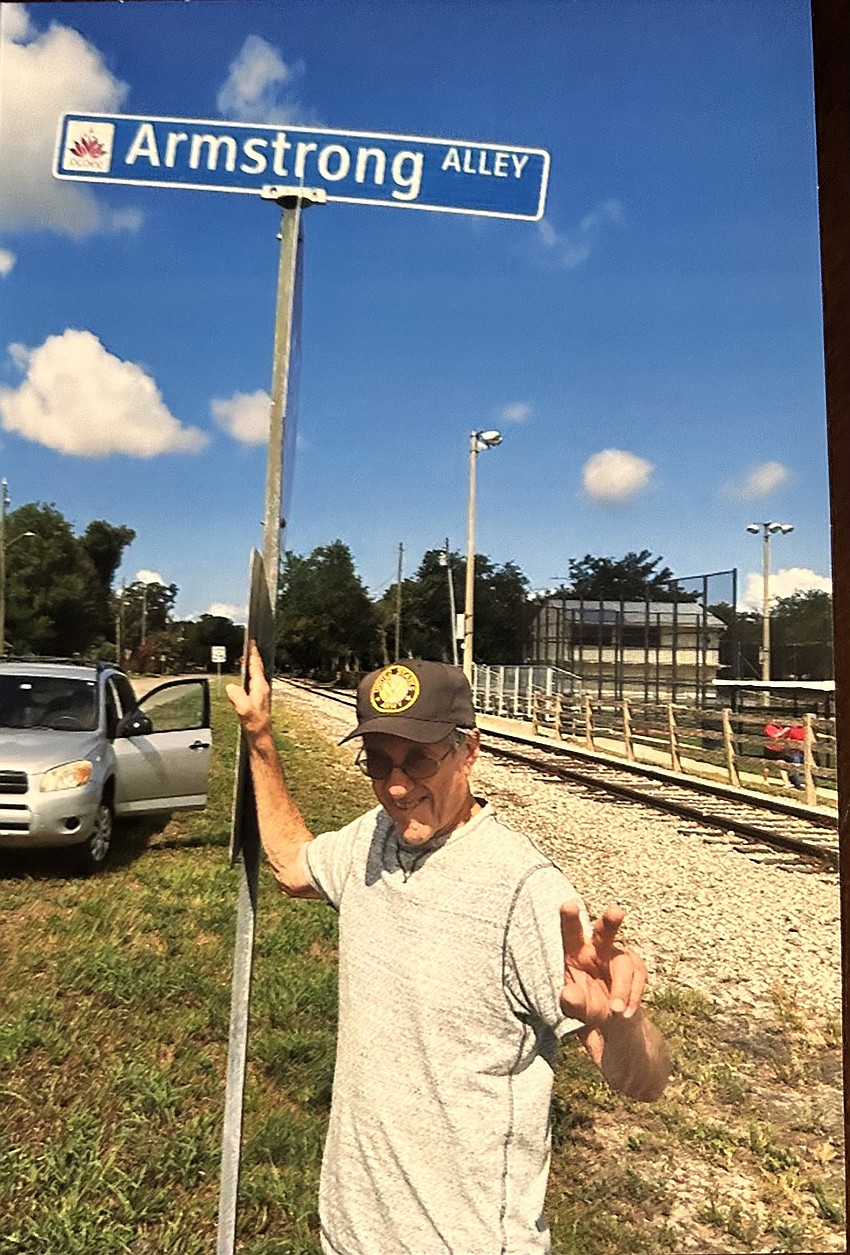
At the Ocoee City Commission meeting March 17, 1987, James Beech recounted Armstrong’s extraordinary contributions to Ocoee Little League and requested the bypass between the youth center and the baseball fields be named “Armstrong Alley.” His request passed unanimously, and Armstrong Alley was born for the years he had put into the program.
But his legacy doesn’t live on through a street sign. It lived through the former players who would stop by his house to say hello, in backyard batting cages, in coaches who believe repetition builds confidence and the kids who felt seen when they were new or unsure of their talents.
And it will continue to live through his players who were so touched by his coaching style they practice today.
Winters, now Foundation Academy softball team’s head coach, remembered three years ago calling pitches to his pitcher. One in particular wasn’t working, and she didn’t want to throw it, but Winters had her repeat it because he knew one successful pitch would bring up her confidence.
“When I’m on a bucket, I can hear him to this day saying, ‘Smile out there Kool-Aid. Kool-Aid smile,’’’ Winters said. “And I do the same thing when they’re pitching, if they’re struggling I say, ‘Give me a smile.’”
Carroll, South Lake High’s pitching coach, follows the same tough love to his players Armstrong showed him. He’s tough on them, but after practice, Carroll treats them as one of his own children.
“This probably comes from Mr. Armstrong and I say this, ‘Softball is just a tool; it’s just a tool for life,’” Winters said.