- March 27, 2026

-
-
Loading
Loading
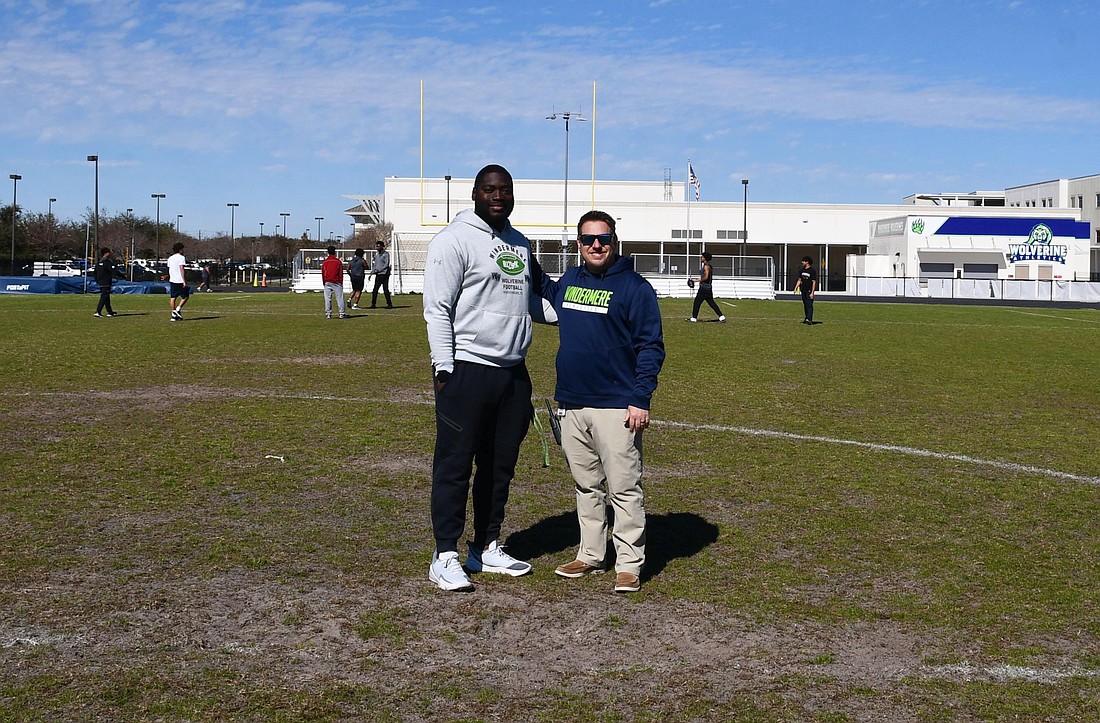
Windermere High’s field looked perfect at the end of December for winter break. Green grass covered the field, without a hole in sight, but then students came back.
Physical education classes, soccer, and track-and-field teams, band rehearsals, and more filled Windermere’s field, and within a month, dirt holes were scattered across the field once again.
The growth of the school is reflected in the field’s constant use, which, in turn, has brought to light the limitations of the Wolverines’ existing playing surface.
That has led to Windermere jump-starting the “Turf the Field” campaign in November to raise $1.3 million to fund the installation of a turfed field.
In a perfect world, the field would be completed in June, Athletic Director Jeremy Campbell said. The timeline depends on how quickly the school can raise funds. Once Windermere hits its financial goal, the building process will take 10 weeks. Teams already have begun contributing their part by hosting fundraising competitions, apparel sales and the GoFundMe donation campaign.
Windermere’s goal with turfing the field isn’t only to benefit the athletes and students who frequent the property but also the local community. When Campbell took over as the athletic director in July 2025, he said he wanted to make the school more known in the community and foster a place for families to drive to on the weekends.
“This is for the community,” Campbell said. “This is not a, ‘We build it, we keep it and lock the gates.’ We want to build it so that the community can come and be a part of this thing with us.”
Right now, with the current state of the field, Windermere is unable to allow outside organizations to rent it for use because it wouldn’t be safe, and the field can’t afford the extra wear and tear. Principal Andrew Leftakis said the Horizon West Wolves, a youth sports organization that has partnered with Windermere to use its fields for years, reached out to continue the partnership, but he had to turn them down.
With new turf, that changes.
Leftakis and Campbell envision a place for youth leagues to host practices and games, track organizations to hold meets, and community events, competitions and performances also could call Windermere’s stadium their home.
The debate over the safety of turfed athletic fields has been prominent in the sporting community, but the school found research that refutes these concerns and has chosen to move forward. A major concern with the current grass field is player safety during games; athletes must be constantly vigilant about avoiding holes in the field to prevent sprained ankles.
“As a coach, I’m very esteemed to be able to have turf just as far as durability and the kids being able to play on a fast turf,” head football coach Riki Smith said. “But I think it’s bigger than, in my opinion, football. Yes, we play on it, but just think about all the sports that can benefit from it.”
Boys and girls soccer, football, track and the marching band will be able to practice on the turf without disturbing its condition. And Windermere’s athletic programs are on a straight line to success. This year the school celebrated both soccer teams winning districts, a football team with back-to-back 10-0 seasons and a four-time district champion lacrosse team.
A turfed field will benefit all of these programs on a daily basis, and the athletes are excited about the opportunity. They understand the benefits of playing on that type of surface and not being subject to changing conditions, Campbell said.
Leftakis said grass fields can be beautiful if they’re properly maintained, but doing so costs $60,000 or more per year to keep up with it. It’s not an annual cost Windermere can afford; it is more common at the college or professional level. He said what the field really needs is time off, but with a student population of approximately 3,000, that’s not possible.
“The initial cost (for turf) is a lot,” he said. “But once you get to the lifespan of that field, the replacement cost is considerably less.”