- March 4, 2026

-
-
Loading
Loading
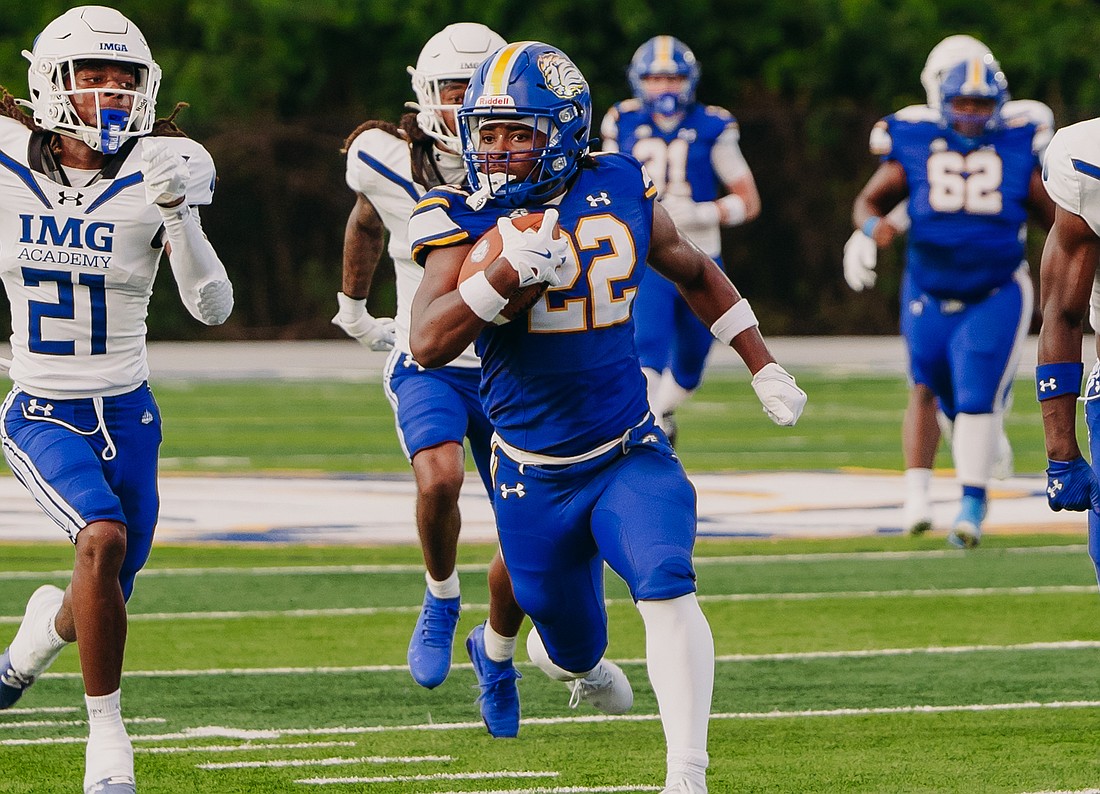
The First Academy football program underwent a significant change three years ago with the departure of longtime head coach Leroy Kinard, who had served for 20 years.
His replacement was Jeff Conaway, who arrived with state championship pedigree. He led his previous team, Shiloh Christian, to four consecutive Arkansas state championship games and won the title in 2020.
This hiring signaled a new era for the Royals, shifting their ambition from simply being annual playoff contenders to striving for state championship greatness every year.
However, the team’s pursuit was halted in 2024, when TFA was handed a two-season ban from the playoffs because of recruiting violations.
With the 2026 season marking the end of that ban, the Royals can resume their quest for a state title. But the true future of TFA’s program is a priority of creating better men and athletes along the journey.
“We say this all the time, but we’re not chasing championships, we’re developing champions, and the fact that we’re seeing them be developed gives us everything we need,” Conaway said. “A state championship is just the icing. We want the cake, developing athletes, the icing is when you get to win the big one.”
In November of the 2024 football season, an investigation into TFA revealed the school broke multiple FHSAA eligibility and recruiting rules. At least 10 student-athletes were a part of football activities, including practices and summer programs, before they officially enrolled as students. One specific finding cited TFA offered an Uber ride to a non-enrolled prospective player — an improper benefit under FHSAA rules.
The violations triggered a cascade of FHSAA policies, which resulted in a forfeit of TFA’s nine wins during the 2024 season and a ban from the postseason in 2024 and 2025.
Conaway also was suspended from coaching for the 2025 season by the FHSAA. After an appeal, his suspension was reduced to six games, and he returned to the field for TFA’s game against St. Frances Academy Oct. 3. Following the close of the 2025 season, TFA made an appeal to the FHSAA, and an Orange County judge temporarily lifted the team’s postseason ban before the playoff bracket was released. It gave the team a small hope of a postseason future, but days later, the ruling was dissolved and the ban upheld.
The team starts anew in 2026, with the past behind it and a brighter future with a playoff picture ahead.
“It’s just motivation from the past two years, just seeing how we have become better as a program and not been able to go to the playoffs,” junior cornerback Kamauri “Bam” Whitfield said. “That just (has) motivated me going into senior year with a lot to do. We have to go win states this year.”
Junior offensive lineman Reed Ramsier described a different energy throughout the training process. The team knows it has to work hard for a successful future. It’s unified and wants to make its mark.
“Being able to play for a state title will only make us grow closer and make us really dig in when the season gets hard and it’s week nine, week 10 and we’re hopefully going to win the playoffs,” Ramsier said.
The Royals will use the last two years as added fuel and want to show fans, other teams and themselves all the hard work and dedication has been worth it.
After back-to-back postseason bans, the TFA Royals spent the last season focusing on self-improvement. By competing on one of the toughest national schedules, the team was challenged to identify weaknesses from both a coaching and player standpoint.
“Being better prepared is really where our focus is,” Conaway said. “We do a good job. Let’s figure out how to do a great job.”
Stepping back onto the field last season pulled Conaway out of a challenging mental position, and he’s excited to stand on the sideline and lead these young men.
TFA is beginning the fourth season under its new coaching staff, and this is the time real changes begin to unfold, Conaway said.
Every day, the coaches brought up the state championship. The constant reminder lingers in the back of each player’s mind as they go throughout their workouts.
“It always puts a chip on our shoulder to compete,” Ramsier said.
For the seniors on the team, reaching states is especially important. They want to leave a lasting impact, and athletes such as Ramsier and Whitfield are expected to become top players to watch in 2026.
“Those guys are primed and ready to lead us as seniors,” Conaway said.
But leadership only matters if you have a team ready to be led. And Conaway has much confidence in his younger players, too.
In TFA’s last game of the past season, the team started 13-year-old Anthony “Deuce” Woods Jr. as quarterback. Woods didn’t just start in his first varsity game, he dominated in it. The eighth-grader threw for 255 yards, three touchdown passes, no interceptions and completed 90.5% of his passes.
“That was a big surprise; that was a very uncommon thing to happen on a varsity team,” Conaway said about the young bright star.
Woods’ work ethic set him apart from others his age. He already has dreams of playing at the next level and understands the work he must put in to achieve it, which is why the coaching staff entrusted his abilities under the Friday night lights.
“He inspired me,” Whitfield said. “He has a solid work ethic. He just quietly works and is a dog. Great kid, too.”
Upon Conaway’s hiring at TFA, he was greeted by a coaching staff of only four. The program began its rehiring process and now has a fully loaded staff of nine.
The nine coaches offer far superior developmental qualities. Their work extends beyond the sidelines of Friday night games, as they are the ones who develop the players during the off-season.
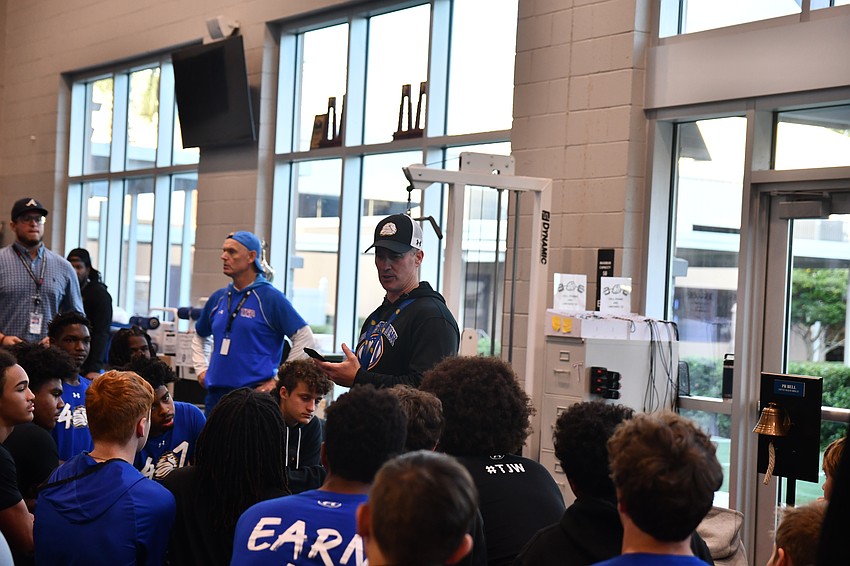
“Great families want to be coached by great coaches, and great players want development and they want the ability to go from point A to point B,” Conaway said. “To do that, you have to have competency. We have highly skilled coaches that can get athletes from point A to point B. I think that’s crucial.”
Many of the coaches previously served as head coaches or played at the next level. TFA’s offensive line coach Chad Mavety played at Florida State University, offensive coordinator Steven Moffett was the quarterback at the University of Central Florida and assistant head coach Corey Broomfield played for Mississippi State.
“They all know what it takes to get (to states),” Ramsier said. “To have people in your corner that will push you every day to get where you want to be but at the same time love you and appreciate you. … I think it’s just an opportunity that’s like no other.”
Each of the coaches was hired under a certain criteria: Christ and character, competency, connection and communication. Each staff member must set a good example for the players. The theme of not only the team but also the school is “the Jesus way,” Conaway said. It’s what the Royals apply to everything they do.
Growing a relationship with God is Whitfield’s favorite aspect of TFA’s program. He was baptized May 2, 2024, and since then, he’s seen his relationship with God shape his approach as a player.
Aside from his character development, Whitfield has developed immensely as a player through TFA, which led to his commitment to an SEC school, the University of Tennessee.
TFA’s crucial development plan doesn’t begin on the playing field or the intense cardio, but in phase zero: weightlifting.
At 6:30 a.m. Mondays through Fridays, TFA’s players trudge into the weight room. They begin with stretches, warm up their bodies, then test their strength. Almost instantaneously, the room fills with cheers and motivation from teammates and coaches as the athletes push themselves — limits are tested and personal records are hit.
“Everything starts there,” Conaway said. “Confidence is built under the bar, but you have to do it the right way. I think lifting year-round is something our athletes use to their advantage.”
Woods’ goal is to work on his strength training. As a younger player on a varsity team, he knows he needs to gain weight and muscle to get faster.
Lifting year-round not only protects the athletes from the hard hits they’ll experience once the season rolls around, but also it enhances their strength and speed over their opponents.
Conaway described the weight room as a place to build injury prevention. It puts the body’s muscles, ligaments and tendons under controlled stress, so at game time, players are conditioned and their bodies can easily adapt to the stress of a game.
“Everything we do on the football field — from getting into the right stance to movement to moving your opponent or getting your opponent on the ground — it all starts here,” Conaway said.
In phase zero, the team calls it the retesting period. After the long football season, the team weight-trained, and coaches took note of all the players’ numbers, max lifting weight and their body weight to put together their future workouts.
In January, TFA has transitioned into phase one of its training program. January officially begins the start of conditioning for the next seven months to prepare for August. The team focuses on growing as much muscle as possible before transitioning to phase two: explosiveness.
In phase three, the Royals switch from being in the weight room four days per week to three and use that period to test and grow the players’ speed. Once summer hits, training intensifies to develop the players’ skills on the field and simulate the action and excitement of Friday night games.
Right away, the team will be tested in its first game back on the field with IMG Academy. Conaway said the goal is to be as prepared as possible for it and the process started once the 2025-26 season wrapped up.
“If you’re prepared, you’re going to be able to perform to the best of your ability, and that’s all we ask,” Conaway said.