- March 14, 2026

-
-
Loading
Loading
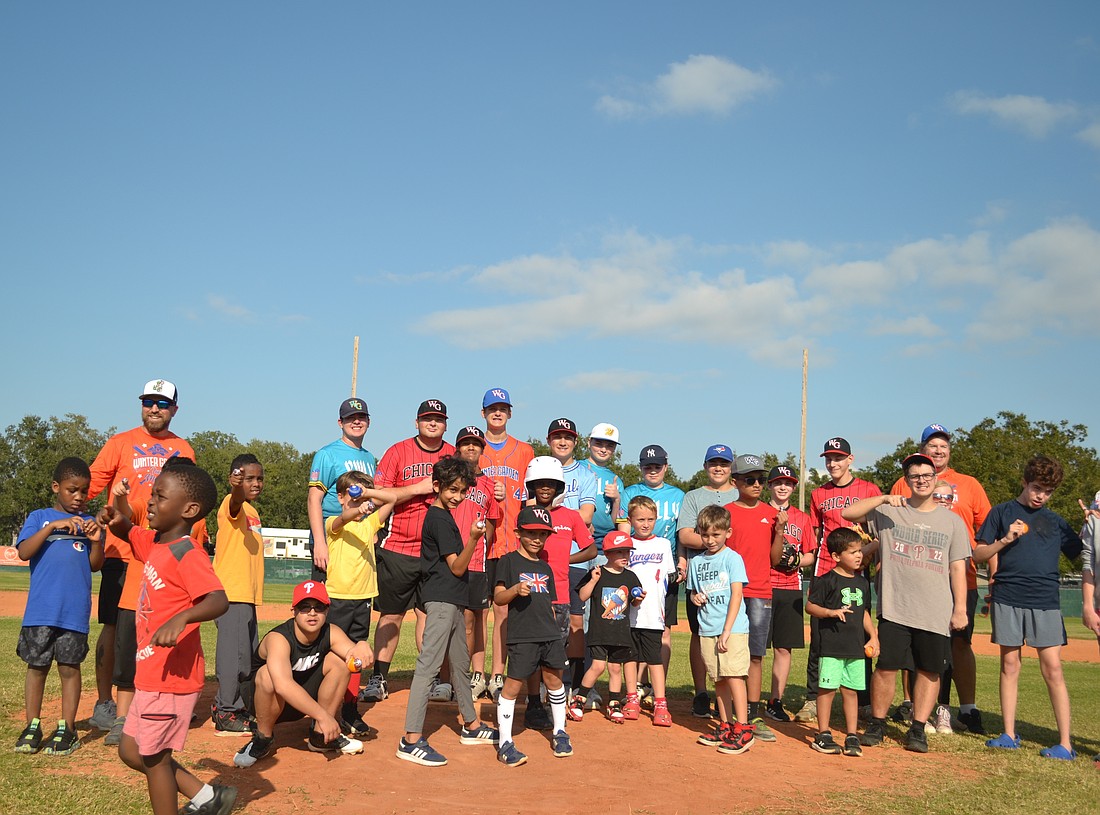
Brooks Napier's infatuation with baseball began when he was 2 years old. He watched his older brother, Remington, practice on the field, and as soon as Brooks could run, he was off dashing around the bases.
Brooks, now 5, plays in Single A as a pitcher in Winter Garden Little League. Being born with Down syndrome never has limited his abilities, but as he advances into the next age group, his parents have concerns about his safety.
Not all children with disabilities enjoyed the same opportunity as Brooks in their childhood.
Winter Garden Little League President Terence Curran’s younger brother, James, was born with tetralogy of fallot, a heart defect affecting its structure, essentially creating a hole in the heart. His childhood was marked with open-heart and lung surgeries, preventing James from ever stepping onto a sports field.
That changes now.
For the first time, James will step onto a baseball field as an adult in the spring as WGLL Challenger Division begins its inaugural season for youth and adults. Brooks Napier, whose development as he ages is unclear, will be in an environment designed for his growth.
When Challenger Division Coordinator Keith Kampenga moved to Winter Garden in 2022 and met families like the Napiers and others whose kids couldn’t play at all because of a disability, he knew something had to change.
Little League is a pillar in the Winter Garden community, and he believed everyone should have the opportunity to be a part of it. Kampenga proposed the idea of creating a Challenger Division — a national league for children with intellectual or physical disabilities — at WGLL.
His idea has come to fruition and opened itself to the community in the fall with two Sunday showcases, a practice and a game.
For the showcase’s game day, Kyle Napier, WGLL coach and Brooks’ dad, said Curran did a phenomenal job with building a special environment for the kids. He bought them hats and championship rings.
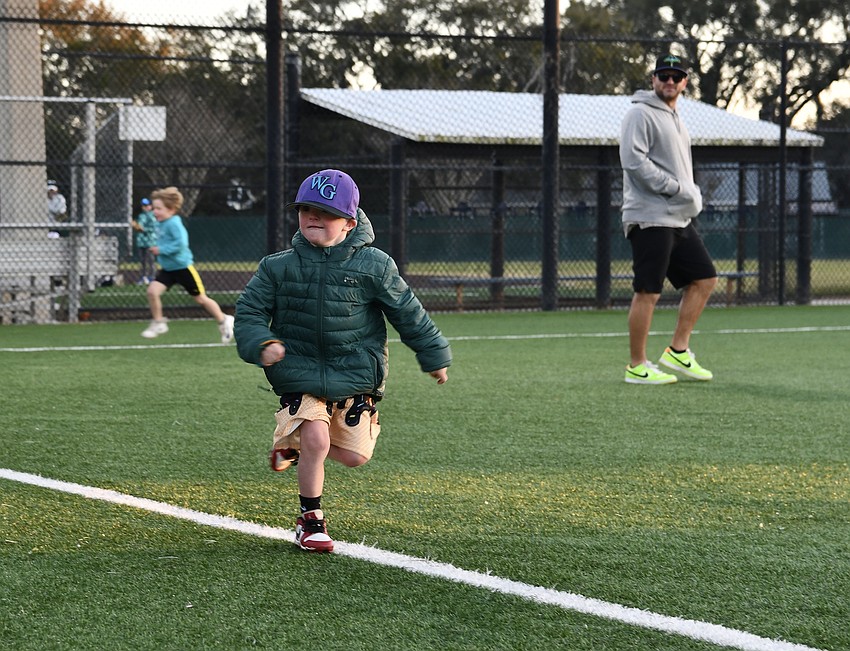
The Challenger Division requires “buddies” to be present during practices and games to assist the players with swinging, directing them to bases or even running alongside them. Kampenga said he particularly scouted older kids from the league’s junior and senior divisions to help. Coaches and younger players are welcome, too. All of the buddies will be given volunteer hours.
“It’s beautiful to see whether it’s a buddy helping or a parent,” Tara Napier, Brooks’ mom, said. “You can see the tears and the joy in the parents.”
A mom approached Kampenga at the showcase last fall and thanked him, saying her daughter never would have been able to play a sport if the division didn’t happen. Another mom watched her son walk onto the field to play catch with a buddy. She was happily shocked seeing her son, who always is attached to her side, go off on his own. Both times Kampenga had to walk away before the waterworks flowed.
Curran participated in the showcase as a buddy. A young boy approached him asking, “What do we do?”
Curran kneeled down to the child to talk with him, and next thing he knew, the boy grabbed his hand and walked onto the field.
“The mom broke down in tears,” he said. “For the two hours that we were there, he was holding my hand, and we were running the bases, and we were working with the bats and the gloves and teaching him how to play baseball and he was ecstatic. ... It was very powerful. It felt very fulfilling to be a part of it and that to me is the reason why we coach.”
Tara Napier remembered seeing how gentle Kampenga’s son, Andrew, was when he pitched the ball to little Brooks. Seeing Andrew have such compassion toward the players with disabilities warmed Kampenga’s heart.
“It was very moving watching the two of them grow,” Curran said about his kids. “Both of them definitely came out as better human beings, to understand that there’s so many limitations to some of these kids to play, and they get to do this all the time, but now they were able to help support some other players.”
Although Remington Napier only is 8, he will be paired as a buddy. His small size makes him ideal to provide comfort to children who might be intimidated by people taller than them.
Meeting the needs of every individual is a top priority for Kampenga. He recognizes each child has a unique personality and might react differently to working with new people. Parents are welcome to step on the field with their child if needed.
His research on accommodating everyone’s needs extended further than the buddy system.
Kampenga’s research on accommodating disabilities was an eye-opening experience. Every detail from the uniforms being a cotton T-shirt to address possible sensory issues and practice and game times being strategically chosen to limit the sun’s impact on players’ skin have been taken into consideration.
The season will kick off with opening night ceremonies Friday, Feb. 20, followed by opening games at 2 p.m. Sunday, Feb. 22. The season runs through the beginning of May.
Creating the Challenger Division was a two-year process. Kampenga had his first meeting with the Winter Garden City Commission in August 2023, and the city approved it a year later. The league also opened its fields to Bob Gwynn, the Challenger coordinator for Florida, who walked through WGLL and pointed out areas of improvement.
“Working with (Kampenga) and talking with him since the beginning of this, his drive is impressive,” Curran said. “He wanted this so bad, and anything that we needed to get done, he was very motivated to get done.”
Curran worked as an advanced EMT critical care technician for 18 years, and he understood the proper medical equipment the league needed to provide for the players. He spent two to three hours per week making field adjustments, fixing any detail that was out of place.
The division will play on the junior and senior fields, and the ultimate dream is to have its own turf field to easily adjust bases and move anyone with a mobility device, Kampenga said.
It will be separated into a junior, 18 and younger, and senior, 18 and older, division. Although the players might be the same age, they could resist the ball more or not be as physical, Kyle Napier said. The league is determining how to organize players based on their circumstance.
Rather than following the three-out rule like Little League, the Challenger Division teams will switch after each team bats through their lineup. They also will play interleague games for now. Eventually, Kampenga wants to expand and play in Challenger games across the country.
The division is free for all players, designing a welcoming environment and a place to have fun.
“At the end of the day, if a kid wants to play baseball, regardless of abilities, talents, disabilities, they should be able to,” Kampenga said.