- April 1, 2026

-
-
Loading
Loading
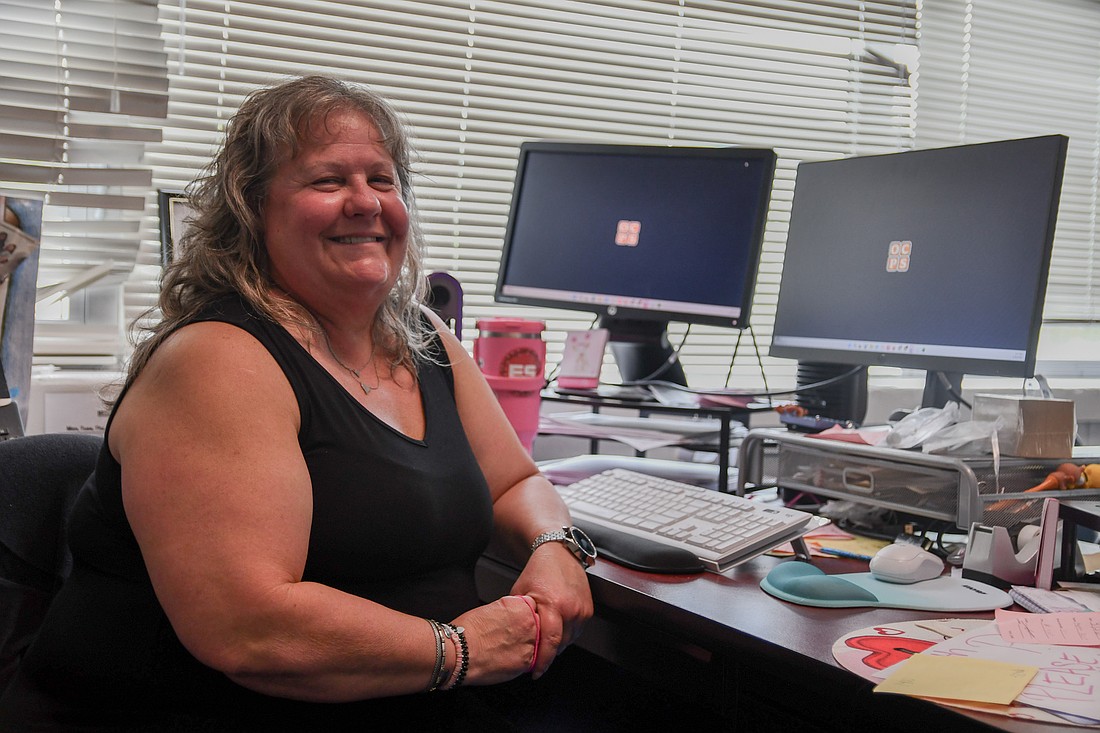
“Cancer was one of my greatest gifts.”
It’s a sentence Dr. Phillips High Exceptional Student Education and Learning Disability teacher Suzanne Scherfer never thought she would say when she was diagnosed with Stage 1 triple negative breast cancer Sept. 22, 2021. But rather than taking away from the light in her life, cancer gave Scherfer a new beginning.
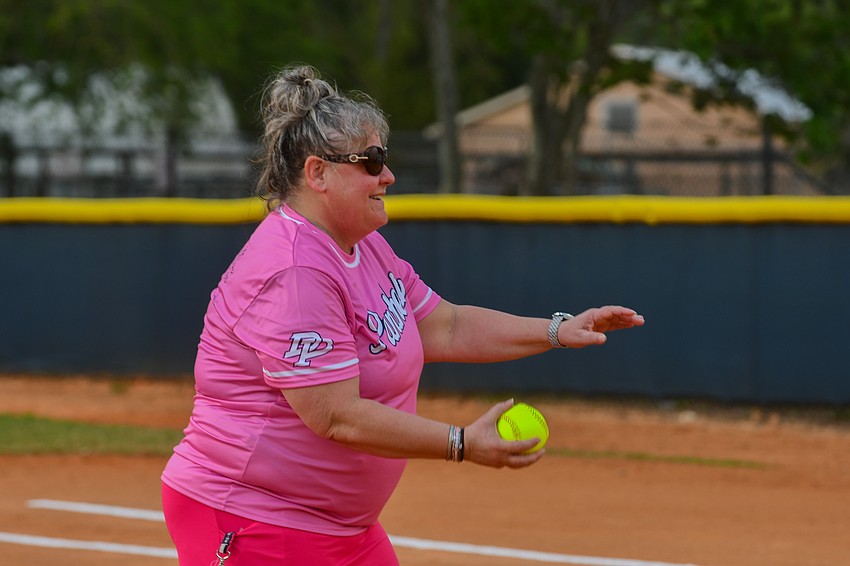
She reconnected with old friends who reached out when they heard the news. She celebrated throwing the first pitch at Dr. Phillips softball team’s Strike Out Cancer Night game Thursday, March 26. Head coach Jessica Jobst gifted Scherfer a pink jersey, which was custom made for the game and signed by all the players.
Most important, Scherfer found her calling.
When she underwent reconstruction surgery in January 2023, it was one of the scariest times of her life. She had friends telling her not to do it, while others stopped talking to her out of the fear of losing her. Her surgery was successful, and she decided to leave her number at the plastic surgeon’s office to give it to new patients who were experiencing the same fear.
Scherfer frequently calls and meets with individuals to provide them a listening ear and a word of advice from someone who was in their shoes not too long ago. She always has been a pay-it-forward type of person, and helping those navigate their fears and make them feel comfortable has given her a new purpose.
“Every year, the plastic surgeon has a reconstruction event, and I usually speak at them, and then people love me because I’m a comedy show,” she said. “I’m comedic relief. I want to help people because it’s scary.”
But she’s always been a helper and a teacher.
Scherfer has dedicated her life to helping students who struggle in school, those that require extra patience and someone who is willing to fight for them. Her journey to become an ESE teacher wasn’t just professional — it was personal.
Throughout high school, Scherfer frequently was called “stupid” and “lazy” by her teachers. She said the teachers always were right, so if they called her those names, she must have been. She also never told her parents because she thought they wouldn’t believe her.
While she was earning her master’s degree at Florida International University, she learned something that changed how she viewed herself.
“I learned that I was learning disabled myself,” she said. “We were studying learning disabilities and I said, ‘That’s me.’ … My other professor who tested me was like, ‘How’d you get through high school?’ I said, ‘I don’t know, but I’m getting my master’s.’”
She was diagnosed with a learning disability and dyslexia. All of a sudden, her childhood made sense. The struggle to read a book, the constant feeling of having to work harder than her peers was due to her disability.
Now working as an ESE teacher, she understands completely what her students are going through, but that doesn’t mean she lets them off the hook.
“I understand them,” she said. “But it’s frustrating sometimes, because I worked so hard and some of them use it as an excuse.”
Without her students, Scherfer might not have been able to catch her cancer as early as she did.
Following COVID-19, Scherfer was placed back into ESE teaching after a few years as a reading teacher. The day before school began, one of the students with autism jumped into her lap when she was sitting in her office chair.
It hurt her hip, so the doctors decided to do a hip X-ray.
During the X-ray, the doctors thought they saw something on her uterus and ordered further testing. Scherfer had a mammogram, then a biopsy, and doctors recommended she undergo genetic testing to see what challenges her genes could present.
“It wasn’t supposed to go this far,” Scherfer said.
The manner in which the doctors were talking to Scherfer, she knew it was going to be a tough diagnosis. A few days later, she received the call.
It’s cancer.
She thought it would just be a lumpectomy, a surgery that removes a portion of the cancerous tumor from the breast. The surgery is quick. It only takes about 15 to 90 minutes, and the recovery timeline lasts from one to three weeks. The doctors assured Scherfer her Stage 1 cancer would easily be removed.
Then the genetic testing came back.
The results showed she had a genetic marker linked to triple negative, an aggressive form of cancer that grows more rapidly. Her treatment plan escalated.
“It went from a lumpectomy to everything has to go, and (I) had to be on the most extreme chemo because it was a genetic thing,” she said. “With my genetics, it’s your breasts, your ovaries and your pancreas, but they can’t take your pancreas. … I had no choice.”
She began her chemo process. For the first 12 weeks, she was OK, but the second round of chemo brought “the red devil.”
“They pump this stuff into you,” Scherfer said. “It looks like a Jell-o shot, and they have to time how they put it in. … He said, ‘Your hair will fall out within so many weeks.’ Thanksgiving, hair fell out. By week eight, the fatigue was really starting to kick in.”
Her humor became her tool for survival.
“I had lost all my hair, and one of my students was like, ‘I wish my hair was longer,’” Scherfer said. “And I said, ‘I know, me too.’ My student said, ‘Miss, that’s not funny.’”
Throughout her treatments, Scherfer never was alone. Friends from her fitness community when she used to coach at Gold’s Gym stepped in to support her. Scherfer’s mom, who lives in Miami, drove up to Dr. Phillips whenever she could to support her.
But allowing others to step in and help her wasn’t easy for the independent Scherfer. The hardest part was letting others do daily chores for her. Someone told Scherfer she needed to let people help her because they wanted to and eventually she understood what it meant.
She never went to the doctors alone, and after returning home after her chemo treatments, she had people with her. She had friends come over to clean her house so she could be surrounded in a welcoming environment.
After finishing her chemotherapy six months later, she underwent a mastectomy in May 2022.
She became cancer-free, but the recovery didn’t end there.
Over the next year, she had her reconstruction surgery and a total hysterectomy due to her genetic risk.
Scherfer still has to go to the doctors every three months to check her bloodwork because of her genetic testing. She is grateful she wasn’t any sicker because the cancer was just one part of her battle — she also was battling insurance the whole step of the way.
“Two hours after getting my port, I’m on the phone fighting my insurance for my chemo,” she said.
It was a constant battle with insurance, which added another level of stress to the point her friend even started a GoFundMe to help alleviate the costs. It took her three years to get a Positron Emission Tomography scan. She had Computed Tomography scans done, and her insurance wouldn’t approve it.
She said the insurance was a struggle when it came to any preventative tasks; even her diabetes is costing her more money than her chemo did.
Through the years of battling chemo, cancer, surgery and insurance, Scherfer tried her best to stay uplifted. She’s back in the classroom. She’s back to working out.
Now that it’s over, she’s finally begun to process it.
“You never process it until you’re done,” Scherfer said. “My first thought was, ‘How am I going to get to the end?’ My life became, ‘What appointment is next? What procedure’s next?’ Then three years later, it was my three-year anniversary and it was like, ‘Wow.’ That’s when it hit because I was finally done with everything.”