- July 29, 2026

-
-
Loading
Loading
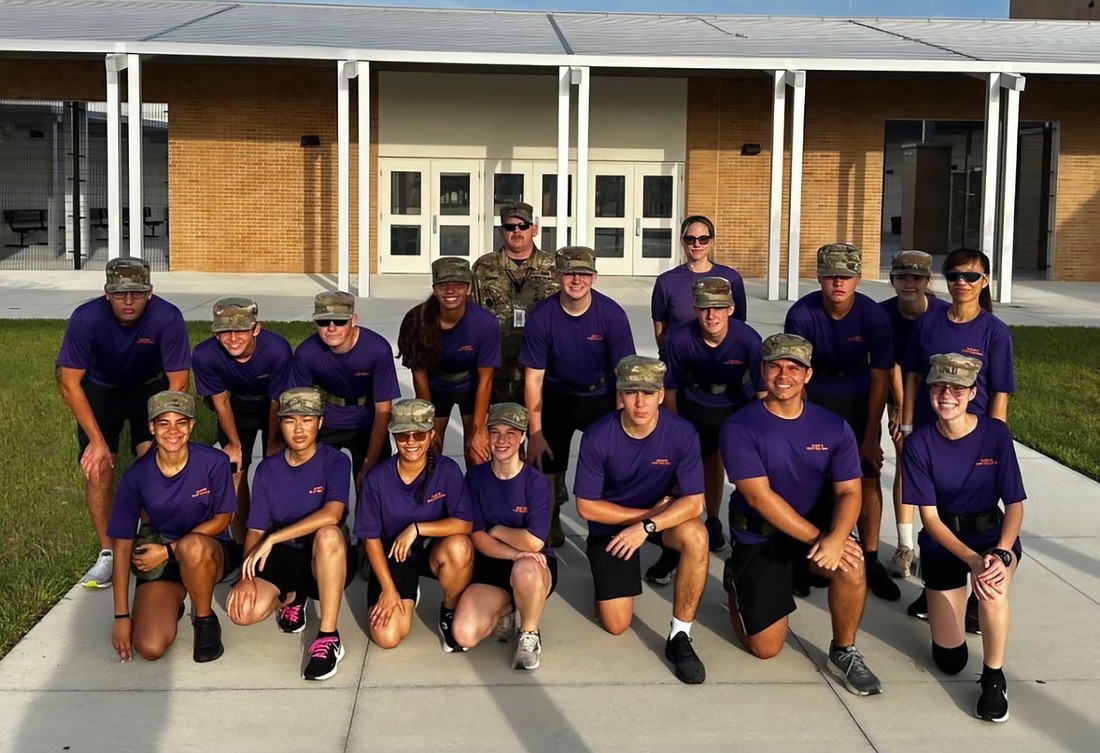
For three years, Mariela Johnson has watched the Horizon High School National Defense Cadet Corps grow in membership, succeed in competitions and provide opportunities for cadets to develop as leaders.
She said the school program is the only one in which she has participated that requires every individual to serve as a leader in some capacity.
It’s the leadership skills and qualities that help the cadets develop as individuals who will make an impact in those around them — whether at school or in the community.
Entering her senior year at Horizon High as the command sergeant major for the battalion, Johnson wants to take advantage of her opportunity to serve as one of the leaders of the program to expand its impact.
Now that Horizon High’s program officially has received the designation as a Junior Reserve Officers’ Training Corps, Johnson’s mission is in action.
The new designation will give the school’s program more flexibility and funding to build upon the foundation retired 1st Sgt. Raymond Mason has been setting since he started the program in 2021 when the school opened.
“The value in (becoming a JROTC) is it finally puts us in a position to have more influence,” Johnson said. “There is a lot we have been able to do, and I would thank Sgt. Mason for a lot of that. But it does really help us to do more in the community.”
Horizon’s program becoming a JROTC in Johnson’s final year of high school is bittersweet. She will work alongside Battalion Commander Eliza Stull to create service learning projects that will become tradition for the program and develop a welcoming culture on which younger cadets can build, but she won’t be at the school to see the fruits of her labor in the coming years.
“I can leave this legacy as the first command sergeant major for the actual JROTC and leave a legacy in my senior year,” she said.
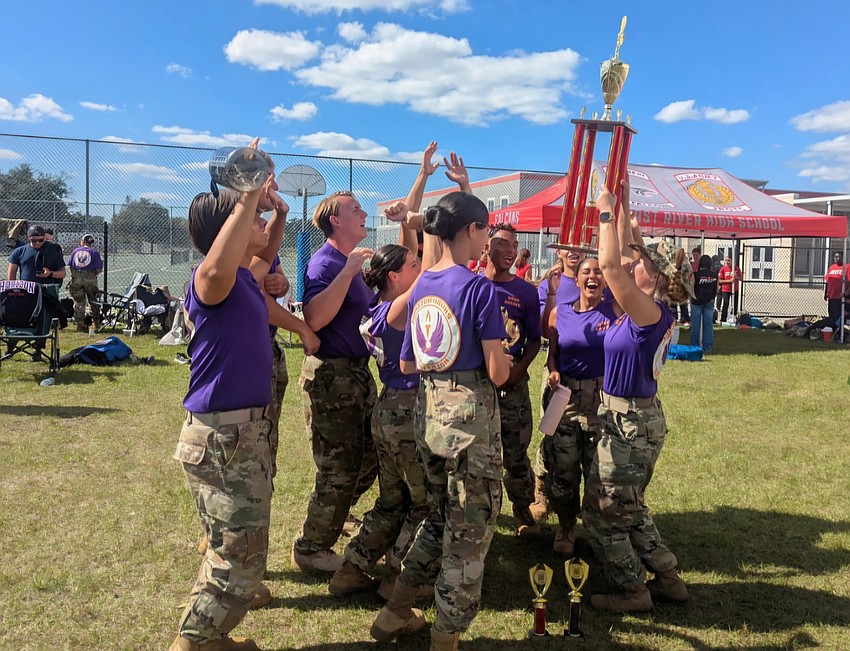
When the corps began in 2021, the Horizon High NDCC had 30 students, and Mason was retired after serving 25 years in the U.S. Army. He wanted a challenge, and he locked in on becoming an instructor and working toward transferring the NDCC into a JROTC.
An NDCC is able to participate in all the programs and activities and function similarly to a JROTC, but the main difference between the corps is how it is funded. Orange County Public Schools footed the bill of NDCC, while JROTCs are federally funded, taking the burden off local high schools and their districts.
Mason said the journey to becoming a JROTC has been hard but rewarding, but with the support of school administration, parents of students in the program and the community at-large, the program has realized steady growth and achieved strong outcomes.
“It’s very rewarding to see students in the very first year and how they progress in the program over four years,” Mason said. “I get to see them meet some of their dreams. … It’s not a military-recruiting program. It’s there for leadership, and it goes down to our core value and our mission, which is to motivate young people to be better citizens.”
At least 130 students will be participating in the Horizon High JROTC program this school year.
Battalion Commander Eliza Stull, a rising senior, joined JROTC because her brother, who now serves in the military, also was in the program. She wanted a glimpse into military life to see what her brother, father, grandfather and great-grandfather might have experienced during their time of service before she goes to college and considers enlisting herself.
Although she plans to enroll in an ROTC program in college and potentially enlist, she said the leadership skills and confidence in herself she has gained from being in Horizon’s program will stay with her for life, no matter the direction it goes.
Although it was an NDCC, Mason set the program up to be just like a JROTC to give students the same opportunities and experiences as cadets in other JROTC programs.
“I’m very excited, because (being an official JROTC) kind of transitions my students to finally be on the same playing field as every other JROTC in the county,” Mason said. “They were already doing the same stuff, but now they get that formal recognition. … I can’t wait to see what we do in the future and what the students do.”
Stull said at times, cadets felt like underdogs being a part of an NDCC surrounded by JROTC cadets. But now, they’re all the same, which is motivating for the cadets, she said.
The differences starting this school year as a JROTC will be small but impactful.
With Mason putting in the work with the cadets the past three years to become a JROTC, the foundation for the program’s future almost is set.
With federal funding, Horizon High’s program will be able to make a few changes, such as purchasing more uniforms so all cadets have a uniform that actually fits. The school previously had to purchase uniforms, or the cadets had to raise money for them.
Stull has experienced a growth spurt but still wears pants that aren’t long enough to cover her legs because uniforms are limited, and she doesn’t want to take a uniform that fits well on another cadet.
Stull said every cadet being able to wear a uniform will bring the program participants together, feeling more like a unit with each cadet beaming with pride to wear a JROTC uniform.
Johnson said the change in the source of funding also will allow for the expansion of service-learning projects.
Cadets already assist Horizon West American Legion Post 419 in activities and initiatives such as Wreaths Across America. They also have a tutoring program with Panther Lake Elementary School to help students in math and English. Another service project was going to Panther Lake and Water Spring Middle School to host a flag-folding class.
With more funding comes more opportunities to serve the community or participate in competitions with ease.
Despite being an NDCC, Horizon High’s program has competed against other JROTCs in the district and state in various competitions, competing at a high-tier level.
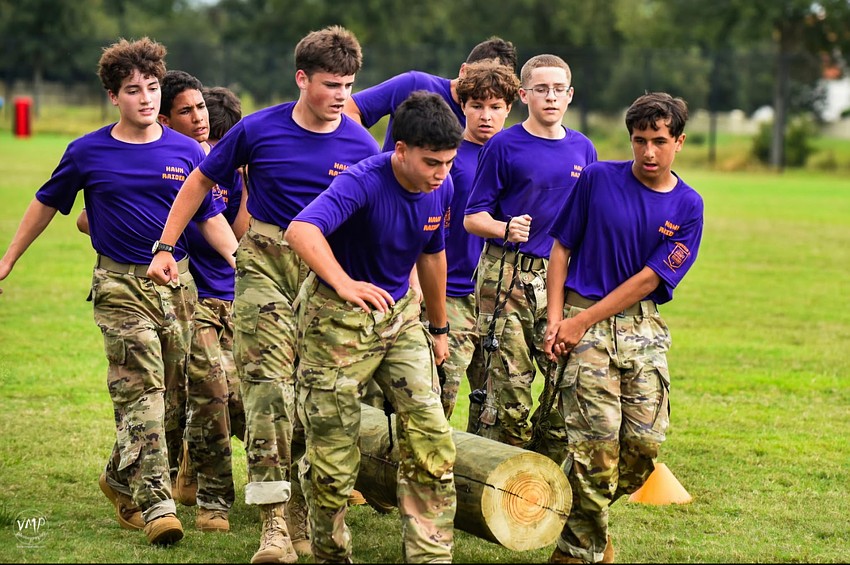
Stull said the raider competitions, which include physical fitness events similar to a Tough Mudder, have kept her in the program because of the memories she has made with other cadets.
“You’re working with a team going through these obstacles and you’re developing close friendships with them,” she said. “You’re learning to trust (one another), guide each other through tough, physical exercises.”
The mixed-male raider team competed in the state competition this past school year, making history for the program as the first team to reach states in the raiders competitions.
“We were able to show up and show out, and we got second place at districts,” Stull said. “We were able to go to states where our morale was kind of high, and we were proud of ourselves to be able to compete at that level.”
The program’s JROTC Leadership Academic Bowl, a competition similar to “Jeopardy,” also has achieved positive results having been runners-up at the state level two consecutive years. The team’s ultimate goal is to compete at the national level in Washington, D.C.
The cadets also compete as a drill team and have qualified for states each year the program has participated. In the program’s history, there has been a color guard team and exhibition teams that have qualified for states. Stull wants to set a standard that every year, multiple drill teams will compete at the state level.
Over the summer, cadets can participate in the JROTC Cadet Leadership Challenge, a five-day camp where they engage in high-adventure activities.
Finally, the cadets participate in the University of Central Florida’s Iron Knight Challenge the college’s ROTC program hosts. Stull is striving to have a Horizon High team come home with the big first place trophy once again like it did two years ago.
More important, having funding more easily available will allow Stull and Johnson to achieve a top goal for their final year of high school: bringing together the JROTC program as one unit.
The program is divided into multiple classes throughout the school day. It’s not often all 130 cadets are able to gather to spend time together, bond and become a solidified unit.
They have a field day once per year that brings out friendly competition, but Stull and Johnson are hoping to host more after-school full-JROTC events to bring the small but mighty corps together, creating more of a family atmosphere.