- July 24, 2026

-
-
Loading
Loading
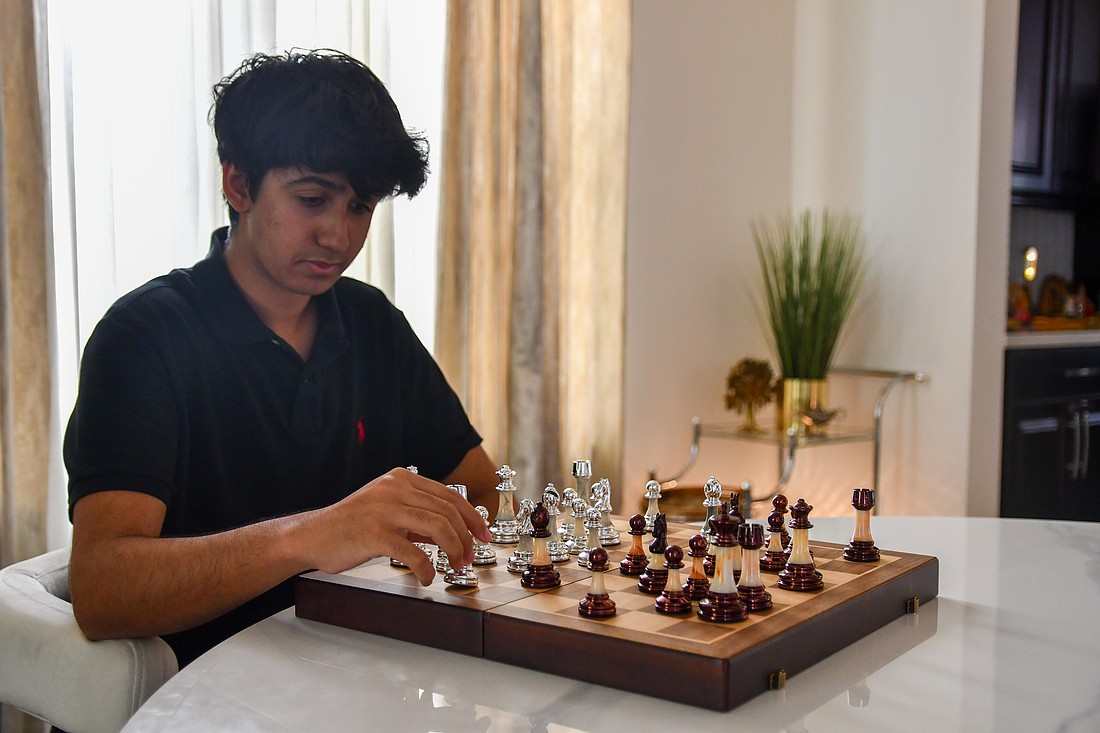
During the peak of COVID-19, Windermere Preparatory School sophomore Suvir Aylawadi realized he was a prodigy at chess. In the time filled with isolation and brokenness, online chess gave Aylawadi a sense of purpose and focus.
But most important, it gave him clarity.
Aylawadi, who was 10 years old at the time, was defeating players who were 13 years old and older, and he realized his natural talent. Specifically, he remembers winning a chess tournament one day, rushing to tell his parents about it and screaming with joy. In that moment, he realized all the other 200-plus players across the world also must be experiencing the same feeling.
“I thought about it,” he said. “What if I could help students who are like me, because I had developed a skill level that was very advanced for my age, to actually help those other people get the same success and same joy as I was feeling?”
He realized with his skills, he could unite like-minded students and help them learn the game — all while providing a space for connection in an unprecedented time.
In 2021, Chess for Change Academy was born.
Now, six years later, the academy has impacted people from all around the world. And in Aylawadi’s ongoing research, he’s discovering ways knowledge of the game and its players can help people outside of chess, too.
At the start, Chess for Change Academy wasn’t the largest organization. At 11, Aylawadi introduced it to his school and his circle of friends. But soon, the momentum grew. One day, he woke to 50 messages from people wanting to play chess. Then 100 messages.
The message count continued to expand to where the academy is today — impacting more than 1,100 students in 12 countries. The academy primarily serves youth ages 4 to 18 through virtual and in-person introduction. Students not only learn how to play chess but also how to think critically, manage pressure and build confidence.
Although the academy’s players continue to excel in national and international tournaments, the success isn’t the root of its purpose.
“It’s more about creating a change for others and giving the same opportunity that every student can have, because every student deserves access to education tools,” Aylawadi said. “They also deserve access to, for example, a book or pen, and these things that we take for granted and especially a chessboard, which may not seem like the most valuable thing, can go such a long way.”
Classes are hosted through the academy’s team of 15 mentors, who have great experience in chess and guide its instruction. They teach anyone, regardless of their skill level, how to play the tactical game and determine their strengths and weaknesses.
Aylawadi even has found another young prodigy through the process.
Last year, a 4-year-old girl was watching her brother play chess at a tournament. She continued to ask how it was played, but her brother didn’t want to help. So Aylawadi took her to a chess table and taught her how to play. He broke down what every piece meant. Out of the blue, she played the Caro Khan opening, which is an advanced start that Aylawadi learned from his chess coach.
A year later, she’s a 1,350 rating in chess and one of the best chess players in India, Aylawadi said.
“That goes to show that people who get access to education and these tools throughout structured learning programs and educational outreach and just one chess class can change someone’s life,” Aylawadi said.
From a parent’s perspective, Aylawadi’s mom Rashi Arora, said she’s heard the success stories and how it has rounded the students as people.
“It has made them more motivated, more confident and better at decision making,” she said. “Students who come as hesitant thinkers, who are not really very confident of what they really want to do … but when they start doing it, they tend to become better decision-makers, and that’s a skill that goes outside of the chess board.”
For Aylawadi, those lessons are the true value of the game he picked up 10 years ago.
Everything began when Aylawadi’s dad introduced him to a chess when he was 5. He vividly remembers flicking the pieces around and playing that way for two weeks until Aylawadi became curious about why there were exactly 64 squares on the board and how he should move the pieces.
Over time, he began to beat his dad, and at 7 years old, Aylawadi began to receive chess coaching. The help from external sources led Aylawadi to finding his passion, and he entered his first online tournaments when he was 10 years old.
He began to find elegance within the board. The calculations were of particular interested — nobody has to guess. While mistakes do happen, every player can think of all possible outcomes, they can see the future, and that coordination strengthens the mind.
Through watching himself and others play, he began to notice trends. Players who were highly skilled, in high-pressure situations, would lose. When there was a short amount of time left on the clock in complex board situations, they would tend to not think and their game would crumble, Aylawadi said.
It sparked the question: Is chess a game based on skill, or is it based on how you regulate yourself?
“That’s a really big part of what I find beautiful (about chess),” Aylawadi said. “Chess is not only about how good you are, but (also) how your traits and character can be seen through the game. It’s not only a medium of, ‘OK, I play some certain moves, and it defines my skill level,’ but it’s really a representation of who you are.”
He created a research model and plan to analyze the high-pressure situations, and see if it was really influenced by skill or if it was influenced by how one regulates their body levels, motivation and confidence on the chessboard. The model centered around adolescence, the primary factor for starting his research. It included topics such as decision-making, performance, motivations and confidence, and used analytical biomarkers that were analyzed through graphs and scientific method and research processes.
Aylawadi said the research really has been his whole life because he has been surrounded by chess, but the inquiry and depth inside of the scientific world began around nine months ago. His teachers, grandparents and other mentors, helped him develop an interest and incorporate chess into science.
His research explored how these patterns apply beyond the chessboard, with potential implications in fields such as education, health care and emergency response.
“Think about teachers, doctors and police officers,” Aylawadi said. “They’re constantly in high-pressure situations. If we can understand how people make decisions under stress, we can help improve how they perform in those environments.”
The project earned Aylawadi national recognition and awards, and he plans to expand it to phase two, which will be done over the next two years by incorporating artificial intelligence models in future phases. He wants to use his research to help people — not only in chess but also in everyday life.
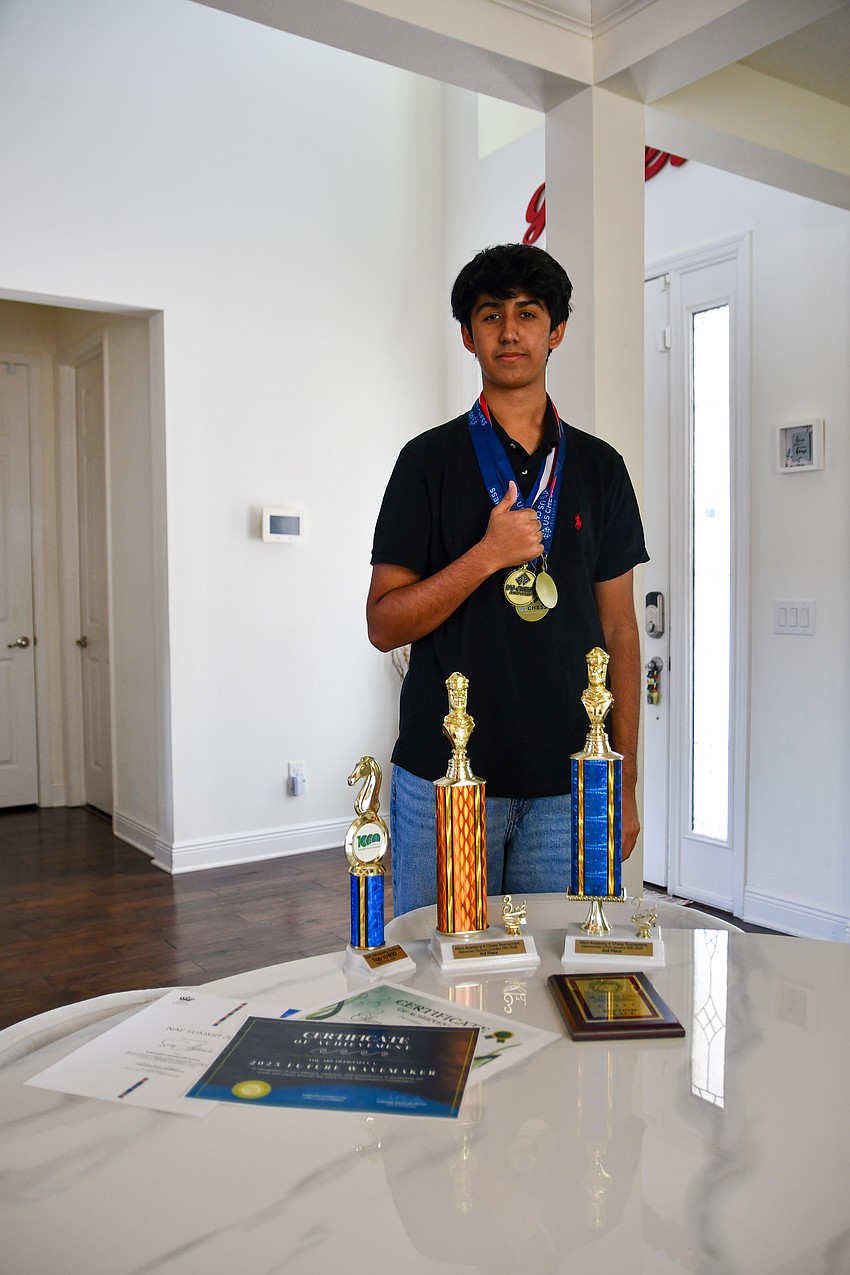
He won the Special Award for Outstanding Individual Research in Neuroendocrinology and Behavioral Psychology and second place in the senior division for Behavioral and Social Sciences of the Dr. Nelson Ying Science Exposition. Aylawadi also has been recognized for his efforts with Chess for Change Academy.
Aylawadi has spoken and presented on his academy at international forums. He spoke at the Nord Anglia Education UNICEF conference, where he presented on how his academy supports the United Nations’ sustainable development goals of quality education and inequality reduction.
Speaking at the global youth summit, where he addressed students from more than 50 schools, was life-changing.
“It was the first time I spoke at that scale,” he said. “After I finished, people came up to me, asking questions and talking about the academy. That’s when I realized the impact it was having.”
That moment stayed with him.
“I went back to my room that night, and I was just thinking, ‘If this is what one talk can do, what else is possible?’” Aylawadi said.
Since then, he has continued to expand his reach, earning recognition as a student leader and being selected for further programs. He recently was awarded a Delegate Commendation at the UC Berkeley Model United Nations, where his ability to address complex global challenges reflected a broader commitment to impact that extends beyond academics into real-world problem-solving.
The Windermere Prep student has accomplished all of this at only 15 years old, and he’s just beginning. It has shown him that the saying, “Age should never be a limit of what you do,” which his grandparents said to him, truly is accurate.
Chess no longer is just a game for Aylawadi. It has become a tool to help others, connect with peers and create change.
“All of this started with a chessboard,” he said. “Just 64 squares, and it’s led to something much bigger than I ever imagined.”