- August 11, 2026

-
-
Loading
Loading
 Orange County Public Schools
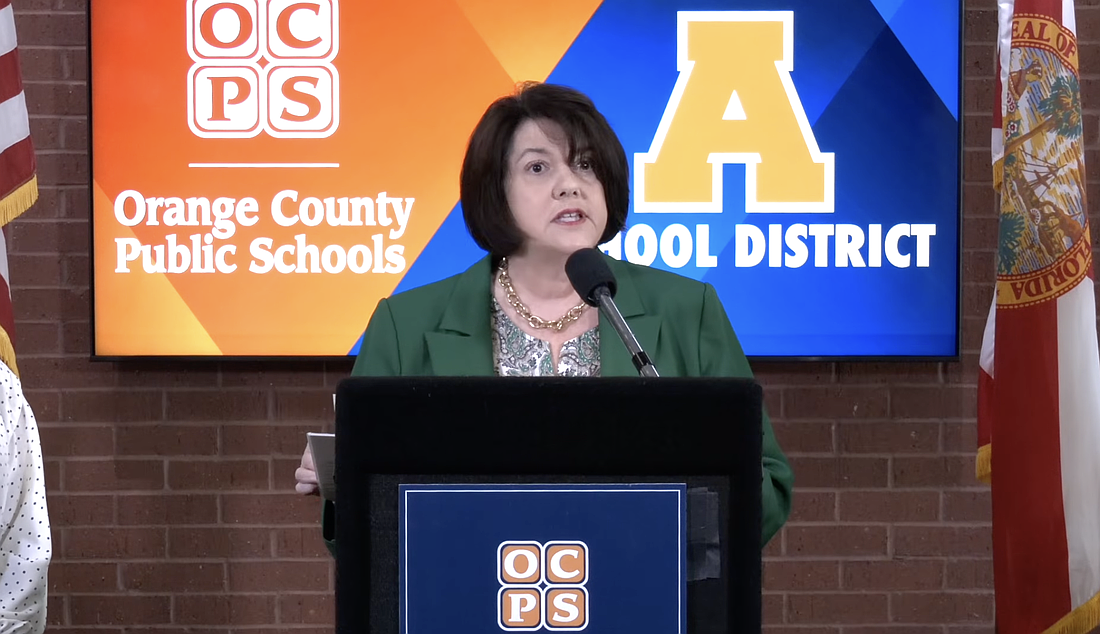
Orange County School Board members addressed topics such as health care costs, declining enrollment and school consolidation during a press conference Tuesday, June 16.
OCPS Superintendent Dr. Maria Vazquez said the school district currently is facing many challenges — lower birth rates, housing trends, changes in federal immigration policy and increased competition through taxpayer-funded vouchers and other school-choice initiatives.
These factors led to the closure of seven schools due to enrollment decline.
“We are now taking a thoughtful pause to develop a long-term plan for under-enrolled schools while continuing to deliver a high-quality education for every student that walks through our doors,” Vazquez said.
The plan is to repurpose the schools to meet operational, community and partnership needs while potentially using these facilities to enhance educational opportunities.
Vazquez said the district currently is expanding opportunities for families through the development of new school choice options including micro schools, such as the baseball/softball academy for third- through sixth-graders, while also introducing new scholastic academies at the elementary and middle school levels.
Vazquez said no other schools are expected to close for the 2026-27 school year.
Rise in employee health care
Florida is experiencing some of the fastest increases in health care costs in the country. Today, the district contributes up to $10,555 per employee for health care, and that will increase to $11,611 next year.
While the district has invested hundreds of millions of dollars to offset rising health care costs, Vazquez said the current plan simply cannot be sustained.
Contract negotiations between the district and the teacher union, Orange County Classroom Teachers Association, broke down, and Orange County School Board declared an impasse in April after negotiation attempts.
“This was not an adversarial step,” Vazquez said. “It’s a responsible and necessary process under Florida law to keep moving forward as deadlines approach related to health care decisions. Without an agreement, the district could be required to allocate up to $20 million per month just to maintain its current health care plan. That’s not sustainable, and it’s not an ideal outcome for anyone.”
Vazquez urged for decision-making as continued disagreements could impact funding available for teacher raises, classroom support and student programs.
“Because we are self-insured, failing to meet those costs could put our health care coverage at risk and force us to move into a more expensive for-profit model,” Vazquez said. “That’s not where we want to go.”
She said the district’s goal is to protect health care for employees while also protecting its investment in students, claiming future steps must be grounded in transparency and shared responsibility.
School Board members said transparency is key.
“We are committing to grounding our communications and conversation in facts and being transparent throughout this process,” board member Stephanie Vanos said.
However, Clinton McCracken, OCCTA president, said the district is not being transparent.
“Transparency means showing employees the data, the contracts, the decision-making process and the analysis behind the recommendations being made,” he said. “Transparency also means being willing to answer difficult questions when those answers may be uncomfortable. School Board members seem to think that putting on a scripted show (Tuesday, June 16) is enough.”
McCracken asked the district to release an un-redacted copy of the district’s contract with Cigna, explain what happened with CVS Caremark and why it insists on maintaining complete control over what insurance-related information is shared with employees.