- August 13, 2026

-
-
Loading
Loading
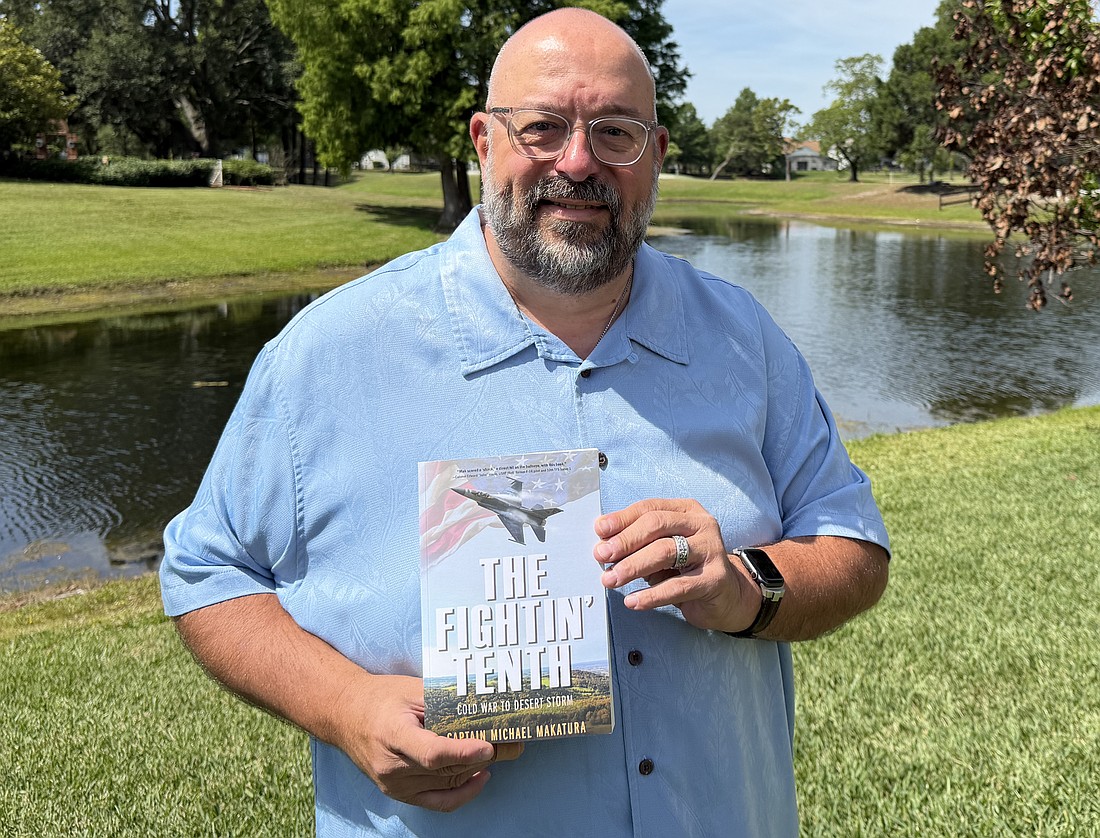
When Winter Garden’s Capt. Michael Makatura travels to Virginia Beach next year, he will be reunited with his buddies with whom he served in the 10th Tactical Fighter Squadron.
Just as they have at every reunion every three years, they’ll reminisce and tell war stories.
But what will make this reunion special is it’ll be the first since Makatura, who served in the Air Force from 1987 to 1994, published his book, “The Fightin' Tenth: Cold War to Desert Storm,” a book putting all the stories the members of the squadron have been sharing with others over the past 30 years on paper.
A tradition in the Air Force was for each member of a squadron to sign a lithograph of an F-16 and its silhouette as a keepsake for those who were departing. The lithographs were given as tokens of appreciation.
Instead of each member of the Fightin’ 10th signing the lithograph at the reunion next year, everyone will sign 50 copies of Makatura’s book so every member can return home with a copy of their written legacy in hand with all the members’ signatures.
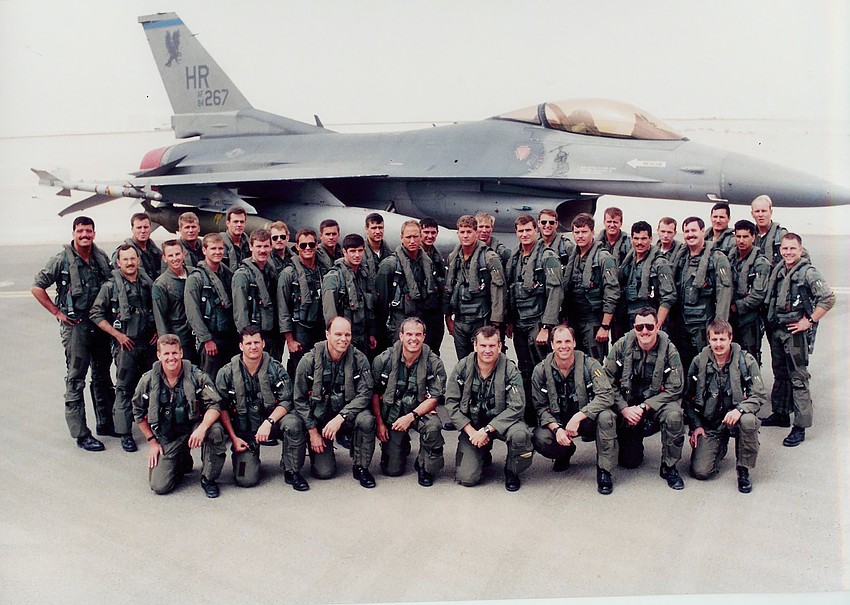
“The Fightin' Tenth: Cold War to Desert Storm,” which was published Tuesday, May 5, is a memoir of the 40 individuals who served in the 10th Tactical Fighter Squadron in the U.S. Air Force.
Makatura shares his experiences serving as an Air Force officer with the squadron as the Cold War dragged on before the squadron was deployed to Kuwait for Operation Desert Storm.
The book is a telling of the squadron’s legacy of standing ready to serve.
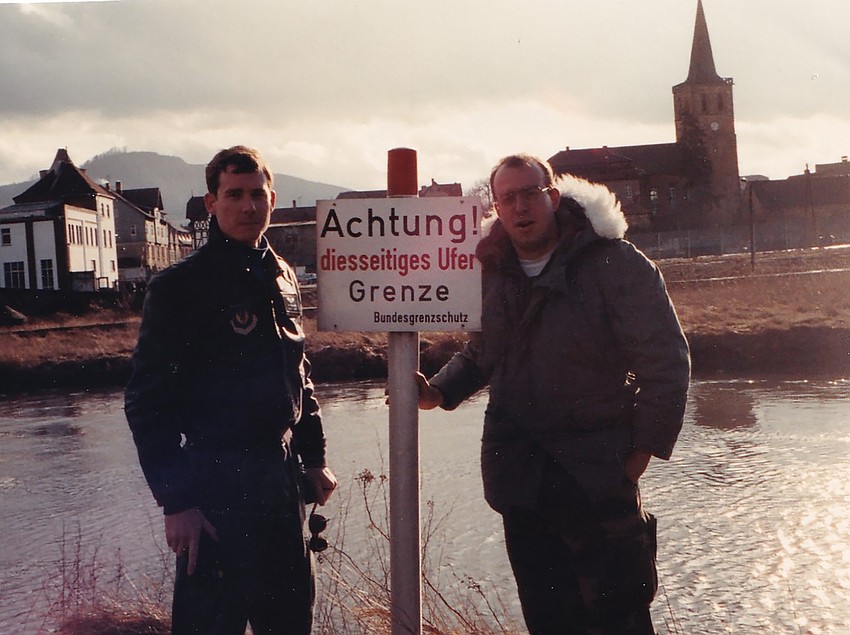
Freshly graduated from the University of Pittsburgh at Johnstown, Makatura was trying to figure out his next steps and drove past a military recruiting station near his grandmother’s house in Pittsburgh. He always felt a sense of duty and desired to give back to his country.
That sense of duty encouraged him to walk through the doors and enlist in the Air Force.
Before he knew it, Makatura was headed to the airport to fly to Lackland Air Force Base in San Antonio, Texas, for Officer Training School.
He remembered being called “sir” and being shepherded around along with another young man headed to training. At the airport in San Antonio, he saw about 300 young people sitting on duffle bags, but he was pleasantly surprised to learn he would not be joining them as they were going to basic military training. Instead, he was put in a taxi and taken to the dorms of Officer Training School where they were met by a training officer who welcomed them and brought them to the dorms.
“We went to bed that night thinking, ‘This is going to be great,’” Makatura said. “At 5 a.m., there were really angry people yelling at us and waking us up. The evening before was the last nice thing that happened to us.”
After four months of intense training in which Makatura was put through a mental game to break a civilian of the “self-centric” mindset and rebuild him to adopt the military life and become a military officer.
“It might have been the most difficult thing I’ve ever been through,” he said.
But it was the sense of duty that made him persevere through training.
On Feb. 23, 1988, Makatura was sent to Biloxi, Mississippi, to Keesler Air Force Base for operations management and technical training before he was assigned.
He recalled receiving his assignment on a rip, a sheet of paper printed on a dot matrix printer that stated in the middle of the sheet Hahn AB-GE.
“I was a civilian, right? I’m just getting into this mess, so I don’t know what AB means, and I don’t know what GE means, so I asked my flight commander,” Makatura said. “He said, ‘Oh, that’s Hahn Air Base in Germany.’ I can remember thinking clear as day, ‘You’ve got to be kidding me. Really, how cool is this?’ Just a few months ago, I was a college student, and all of a sudden I’m a second lieutenant in the United States Air Force, and I’m going to Germany.”
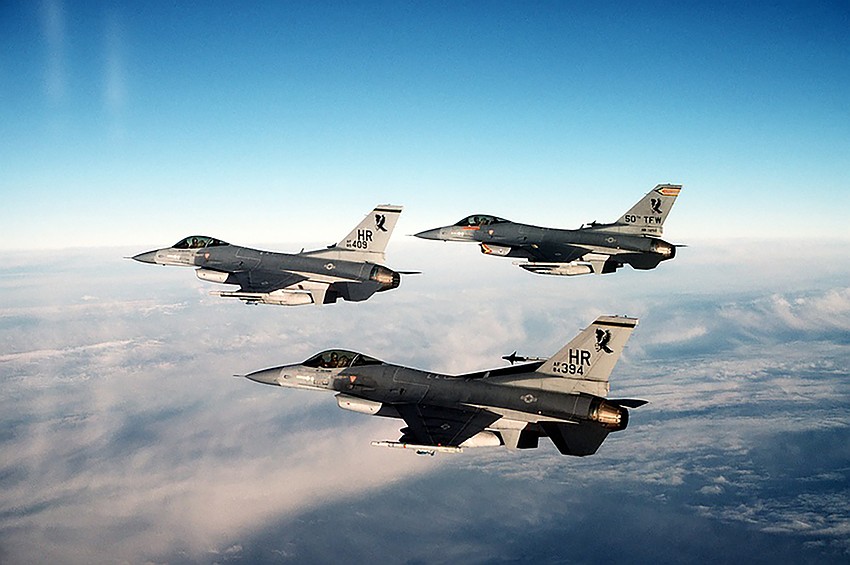
Makatura landed in a country where he didn’t know the language, didn’t know the surroundings. Everything was different. Moreover, he discovered being in the 10th Tactical Fighter Squadron would be completely different from the atmosphere he experienced at training.
Makatura said a fighter squadron has its own ethos. Unlike Officer Training School, which was a regimented, by-the-book environment, the squadron was different.
In training, he was taught to report to his superiors by saying, ‘Sir, Lt. Makatura reporting for orders, sir.’ He was practicing this in his head. When he approached his sponsor, a first lieutenant, he gave him a “crisp salute” and said his line.
The lieutenant with a “wry Oklahoman grin,” said, “Be careful with that thing, you’re going to put an eye out,” Makatura said.
“That was the beginning of an immersion in a fighter squadron culture that I heretofore had not had any experience with,” he said. “The other thing about the fighter squadron ethos, because the gravity of what they do is so great, the communication and feedback loop is immediate and radically candid. So there is no time or appetite for beating around the bush and the niceties. It is very, very blunt. There’s a lot of sarcasm, and there’s a lot of thick skin, because that’s what you need to survive in that environment.”
As the executive officer, Makatura was the commander’s right-hand guy, conducting all the “administrative functions that enabled pilots to fly, fight and win,” he said. He was known as a “shoe clerk,” which he said was a derisive term for someone in that position who also was supposed to be subservient.
But not Makatura.
He, like the F-16 pilots, was a Type-A personality, gregarious and loud, which took the pilots and others in the squadron by surprise.
But because of his personality, Makatura became “one of the guys.”
He knew he was trusted and highly revered when he became the first non-pilot in the 10th Tactical Fighter Wing history assigned to the duty desk, the central nervous system of the fighter squadron. The duty officer was charged with ensuring the jets were ready to go, communicating with maintenance teams and the control tower and letting pilots know of anything going on whether it was maintenance, weather or anything that could impact the mission.
“It was unbelievable,” Makatura said. “Military service in general is a calling, and I found myself walking tall and proud that I was an Air Force officer, that I was serving in Europe during the Cold War. I was completely bought into the calling and the responsibility that I had.”
When Makatura was sent overseas to Germany in June 1988, it was in the midst of President Ronald Reagan’s second term. Reagan was working with Margaret Thatcher and the U.S.’ NATO allies to put pressure on the Soviet Union. Reagan and Mikhail Gorbachev, the leader of the Soviet Union at the time, were redefining the geopolitical landscape, negotiating treaties to remove nuclear weapons from Europe in the wake of the Chernobyl nuclear disaster and the subsequent attack on Libya.
“The tectonic plates of the geopolitical environment were shifting under us, and we were the closest fighter squadron to Moscow, and we had missions associated with repelling a Soviet invasion of Central Europe,” Makatura said. “We were on the front lines of the Cold War.”
Makatura served in Germany when it was an occupied nation and the country was in the process of reunification, the Soviet Union crumbled and the Warsaw Pact disintegrated.
“The gravitas of everything that was going on was amazing,” he said. “We said that peace was breaking out all over. As soon as we were all wondering, well, what’s next, Saddam Hussein invades Kuwait.”
While the rest of his squadron was shipped to the Middle East to help ensure Iraq didn’t obtain sole control over the world’s oil supply in Saudi Arabia, Makatura went to the command post and stayed in Germany.
He said it was agony being left behind as all the men he trained with were headed to the Middle East to serve in Operation Desert Storm, which only lasted 43 days.
“It was pretty tough, but what military people will tell you is we are each assigned a role, and everybody’s role is important,” Makatura said. “You have to answer the call of duty to whatever role you’re in at the time that it happens. I was now in a nuclear command post responsible for relaying very important messages from national command authority to the guys that were deployed.”
He said it was an honor to be entrusted with the lives of others because that’s a part of what duty means. He didn’t want to let his buddies, any level of the organization or his country down.
“You step up and do your job,” he said.
Makatura recalled sitting in his house in Germany with the wife of one of his squadron buddies as they watched his buddy on CNN flying over Iraq. He consoled the wife as she cried tears of fear.
At the time, Makatura said it was expected that of the 40 men sent to the Persian Gulf, 10 would not return home.
“We were sitting there just praying that everybody would survive,” he said. “She’s crying and I’m comforting her, and we’re drinking coffee by the gallon because we’re riveted to the fact the guys we know are prosecuting the war right in front of our eyes.”
Because Makatura was not in the Middle East during Operation Desert Storm, he depended on the journals men in his squadron kept to share the stories, history and legacy of the 10th Tactical as they fought in the gulf.
Hearing and sharing the Operation Desert Storm stories of the men he already had an “enormous amount of respect for” brought the same sense of responsibility he had with being an Air Force officer, Makatura said.
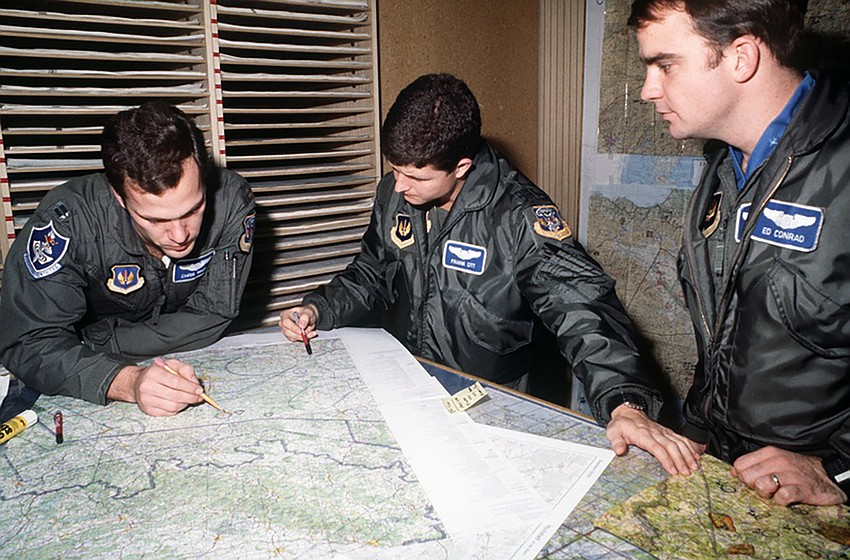
Looking back, Makatura said he and his squadron didn’t understand the depth and impact of their missions as they were living it. They simply were doing their jobs, playing important roles in the defense of NATO and Central Europe.
Three years ago, Makatura started looking at old copies of the “Stars and Stripes,” a military newspaper. He took the time to examine dozens of front pages of the newspaper in the archives. He said it took his breath away to see how many events happened while the 10th Tactical was in Germany and how many of which they were involved.
“That gave me the perspective of, holy cow, we were right in the middle of enormous historical events and geopolitical shifts, and that’s when I first fully recognized it and that’s when I said, I have to tell this story,” he said.
The story of the 10th Tactical Fighter Squadron is one of bravery, camaraderie, duty and humility.
As members of his squadron have read “The Fightin' Tenth: Cold War to Desert Storm,” Makatura said it has brought a sense of nostalgia, and he has been told on several occasions how much the book means to those who served with him.
His children, who are between 23 and 45 years old, are seeing their father in a new light. The book has given him an opportunity to introduce his children not only to a period of history but also to his younger self.
Although the book focuses on the 10th Tactical Fighter Squadron, Makatura said he “always takes a step back in deference to everybody else,” because he could be telling the story of any Air Force fighter squadron or unit in the U.S. military over any period of history.
“My point is that I’m telling the story of the 10th, but it’s a microcosm of the broader story of soldiers, sailors and airmen, who have answered the call of duty and served their country and have done extraordinary things when duty called,” he said.