- July 31, 2026

-
-
Loading
Loading

Editor’s note: Way Back When is an ongoing feature that records and preserves the stories and memories of lifelong West Orange and Southwest Orange residents.
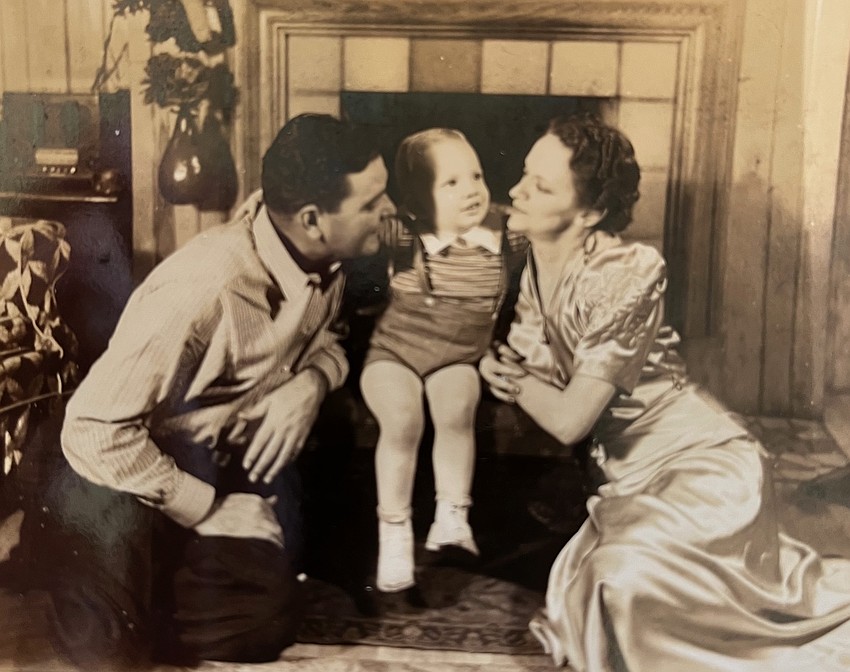
John Mills Nabers, now 88, remembers Windermere as a lonely town when he arrived here as a 5-year-old. He and his parents moved to Oakdale Street following his father’s retirement from the United States Department of the Treasury — years after helping agent Eliot Ness of the Untouchables take down notorious Chicago gangster Al Capone.
Nabers’ loneliness was compounded at the age of 12 when his father died; then it was just him and his mother. He recalled going fishing regularly to put supper on the table.
“Windermere was a natural paradise then,” Nabers said. “As a child, we spent the days fishing, swimming, boating, hunting. … We made our own poles from local bamboo for catching shiners and brim. … When we fished, it was serious because we would clean them and eat them the same day for supper. We ate fish several times a week, which was encouraged by our mothers, due to the much harder times economically during World War II.”
The war affected everyone in America.
“I’m a child of World War II, and people today don’t realize how the culture was just completely dominated by the war,” Nabers said. “Everybody either had a family member fighting the war or a friend. … There was nobody who wasn’t extremely patriotic.
“And then you had ration stamps,” he said. “Butter wasn’t available — it all went to the military. The average person could not go to the store and buy butter. That’s how margarine came about. It came in a long plastic bag, and it was snow white, but there was a little capsule the size of a marble, concentrated red dye or dark orange, and you would squeeze that till it punctured in the bag and you kneaded it from the outside so it was of uniform color and the color was yellow like butter. It was totally cosmetic.”
Everything used by soldiers was rationed, he said. Ration stamps were handed out for commodities such as coffee, flour, gasoline, cigarettes, rubber tires and nylon stockings.
“Transportation was difficult due to rationing of gas,” he said. “Most families had only one car, if any, and we had no bus service, so Windermere was pretty much our own world, except for the weekly trip to Orlando for items you could not buy at Parramore or Grice’s stores.”
A CHILDHOOD OF IMAGINATION
As a child, Nabers and his friends often made trips to the town’s small dump at the end of West Seventh Avenue near Lake Butler where Fernwood Park now is.
“Exploring items from the dump was a fun adventure,” he said. “I would occasionally bring items home to Mother as a great gift, and she would thank me before storing it in neverland. I remember (finding) antique irons. … We used them as doorstops.”
This is where folks got rid of unwanted items that couldn’t be burned in the backyard burn pit — anything from old furniture to fireplaces and other metal pieces.
Everyone had an area for burning trash in their backyards, Nabers said.
“People would dig them 6 or 7 feet deep, and you would burn everything until eventually there was nothing left but tin cans,” he said. “When it filled up, you filled it up with dirt and dug another one. … Everybody had wells … the septic tank was homemade … out of concrete … and it was about 20, 25 feet from our well. It was crazy, but nobody got sick. It was a shallow well, and you could see the water.”
Lake Butler was a popular destination when Nabers was growing up.
“Bird Island was always teeming with birds,” he said. “During the nesting season when we explored the island, we literally had to step over the (bird) nests. The trees were so full they had to nest on the ground. Snakes, gators, turtles, muskrats, raccoons and other animals (were) frequently seen on the island.”
Growing up in a rural area made several items invaluable to a child — a pocketknife and a BB gun.
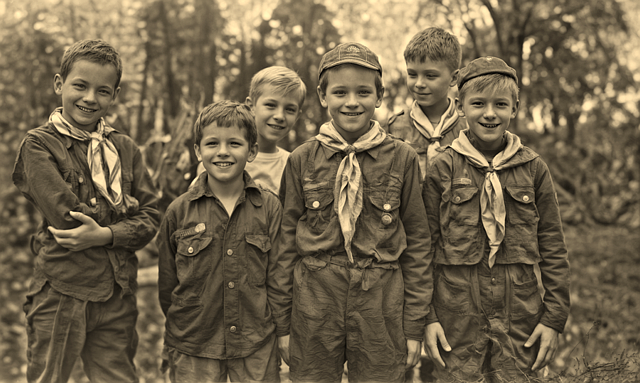
“By the time a boy was 5 or 6 years old, he was given a pocketknife,” Nabers said. “We spent our time fishing, and you would need a knife to cut the fishing line or whittle a piece of wood to build a sling shot. … One of my prized possessions is a green handled Boy Scout knife.”
WILD WINDERMERE
Because there were fewer than 300 residents — mostly snowbirds — inhabiting the town, it was common to see and hear wild animals in the vicinity, Nabers said. His father once told him he could hear panthers screaming in the wooded areas south of Windermere.
He called his childhood a Tom Sawyer-like existence but also remembers the solitude. There weren’t many children his age in the area. Windermere Elementary School, then at Main Street and Sixth Avenue, had two classrooms for all six grades, and some grades only had four or five students.
When it was time to continue his schooling, Nabers said, his mother thought he would get a better education in Orlando so he attended Memorial Junior High and Boone High schools. He graduated from Edgewater High School.
Children had to be creative with their activities; there were no organized programs such as Little League.
“You had to be self-reliant and creative,” Nabers said.
Television had yet to be invented, but listening to radio shows was a popular pastime.
“Adventure programs like ‘Sky King’ and ‘The Lone Ranger’ were sponsored by cereal companies, and on Saturday mornings, we would all gather around the radio to hear three or four of these programs in sequence,” he said.
“One of our favorites was ‘Sky King’ … who used his airplane to fight evil,” he said. “You could mail in some pocket change and the box top of the cereal and get special prizes. The most memorable was this ring that glowed in the dark, and I remember spending half the night with my good friend, Ray Duncan, talking about this amazing ring. It had a secret compartment and a miniature ball-point pen; it would recharge itself in the light and then glowed for about an hour. … It also had an embossed recess you could press on hot wax and … press the logo of Sky King.”
Free time also was spent swimming in Lake Bessie, riding bicycles, shooting BB guns and collecting comic books.
“My parents gave me a subscription to Disney Comics and Marvel Comics,” Nabers said. “They would come once a month, and you would go to the post office and ask, ‘Did my comic books come in?’ You would go home and start reading them. And of course, you saved them. If other kids had different ones, you could trade.”
One source of entertainment that included all the townsfolk was the weekly potluck supper held at Windermere Town Hall. They always ended with a cake walk, and the winner left with a cake baked by one of the Civic Club members.
Other times, traveling entertainers made a stop in the town to put on a show or residents would show movies. Nabers’ mother enjoyed showing fishing pictures as well as cartoons sponsored by Castle Films.
“These sessions were well attended,” Nabers said. “There was nothing else to do.”
HOME SWEET HOME
Nabers still owns his family’s first Windermere home, and his granddaughter lives there today — about six blocks from his current home on Lake Bessie. The original was built around 1916 and probably is the third or fourth oldest house in Windermere, he said.
It was a small home, just big enough for Nabers and his parents, Albert and Lou. After his father died, his maternal grandmother moved from Georgia and occupied one of the bedrooms that had been added.
“We didn’t have central heat,” Nabers said. “We had a central fireplace and kerosene space heaters. It wasn’t insulated very well … and we didn’t have exterminators, so we’d throw DDT (insecticide) in the closets to kill the roaches. … Nobody ever died or got sick that I knew of.”
The family also kept a vegetable garden and a poultry coop, and everyone enjoyed fresh harvests, eggs and chicken. His grandmother taught him how to ring a chicken’s neck and pluck the feathers.
“The best part of this was sitting down at the dinner table and enjoying the delicious fried chicken and biscuits and whatever vegetables were growing in the yard,” he said.
For other food, families shopped at the two retail businesses on Main Street in Windermere, The Parramore Store, at Sixth Avenue, and Grice’s Store, at Fifth Avenue. Both sold groceries and gasoline, and Grice’s had a cold storage room to keep meat.
“My mother would send me to Parramore with a gallon jug to get kerosene for our lamps,” Nabers said. “I would stick my head in the store and say, ‘Hey, Eunice, I have a gallon of kerosene; put it on our bill.’ (Mother) would send me down there for food. I was about 6 or 7. I would walk there barefoot.”
Surrounding their house were a few neighbors, John Luff and Loren Robertson (L.R.) “Andy” Williams; vacant lots; and multiple orange groves and wooded areas.
Nabers remained in Windermere until he attended the University of Florida, preparing for a career in banking and joining the Air Force Reserves. He worked for such companies as Florida National Bank, SunBank and SunTrust and retired at age 55 as SunTrust’s senior vice president and senior credit officer.
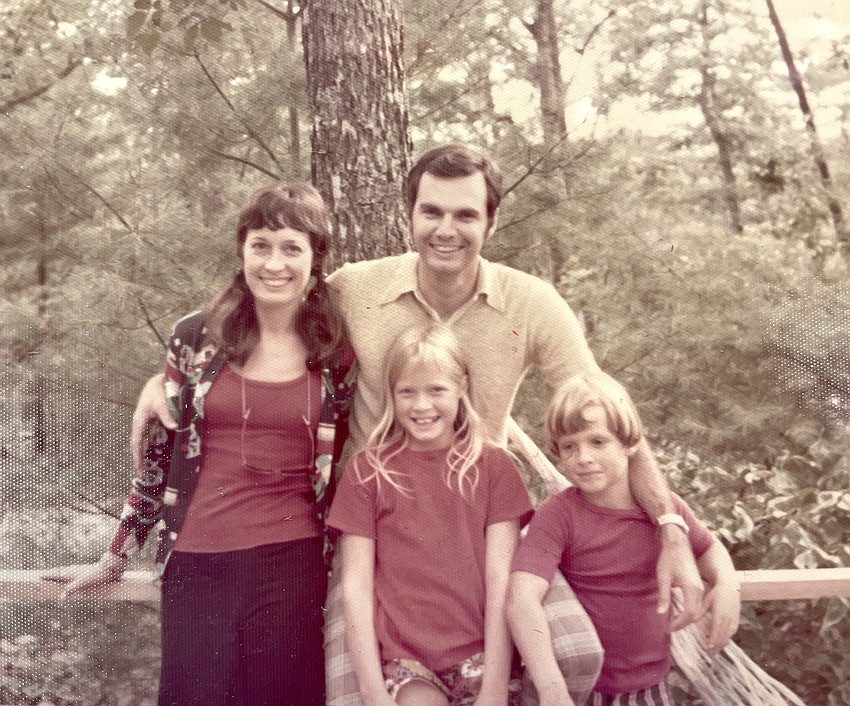
John Nabers and Patricia Cade Nabers made Windermere their home after marriage. They enjoyed 59 years of married life until her death in 2022. They had two children, Kerry Nabers Sharpe and the late Cade Nabers, and two grandchildren — and all attended Windermere Elementary School.