- July 8, 2026

-
-
Loading
Loading
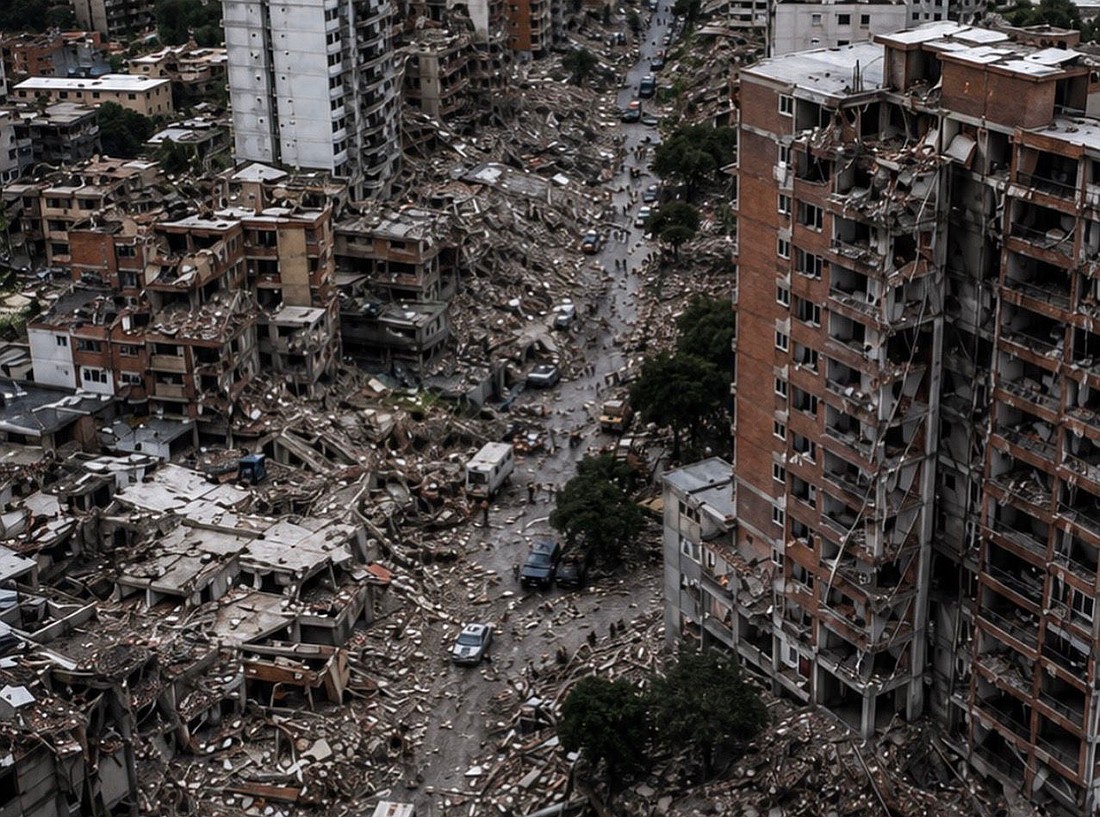
While Winter Garden’s Vanessa Vollmer, a native Venezuelan, was watching fireworks Saturday, July 4, celebrating America’s Independence Day, she received one of the worst phone calls imaginable.
Every day since Friday, June 24, when two earthquakes with magnitudes of 7.2 and 7.5 struck Venezuela, she had been trying to reach her cousin in Venezuela but had no success.
A night of celebration turned into a night of mourning as the call she received notified her that her cousin, along with her cousin’s husband and five members of her husband’s family, had died in the disaster.
They were among the more than 3,342 people who have died in the earthquakes.
Much like Vollmer, there are many West Orange families who have been worried and waiting to hear the fate of their loved ones in Venezuela, trying desperately to get in contact with them.
Beyond family members, Vollmer lost neighbors, friends and school teachers.
“I can’t even count,” she said. “The last 10 days, it’s just been a bunch of messages popping up and all of them are the same — ‘This person didn’t make it.’ … It’s just deep sadness at this point.”
Venezuelans still are pulling people and animals out of the rubble left from the devastating earthquakes.
While some have received heartbreaking news about their loves ones, others have had calls and texts of relief.
As soon as Vollmer’s husband shared the news of the earthquakes, she called her mother-in-law, who lived in an unstable building in Venezuela.
She learned her mother-in-law was rescued from the rubble of an eight-story building, and although she survived, she must undergo several surgeries and now she is homeless.
On top of all the grief, Vollmer now is suffering from survivor’s guilt.
“It hits so hard from a distance,” she said. “There are guilty feelings for being safe (and) for being away, but also the joy of knowing our homes collapsed and we are safe. (There’s) frustration and desperation from being unable to be there to rescue our families, to help our people. … It feels way different from the distance, it feels (as if) you are trapped in a window display, living it, but safe —living it but unable to be a part of (it).”
This tragedy has impacted Vollmer deeply.
“I stopped working, I stopped sleeping, eating,” she said. “I understand life can change or end in 39 seconds and I can’t see it the same way anymore.”
Today, she prays for the souls of her loved ones to be welcomed into heaven, and for her and her relatives who survived to find peace and strength to keep living after this tragedy.
“I just want to ask every reader to pray —there are many bodies that still need to be recovered and reunited with their families, many people that lost everything, and they all need prayers,” she said. “My biggest concern now is that of what’s coming next: mental health, suicides, poverty.”
Winter Garden’s Daniel Giandoni also was impacted by this tragedy.
On the day of the earthquakes, Giandoni was walking into a meeting when he noticed a missed call from his niece.
“She never calls me, so I immediately thought something was wrong,” he said. “Then, she sent me a voice message saying, ‘Uncle Dani, there was an earthquake. It was terrible.’”
He called his niece right back, and though there was no video available, he could hear the voices of his family members.
At that point, hearing them alive, he believed there were strong tremors but no fatalities.
After his meeting, he checked his phone again.
That’s when he noticed news outlets reporting on the earthquakes and the destruction.
“I sat down and called my family again,” he said. “They showed me the damage inside their apartment — things that had fallen everywhere, and there were cracks in the building. Ironically, as they were starting to calm down, that’s when the reality of what had happened really hit me.”
While his immediate family is safe, friends and family-friends lost their homes, some lost family members, and some lost their lives.
The worst part, he said, is that many families still are searching for their loved ones.
“For many families, there’s still no closure,” he said. “I feel like I’m living through an extended mourning. I’m frustrated, sad, broken. Every time I open social media, I see another family looking for someone. I don’t even know those people personally, but somehow they feel like my own. That’s one of the emotional prices many immigrants pay. Even when you’re far away, your heart never really leaves home.”
Giandoni feels helpless.
“So much is completely out of our control,” he said. “Not only because of the natural disaster itself but also because of the regime’s response. … It’s difficult not to talk about the political reality because preparedness and emergency response matter. A natural disaster cannot be prevented, but the consequences can be reduced with planning, coordination and functioning institutions.
“Every collapsed building tells a much bigger story,” Giandoni said. “Of institutions that failed, of a regime that neglected its people and of citizens who had to save each other because they couldn’t count on those in power. But if there’s one thing the world should remember, it’s the Venezuelan people. They didn’t wait for permission. They rescued neighbors, shared food, opened their homes and organized themselves almost immediately. That’s who we are.”
While he’s grateful for those who are safe, he said there is a lot of work that still needs to be done.
Both Vollmer and Giandoni said the earthquakes will affect the country for months, maybe years to come, and it’s vital that people from around the world continue to support those in Venezuela even after the country stops making headlines.