- July 31, 2026

-
-
Loading
Loading
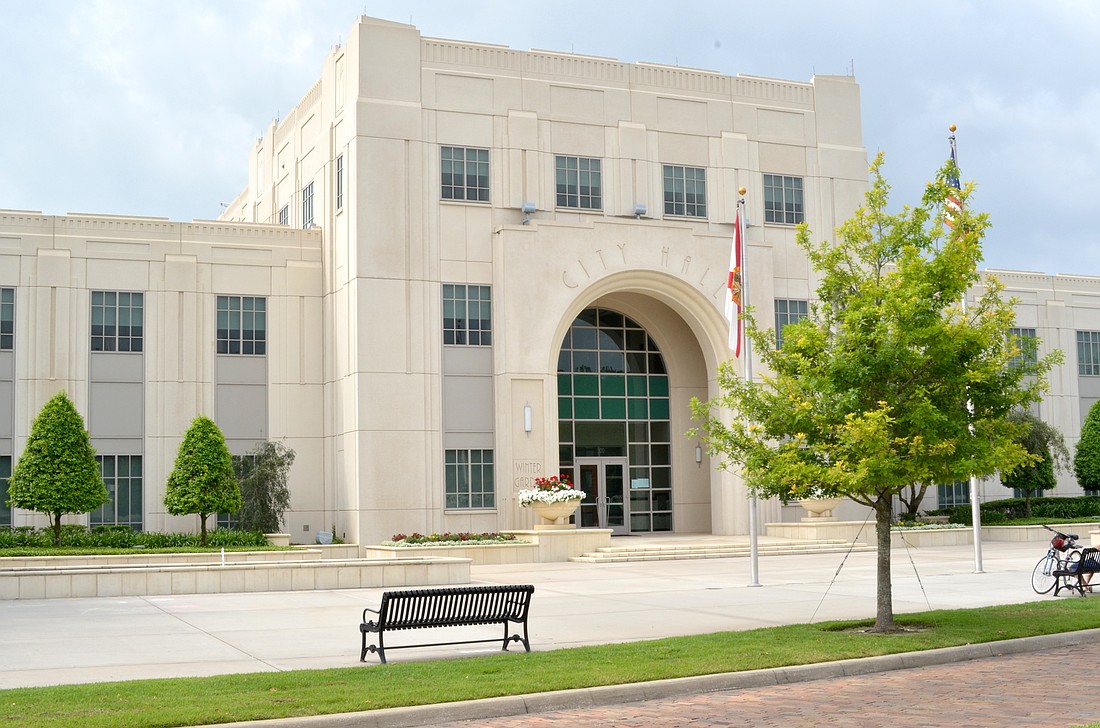
According to Winter Garden City Manager Jon C. Williams, if Florida voters approve proposed changes to property taxes passed by the state Legislature, the resulting property taxes collected by the city won’t be enough to fund the police and fire departments.
Williams presented a budget forecast during the City Commission’s Thursday, June 11, meeting.
The Legislature-endorsed changes (HJR 1F) would increase the existing $50,000 exemption for homestead properties to $150,000 starting in 2027, rising to $250,000 in 2028.
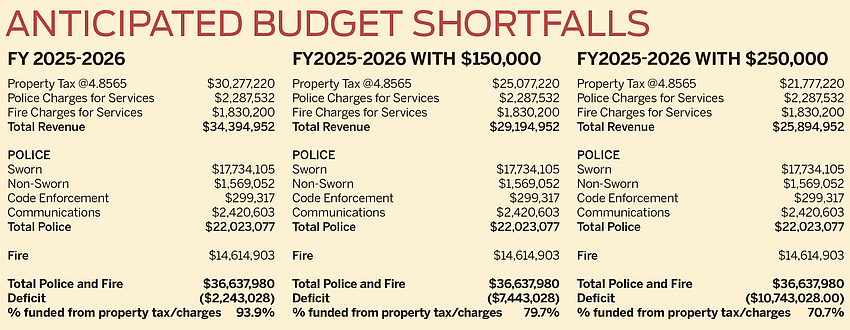
According to Williams, current property tax collections total $30,277,220, and combined with police and fire charges, funds 93.9% of the costs for operating both departments. If the homestead exemption increases to $150,000, that total drops to $29,194,952, funding 79.7% of the costs. At a homestead exemption of $250,000, it drops further to $25,894,952, or 70.7%.
“I wanted to do that comparison, because there’s been some statements from … officials out of Tallahassee that said, ‘Whatever reduction in property tax, you’re to take the remaining portion, fund the core services, public safety being one of those,” Williams said. “At present, we don’t even cover the full cost of public safety with the ad valorem (taxes) that we generate.”
The total revenue reduction for the first two years would be $13,500,000, he said.
Furthermore, Williams noted these calculations are based on 2025-26 numbers and do not address increased wages or benefits.
“It also does not take into account any additional staffing to accommodate new firefighters for schedule modifications to either implement Kelly Days or 24/72,” he said.
With a sigh, Williams said city staff is looking at several options to accommodate the potential shortfall.
“We’re going to look at eliminating non-core services and programs, and we’re certainly going to bring back those details of what those services and programs will look like,” he said. “Other factors we’re looking at (are) ways to increase revenue to be able to offset this deficit. I don’t think, at this point, that I can comfortably say that through reduction or elimination of non-core services and programs that we would be able to cover this deficit entirely.”
For Winter Garden residents, that could mean an increase in the millage rate.
“We’re going to have to explore additional property tax for this, and that could be an increase in the milage rate starting with the budget Oct. 1, 2026,” Williams said. “We know if this constitutional movement does get put in place, there will also be some caps on what you will be able to adjust your millage rate going forward.”
Other potential revenue-generating measures include implementing a fire assessment, which the city discussed last year; parking fees; and other service fees.
District 4 City Commissioner Colin Sharman said the property tax measure would not help property owners to the degree its proponents have promised.
“It’s all political theater — all of it,” he said. “It doesn’t do anything for anybody. There’s no way to fund it again. They’re just boosting their own popularity with something that covered the cost, but if they were true to their values, they would cut costs at the state level and let local governments have more Home Rule.”
The measure already has sparked a lawsuit, City Attorney Kurt A. Ardaman told city commissioners. A nonprofit called Save Our Voters From Misleading Ballot Language, Inc., along with Thomas F. Campenni, former mayor of Stuart; and Michael W. Davey, former mayor of Key Biscayne; filed the suit Thursday, June 11.
The suit claims the ballot measure’s title — “Save Our Homes From Excessive Property Taxes” — is an endorsement rather than an explanation.
“The ballot summary does not merely describe the Proposed Constitutional Amendment — it endorses it,” the lawsuit states.
However, the lawsuit will not prevent the measure from appearing on the November ballot. Rather, it asserts its language should be revised.
And thus, Williams said the pressure is on him and city staff to make the numbers work.
“We are now four months and 24 days until Election Day and (when) voters would potentially sign this,” he said. “Nine months and 14 days until we would kick off the budget cycle that would incorporate these changes, and 15 months, 21 days until the new fiscal year would begin in which these changes would begin. So this is a rather large task to try to navigate in a relatively short period of time to be able to come back and make some solid recommendations to consider as we move forward. But I’m confident in all of our staff and all the work that they’ve done … to be able to achieve that, working side-by-side with them along the way. It’s highly likely that I will be totally bald when it’s all done.”
City commissioners also passed the first reading of an Ordinance 26-17, which clarifies permitted uses and requirements for detached garages and accessory dwelling units in the historic downtown district.
“The most significant change is the expansion of ADUs as a permitted accessory use within most residential zoning districts, including R-1A, R-1, R-1B, R-2, R-4, R-5, R-NC, RNC-2, and residential planning unit developments,” Planning Director Kelly Carson said. “This ordinance establishes a consistent set of standards for ADU location, size, height, parking, architectural design and occupancy.”
Carson said the ADUs would be permitted only on homesteaded single-family residential lots, limited to one per property and remain subordinate to the principal residents. Owners must provide one off-street parking space for the ADU. The ordinance also prohibits the separate sale of ADUs and prohibits short-term rentals, she said.
“These standards are intended to provide additional housing opportunities within our community, support multigenerational arrangements, aging-in-place solutions, and increased housing plus flexibility while preserving the character of our existing neighborhoods,” Carson said.
Mayor John Rees noted adding a second structure to a property, in effect, doubles the density.
“How do you stop an area basically from going from R-1 to R-2?” he asked. “Because when you’re sitting here in an R-1 neighborhood, you got one house per acre. So you have two or three people that put up an ADU. Now you’ve got two houses. So you do that, you’re really going from R-1 to R-2.”
City commissioners also questioned how to define short-term rentals.
“A year is a standard … term of a lease,” Carson said.
A second reading and public hearing is scheduled for the City Commission’s June 25 meeting.