- July 27, 2026

-
-
Loading
Loading
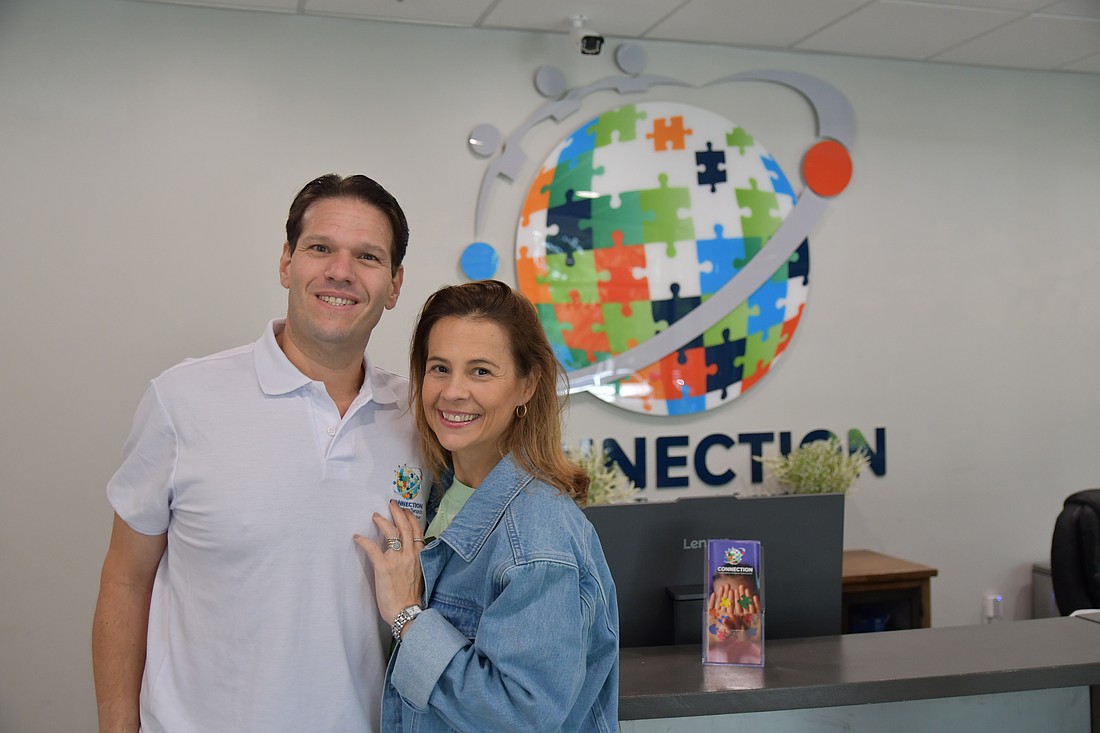
When Winter Garden residents Daniela and Andre Sophia’s daughter, Valentina, was diagnosed with autism, they told themselves they would never allow it to drive their lives to a pathway of restriction.
Instead, they let it lead to something much more beautiful.
The pair has allowed Valentina’s diagnosis to drive their lives to opening Connection, a transdisciplinary therapeutic support center. The Winter Garden center is designed to help people with Autism Spectrum Disorder live a life independently.
At the center’s soft opening and ribbon cutting Nov. 15, 2025, Valentina was the one with the scissors in hand to cut the shiny red ribbon in front of the 250 guests, who came from across the U.S., Brazil, Angola and Portugal.
Andre Sophia, founder and executive director of Connection, proudly watched his daughter. For him, it was symbolic to see her cut the ribbon as her birth was the first step in the journey to get there.
“It was a realization of a dream,” he said of the opening. “In between this, I decided to quit my career … and after all this history, this is the most rewarding job that I ever had — looking in a parent’s face when they come here and they’re happy with their kid’s development.”
The center officially opened to the public Friday, Jan. 2. Since then, Connection has reached 60% capacity with 35 kids, and it has plenty of room for more, depending on the treatment level the child needs. It has begun to expand past Applied Behavior Analysis therapy services to also offer speech and occupational therapy.
The therapy is helping the kids learn how to work together hand-in-hand, while the technology is introducing them to their senses.
Connection’s 6D room is decorated with technology such as changing lights, clouds on the ceiling that dispense rain, a ball pit, sensors to dispense smells and more.
“If you talk about rain, it rains,” Andre Sophia said. “You can tell the kid, ‘Hey, touch the banana,’ and he (or she) touches the banana and everything gets yellow. The room is set up to interact with the kid and that not only helps with his (or her) development, but it’s proven that when you mix other senses and learning, it records much better in your memory.”
The room is one of many. On the ground floor, there’s a gym with monkey bars and beanbags. There is also a room lined with padded walls if a child needs to take a breather.
Walking up the stairs, there’s a landing, which will be decorated to look like a rainforest with cascading vines and leaves. On the second level, there are more tools to help shape the children.
One room is fixed with a bed, desk and closet. At first glance, it looks like a place for a nap, but it actually is designed for therapists to teach how to make beds and do common household chores. Also in the process of being designed are three “offices” — a dentist, doctor and hair salon — where kids will learn how to behave in the three types of chairs and help them become accustomed to the tools and sights of a real one.
The dentist and doctor are make-believe, but Andre Sophia said kids actually will have their hair cut at the salon with parents’ permission. All of these tools and different scenarios are to help teach them how to interact and react to various social opportunities.
Seeing the growth and development of the center in just three months has been “super exciting” for the Sophias, and it all began with a diagnosis 12 years ago.
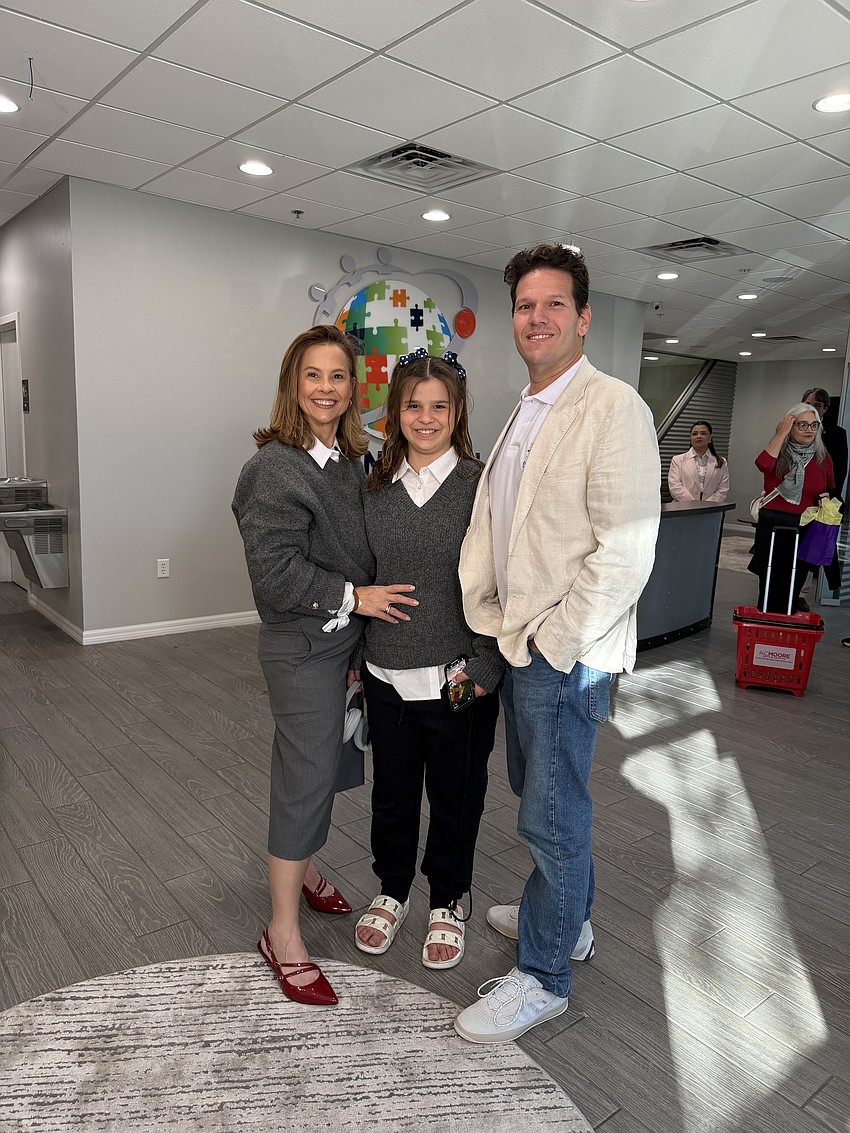
When Valentina was born in 2014 in Brazil, she had regular newborn development until she hit the 1 year old. Her parents knew something was wrong with their daughter but couldn’t pinpoint the issue.
“Brazil is very behind in terms of autism — especially at that time 12 years ago,” Andre Sophia said. “We spent a lot of time and money trying to figure out what was going on, and no doctor was able to tell us. They said, ‘Oh, she looks like an autistic kid, but she’s not treated as she is.’”
Everything changed when Daniela Sophia heard of Dr. Carlos Gadia, a doctor from the United States who specialized in pediatric neurology, which treats autism spectrum disorders, ADHD and more. At that time, Gadia traveled to Brazil every three months to spend a week doing appointments.
The Sophias landed one.
Within 15 minutes of their appointment, Gadia had a clear diagnosis.
She’s autistic; I have no doubt, Gadia told her parents.
At long last, they had a diagnosis. And with that came a game plan.
Gadia recommended Applied Behavior Analysis therapy. The only catch was Weston, Florida, was the best place to go. Weston has many centers catered toward youth’s development and was recognized as an Autism Friendly Community by the UM-NSU Center for Autism and Related Disabilities and Helping Adults with Autism Perform and Excel.
For three decades, Andre Sophia had been working as a director and executive of big corporations worldwide and in Brazil; he was well established. They had their whole lives set up in Rio de Janeiro.
It seemed like an impossible decision. But ultimately, the Sophias decided in favor of their daughter’s future of becoming independent.
They moved to Weston in 2019.
“We’ll spend everything we have for her treatment, and we’ll come back (to Brazil) and we’ll start from scratch,” Andre Sophia said of their plan. “We came here with three (pieces of luggage), and I was going to English classes.”
He was on a work and travel permit, and while Andre Sophia was looking for a job — COVID-19 struck. Everything stopped.
For one-and-one-half years, he struggled to find a job, but Valentina’s ABA therapy didn’t stop. She was up to 40 hours per week, and while her parents had more free time, they put their heads together once again.
They kept thinking: What can we do for the autistic community? What can we do to help?
They decided to start Infinite Minds ABA to do virtual ABA services. To begin, they needed a board-certified behavior analyst and registered behavior therapists. It began with one client, then increased to another and continued to multiply.
Last year, other companies approached the Sophias with a proposal to build a physical center. Two of the companies are from Brazil and take care of more than 1,000 kids, and the other is from Angola and Portugal. They all have knowledge on other therapies, such as occupational, physical and speech therapy.
The Sophias had the knowledge on ABA therapy, so it was a perfect fit to create the transdisciplinary center.
“When we say ‘transdisciplinary,’ we mean working beyond side-by-side,” Andre Sophia said in his soft opening speech. “We mean building strategies together, observing children together, celebrating progress together. Because development is not divided into categories.”
When the center opened in Winter Garden, the Sophias made the move from Weston.
“It has been amazing for me being closer to the families, because we have been doing this business for six years, but we didn’t have the day-by-day with the parents now that I’m here in the clinic,” Andre Sophia said.
Working with the families and meeting their needs is the No. 1 priority of the center. There are families who drive more than an hour every day to attend the center, as well as an employee who does the same. Families are moving to Winter Garden to be closer to the clinic.
“We do everything for our families,” he said.
As the center continues to grow within its first physical location, the Sophias and their partners have their eyes set on the future. Andre Sophia said hey have discussed opening facilities in the greater Orlando area, across the United States and in other countries.
“We’re going to keep helping the community and doing everything we can for more and more parents,” Andre Sophia said.