- June 24, 2026

-
-
Loading
Loading
Editor’s note: Way Back When is an ongoing feature that records and preserves the stories and memories of lifelong West Orange and Southwest Orange residents.
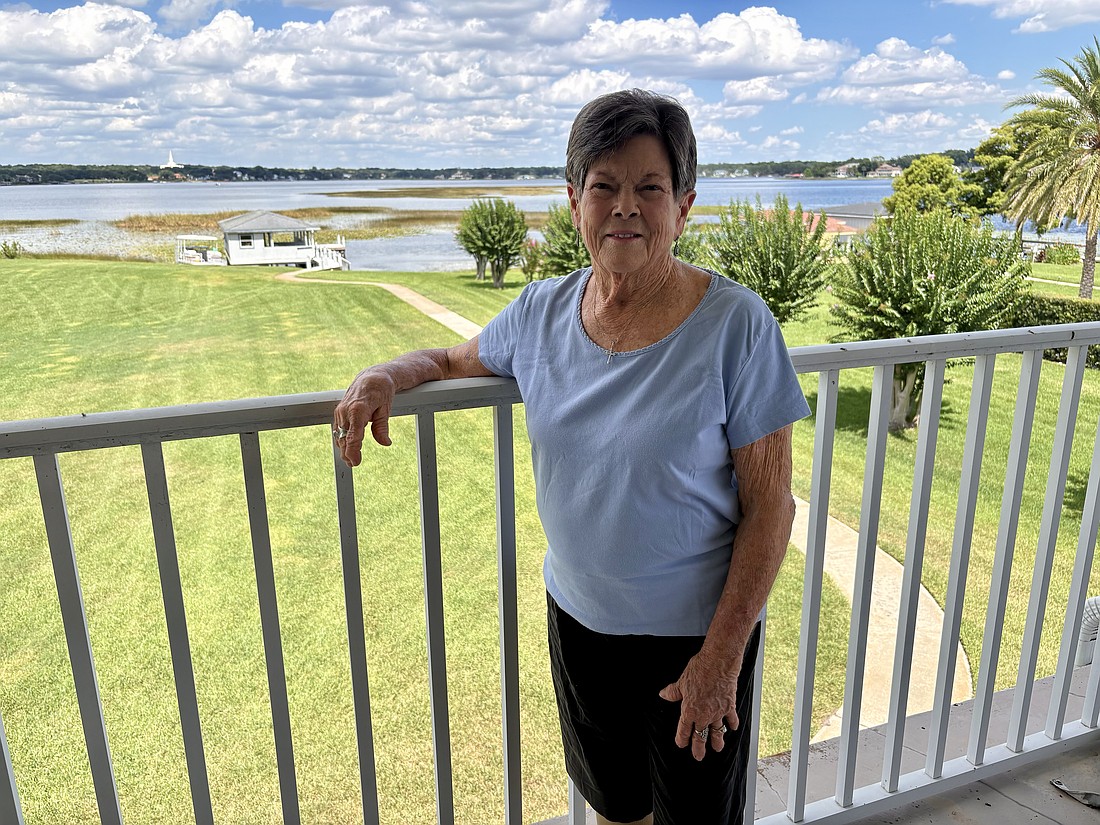
Mary Frances Fischer Howard’s childhood and adolescence were spent at a two-room schoolhouse in Windermere, in the orange groves of Southwest Orange County and on the Butler Chain of Lakes.
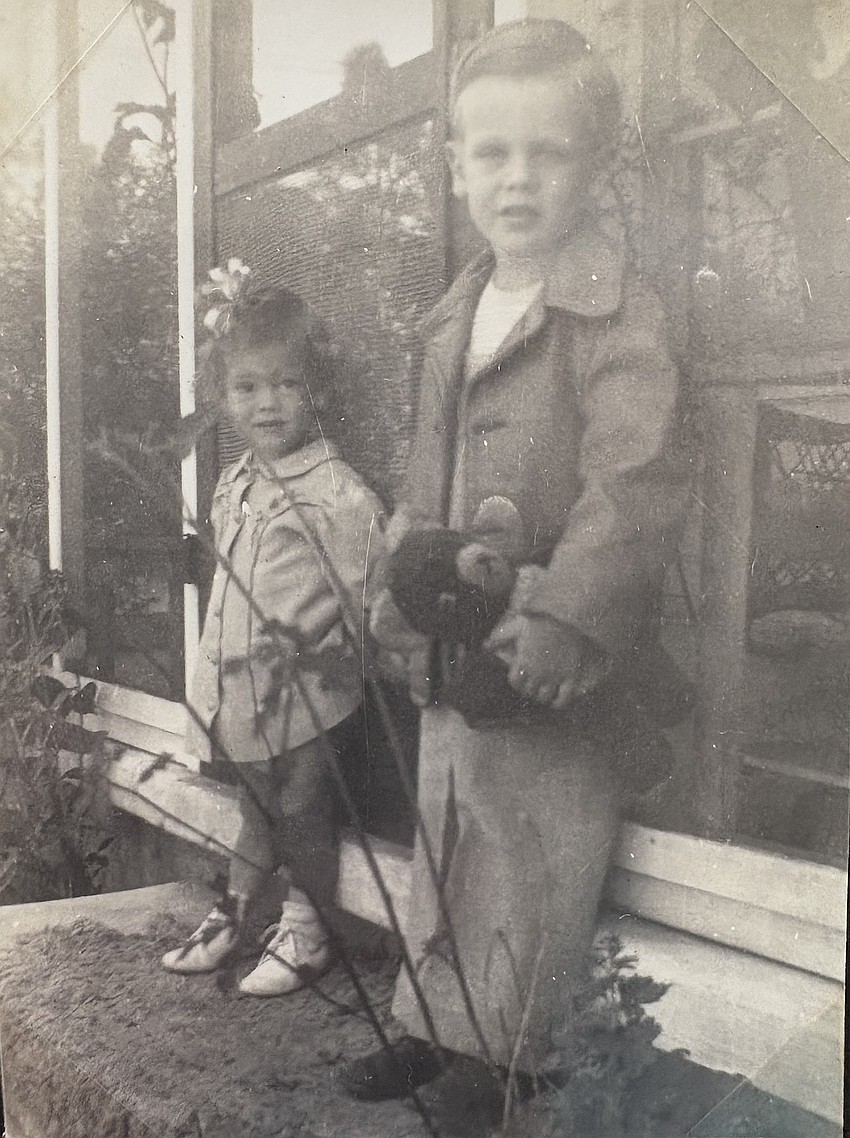
She was born to Edward E. and Mary Fischer in 1943 in Orlando, and she spent her first few years in Gotha. She, her parents and her older brother, Ernest, lived in a small, two-room house built, her daddy told her, out of lumber from the first Lutheran church in Gotha.
The house was across from the current Gotha Post Office, and she said when she was a child an Army ammunitions base was on that property.
“I remember the trucks and jeeps going in and out of the entrance,” Howard said. “They would have days when they would emit black smoke into the air — to cover the whole base — in case the Germans came over and tried to bomb it.”
Her first home still stands today, owned by a paint company business.
The Fischers moved to the corner of Fourth Avenue and Magnolia Street in nearby Windermere when Howard was 3. She can remember getting together frequently with her cousins, Dick, Robert and Freddie Fischer, who lived down the street.
The Windermere of Howard’s childhood was sparse and surrounded by wilderness.
“One of my special things to do with my parents … was to get in our jeep and go out on a piece of property that we had out by Dr. Phillips and look for foxes, all kind of wild animals,” she said. “We would go … through the woods with our big spotlights, looking for any animals that we could find.”
Howard and her friends passed the time away wandering the dirt streets.
“As kids, for fun in Windermere in our early days, we all rode our bicycles all over town, and some of the whole blocks of property were citrus that somebody had set up, or sometimes it was a whole block of woods which we had fun playing in, playing forts and having wars,” Howard said. “About the only thing we had to throw at each other was sticks and stones.”
Before kindergarten was commonplace, a group of parents in Windermere hired a woman to teach children the year preceding first grade. The kindergartners gathered at Windermere Town Hall.
When Howard entered first grade at Windermere Elementary School, it was a two-room schoolhouse built around 1926, with first, second and third grades in one room and fourth through sixth grades in the other. Her first teacher was Jessie Seidner. Memories of WES include being one of only two girls in her sixth-grade class and loving recess.
“We had a merry-go-round that you had to push … and as a small child we loved to ride on that and have the big boys or girls push us,” Howard said. “As we got older, we took over the job of pushing the smaller kids. That was a thrill ride.”
Howard then attended and graduated in 1961 from Lakeview High School. Her husband, Jerry, was in the same class, but they didn’t start dating until they attended Orlando Junior College.
As a teenager, Howard was partial to the water. She enjoyed climbing up the TV antenna on her house and admiring the beauty of the lake before her. She relished the time she and her brother spent on his boat and the alone time she spent in her own rowboat.
“The lakes were a big part of our life as we got to be older,” she said. “I learned to ski, drive a boat; I spent hours sometimes by myself out in my boat feeding the little wild birdies that would become tame enough to eat out of my hand and just exploring all … the little nooks and crannies in the chain of lakes.”
Some of the boys in Windermere created a boat race that lasted several years, and the winner was the driver who could navigate the Butler Chain of Lakes the fastest. Howard said when her brother went to college, she decided to enter and try to beat all the boys in their race.
In the event, she and her co-driver were in the lead early in the race and were on their way back, zipping through Lake Butler with only Wauseon Bay left to clear. When her co-driver was switching gas tanks, he flooded the engine.
“We’re sitting there, and eventually one, two, three, four mini boats start coming by us, laughing at us because we still cannot get the boat cranked,” Howard said. “The girl did not win the race after all; she became the laughingstock of the boys.”
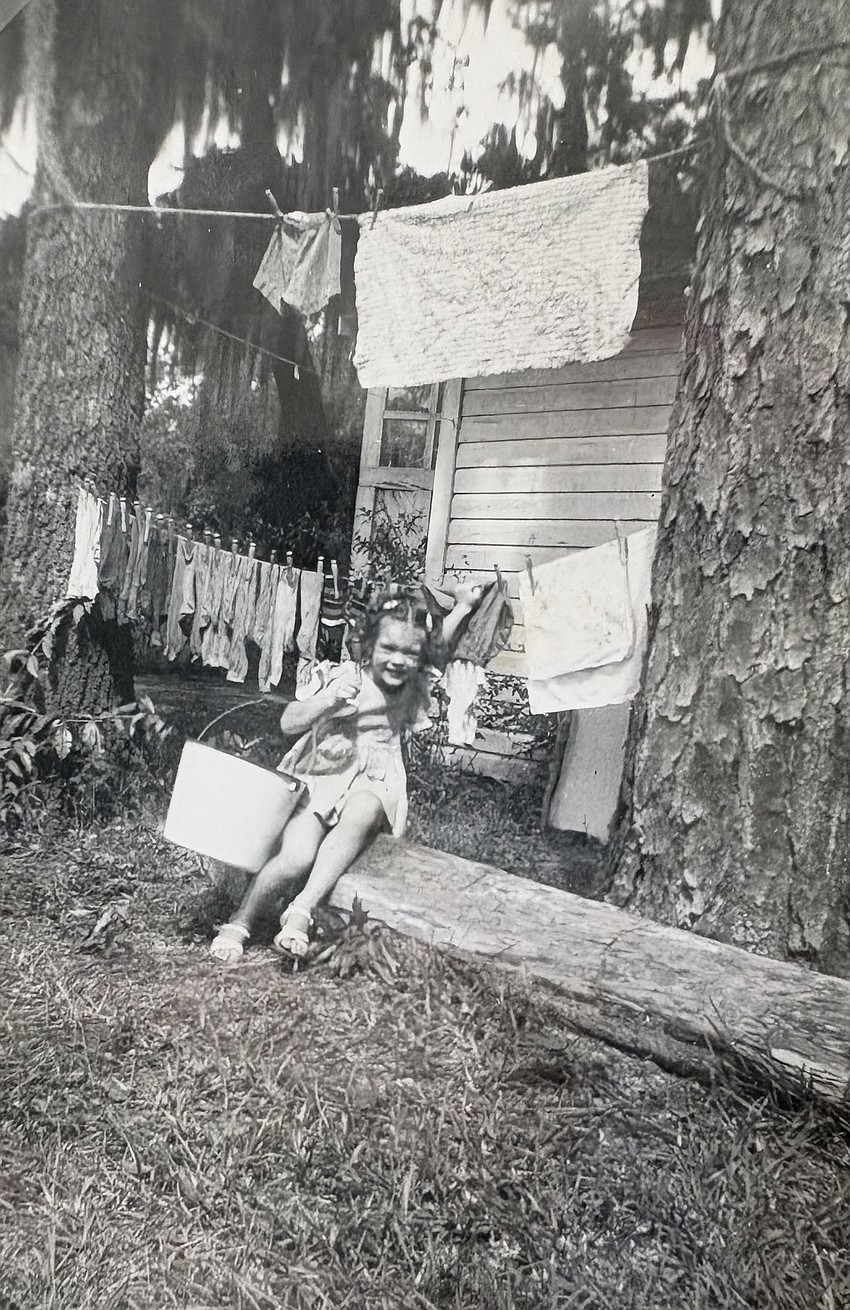
“As a child I loved being outside, especially if I could be with my dad,” Howard said. “He had a small, nine-acre grove just off Gotha Road, and in the summertime if it became too dry, I would go with him to lug and change irrigation pipes. The pipes were about six or eight inches in diameter and ran across the top of the ground. I would walk the top of the pipe trying not to fall off. During the winter, if there was going to be a real cold spell, we would lug old car tires and put them under the tree to keep the citrus warm.”
When Howard was about 9, her parents bought property off State Road 545 and set out orange groves on what is now Hartzog Road in the Avalon area. They built a small, two-bedroom house, and that’s where the family stayed in the summers to keep an eye on the citrus. There was no power in that area at the time; the children spent their days exploring the outdoors and swimming in the nearby pond and their evenings reading by lantern light.
In 1953, Howard’s father bought two-and-one-half acres of land farther north on Magnolia, filled in the low land with dredging out of Lake Down and built a ranch-style home. Her family moved into this three-bedroom house, and she lived there until she got married.
(Howard and her husband later moved into the ranch home when her father built a smaller house next door. The big house was demolished in 1999, and Howard and her husband continue to live in a new house built on this same piece of property.)
When Howard and her brother were teenagers, they joined a local 4-H program and raised dairy cows. To make it easier to keep up with the project, their father put the two cows in the backyard with an electric fence, and they lived there between the house and Lake Down. When he began service on the Windermere Town Council, he thought it best to move the bovines out of town.
The cows were moved to the family property in Dr. Phillips, where they were bred. The Fischer siblings showed their animals at various local fairs for several years.
Howard’s memories of Windermere and Gotha are varied and many, and she has been recording her stories both with the town of Windermere through its legacy project and in audio recordings on her phone.
She recalls the first police officer in the town, Mr. Knight.
“I’m sure he was a big threat to people passing through,” she said. “He had a Ford Falcon as a police car, and he was elderly, gray-headed, thin-boned. I don’t think he ever caught anyone or arrested anyone.”
She recalls when the train brought the northern snowbirds into town after World War II.
She remembers when square-dance caller Joe Johnson held lessons at Windermere Town Hall when she was in school.
“He got about four groups of us to be able to dance,” Howard said. “Everyone who danced in it loved having it. We even got good enough to do some exhibitions into other little towns. … That was a fun time in our lives. We loved doing that.”
She can recall the coconut palm tree in her grandparents’ yard and her brother and older cousins trying to knock the fruit off the tree.
“We would put on a jubilee dance if we got a coconut off, and then the next thing would be getting into it and drinking the milk out of it,” Howard said.
She remembers the taste of fresh, warm milk when her cousin Billy squirted it toward her when he milked his family’s cow.
Howard also remembers when Reams Road — now a Horizon West thoroughfare — was just a curvy dirt road with ditches on both sides. Her brother, whom she called a dirt hotrod specialist, loved to drive fast enough to make the car slide from side to side.
“He would slide from one curve into the next and onto the next curve and in and out, sliding all over the road,” she said. “I wondered if we were going to end up in the ditch. Fortunately, we never did.”
Howard’s own great-grandfather is the subject of local lore.
Anton Mach, who came to America from Germany and settled in the Gotha area, operated an illegal still hidden in the woods. He hid the bottles of alcohol in a trap door in the floor of a neighbor’s house near Windermere Road.
“Because of the Depression and needing money just to put food on the table, people did whatever they had to do,” Howard said.
When the still was discovered by local officials, they arrested Mach and disassembled the still. Pieces of the boiler remain in that neighbor’s backyard today, Howard said.
The University of Florida sports programs have been a big part of the Howards’ lives. They had season tickets to the football games for many years, and she served on the Lady Gator Booster Board. When he retired, the couple started planning trips for the away games; they visited every SEC stadium in about eight years. They held tickets for basketball, tennis and softball and attended gymnastics meets too.
When they aren’t cheering on the Gators, they’re spending time with their three sons and three grandchildren.
Howard has been involved in a quilting group for about two decades. Members make quilts that are distributed around the United States and overseas following catastrophes.
Lately, she has been going through the decades of memories in her house trying to downsize her belongings; she has been donating historical items of interest to the Winter Garden Heritage Foundation.
History always has played a significant role in Howard’s life. Her mother’s ancestors are the Jernigans, who came to Central Florida in the mid-1800s and established the first permanent settlement. They named it after themselves, calling it Jernigan; the name later was changed to Orlando.
Howard served on Windermere’s Historic Preservation Board from 2011-2025, and she used to give history tours of the 1887 Schoolhouse to Windermere Elementary School students.
The best part of growing up in Windermere?
“Feeling like you were free, not like you had to be afraid of riding your bike down the street,” Howard said. “We had free rein.”
There will never be another town quite like Windermere, Howard said.
“I couldn’t have lived anywhere else,” she said. “I wouldn’t have been happy.”